-
ChicagoKarachiwala, FS. "The Examined Line: The ‘Lahore School’ of Neo-Miniature." Impart Perspectives, May 29, 2026. https://imp-art.org/perspectives/features/the-examined-line-the-lahore-school-of-neo-miniature/
-
MLAKarachiwala, FS. "The Examined Line: The ‘Lahore School’ of Neo-Miniature." Impart Perspectives, May 29, 2026, https://imp-art.org/perspectives/features/the-examined-line-the-lahore-school-of-neo-miniature/. Accessed 16 Oct 2026.
-
HarvardKarachiwala, F. (2026) The Examined Line: The ‘Lahore School’ of Neo-Miniature, Impart Perspectives. Available at: https://imp-art.org/perspectives/features/the-examined-line-the-lahore-school-of-neo-miniature/ (Accessed: 16 October 2026).
The Examined Line: The ‘Lahore School’ of Neo-Miniature
How did an art degree course at the National College of Arts in Lahore birth Pakistan's Neo-Miniature movement?
By FS Karachiwala
Link copied!
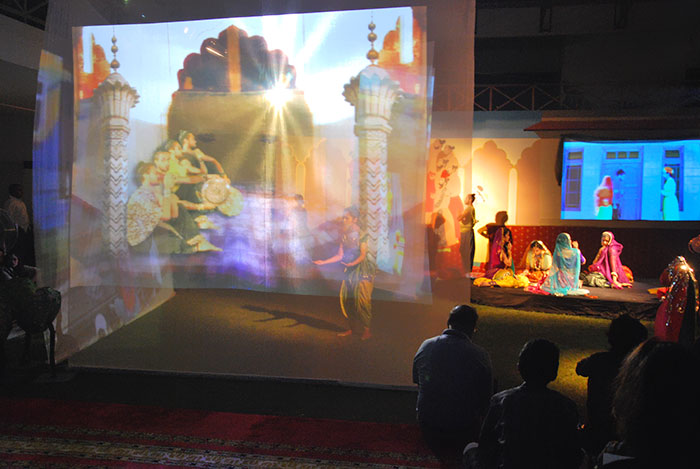
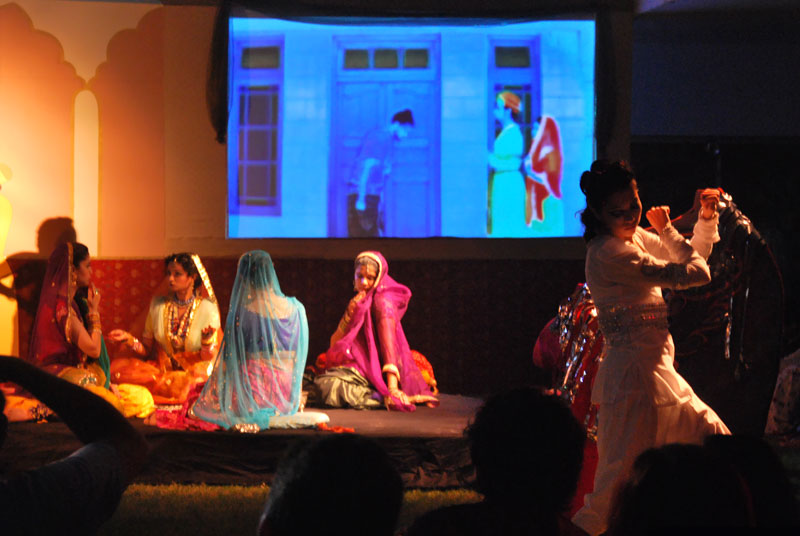
Still from A Feast in Exile Live Performance; Tazeen Qayyum; Karachi, Pakistan; 2009; Performance project. Courtesy the artist
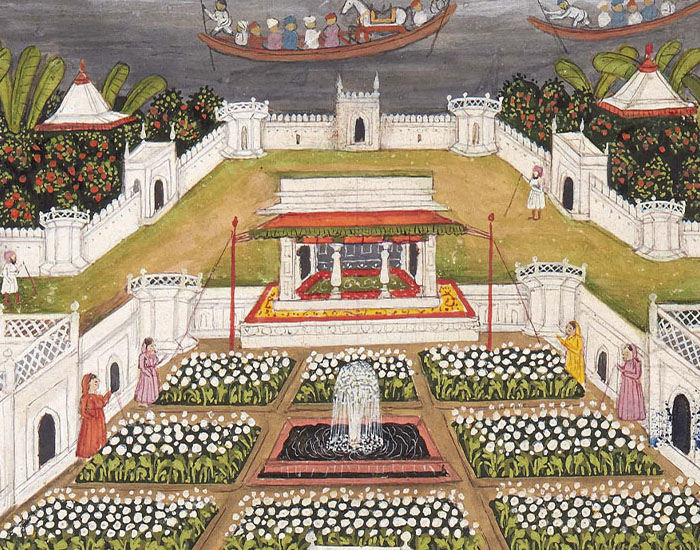
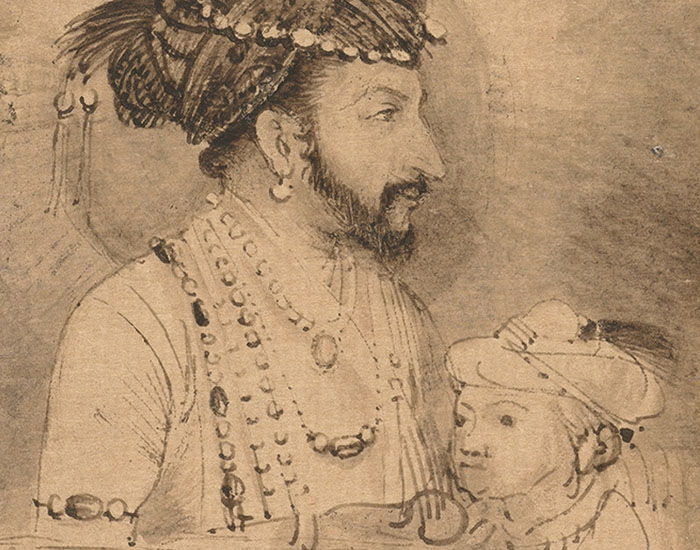
By 1947, miniature traditions, like most indigenous art forms across the subcontinent, were in a state of decay. Skilled artists had been reduced to churning out mass-market ‘baazaar paintings’ to be sold as souvenirs to European expatriates and local urban elite. Deemed ‘unsophisticated,’ and worse, ‘derivative’ by European standards, miniature artists wore the weight of the past. Schools of painting that had developed at courts were highly regulated and hierarchical because they had been shaped by the demands of royal patronage. Add to that, learning the art form itself was a laborious process. Techniques had been passed down, usually father to son, within the families of court painters with an emphasis on replicating the style each lineage was known for.
Therefore, following Partition, Pakistani artists faced a critical question — what to do with these inherited traditions of miniatures? If they were to claim the legacy unconditionally, they risked being labelled as ‘too conservative’ in the face of modern artistic conventions. But to abandon an art form that had been nurtured over centuries was also unthinkable. It would mean severing access to a foundational visual language embedded in cultural memory. No amount of Western modernism could repair that kind of rupture.
It was out of this productive tension that Pakistan’s Neo-Miniature movement took root within one institution: the National College of Arts (NCA) in Lahore. Students of this ‘Lahore School’ would go on to critically reinvent the inherited language of miniatures.
Crafting a New Legacy
For much of the twentieth century, as European modernism swept through Pakistani art circles, miniature painting was widely considered career-limiting. In an atmosphere of near-abandonment in the newly-independent nation-state, the last embers of the art form smouldered in Lahore at the Mayo School of Industrial Arts, later renamed the National College of Arts. Two ageing ustads — Sheikh Shujaullah, who was a descendant of Mughal court painters, and Haji Mohammad Sharif, who had served as the court painter at the Patiala Durbar — had taken up teaching posts at the college. They were inheritors of two distinct lineages of miniature painting. However, their only serious student was Bashir Ahmed, who was dedicated enough to undertake an eight-year apprenticeship under them. This period of study saw Ahmed immerse himself in the mental and physical work of becoming a miniature painter. This ranged from the right posture and mastery of hand-eye coordination to basic skills such as grinding pigments, making a qalam (brush) using squirrel hair, and the preparation of handmade wasli paper.
In 1982, Ahmed formalised this inheritance by establishing the Bachelor’s Degree Programme in Miniature Painting with the help of Zahoor ul Akhlaq, who had become the Head of the Fine Arts Department in 1979. It was the first such college course in the world. Within a decade, this curriculum would place Pakistan at the centre of a global conversation about contemporary art.
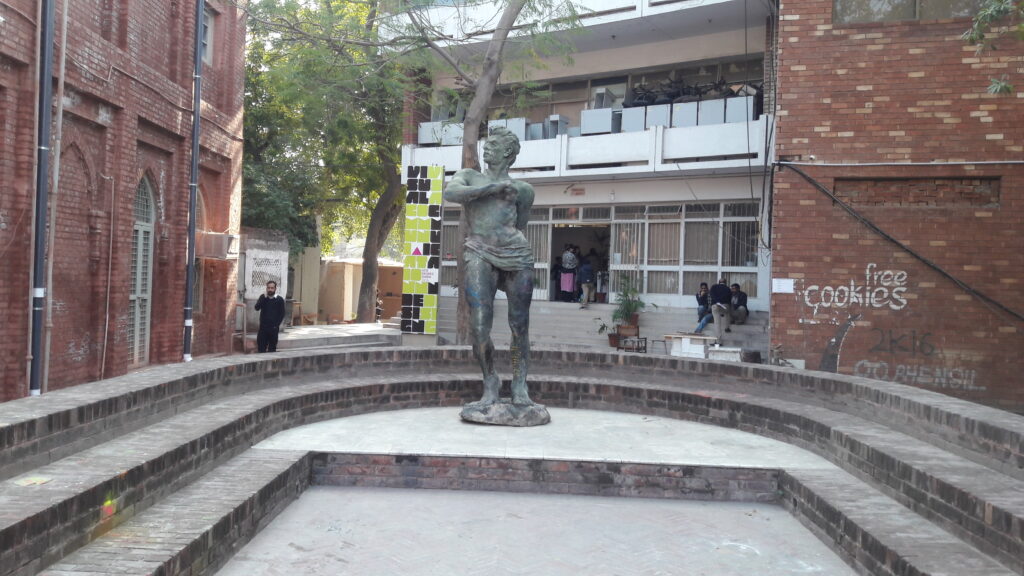
Ahmed’s teaching rested on one foundational insistence: technical submission had to come before conceptual departure. This meant students learnt basic pencil work and inking techniques (sayah qalam) on wasli paper before attempting even a single brushstroke of colour (gad rang). Knowledge was imparted over long stretches of time, patiently. This pedagogical approach created a studio environment that students found transformative because the rigour of classical practice set the stage for creative freedom to be used maturely. Ahmed’s intervention would transform miniature from a dying craft into a living academic discipline at a moment when no other institution in South Asia had the will or the framework to do so.
Across the border in India, miniature traditions would continue to be valued for their decorative continuity instead of critical possibilities for decades. While lineages continued, they were confined to individual master artists or artisan workshops and ateliers. There was no equivalent academic structure or curriculum that asked students to absorb the tradition deeply enough to then argue with it. But at NCA, successive batches of young artists who submitted fully to the process discovered, often slowly, that the visual grammar embedded in the techniques was supple enough to give voice to radical concepts. As Shahzia Sikander, Ahmed’s most consequential student, would later reflect: “Once I understood the rhythm of that process, I realised I was learning a language; it was a way of understanding time, discipline, and attention within image-making.” Many NCA students since, across very different practices, have attested that this foundational knowledge would prove invaluable.
Pioneering Moves
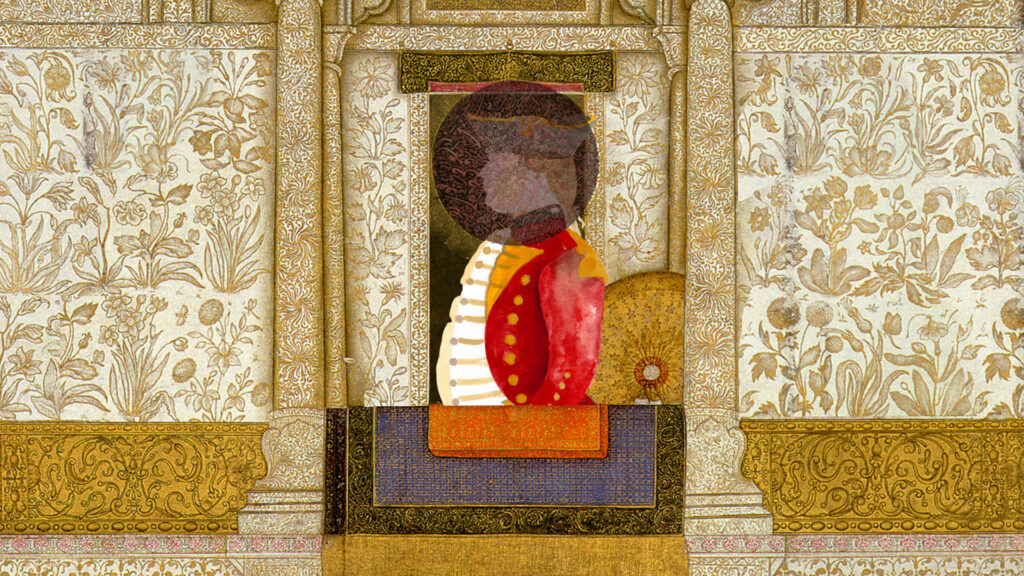
In 1992, Shahzia Sikander became the first woman and the first of Bashir Ahmed’s students, to teach alongside him in the miniature department. By that time, her thesis work The Scroll (1989-91) had already become the Neo-Miniature movement’s founding document. The five-foot-wide, horizontal, manuscript painting depicts contemporary domestic spaces (from Sikander’s childhood home) where ordinary objects are rendered with as much detail and specificity as an ‘exotic’ jade wine cup in a Mughal miniature. Time and space unfold in a series of connected panels in the painting. The Scroll’s autobiographical protagonist, a ghostly figure in white, moves in and out of rooms and scenes of domesticity before finally stepping out of her home’s confines to paint a self-portrait. The work unlocked the ways in which deeply absorbed classical training could be used to depict contemporary lived realities within an art-historical continuum.
When she arrived in the United States in 1993, there was no institutional framework for what Sikander was creating. Pakistani art had no visible presence in Western contemporary art discourse. Despite this cultural gulf, Sikander would forge the terms of an entirely new critical conversation, which was later dubbed ‘Neo-Miniature’. And, for a while, Sikander was the only one representing the entire genre. By the late 1990s, she had extended the tradition into animation and video, demonstrating in practice that the miniature’s non-linear logic, which compressed time and space in simultaneous, multiple frames on one surface, was inherently suited to the fragmented narratives of contemporary art. She opened doors that an entire generation of NCA artists would walk through.
The Radical Era
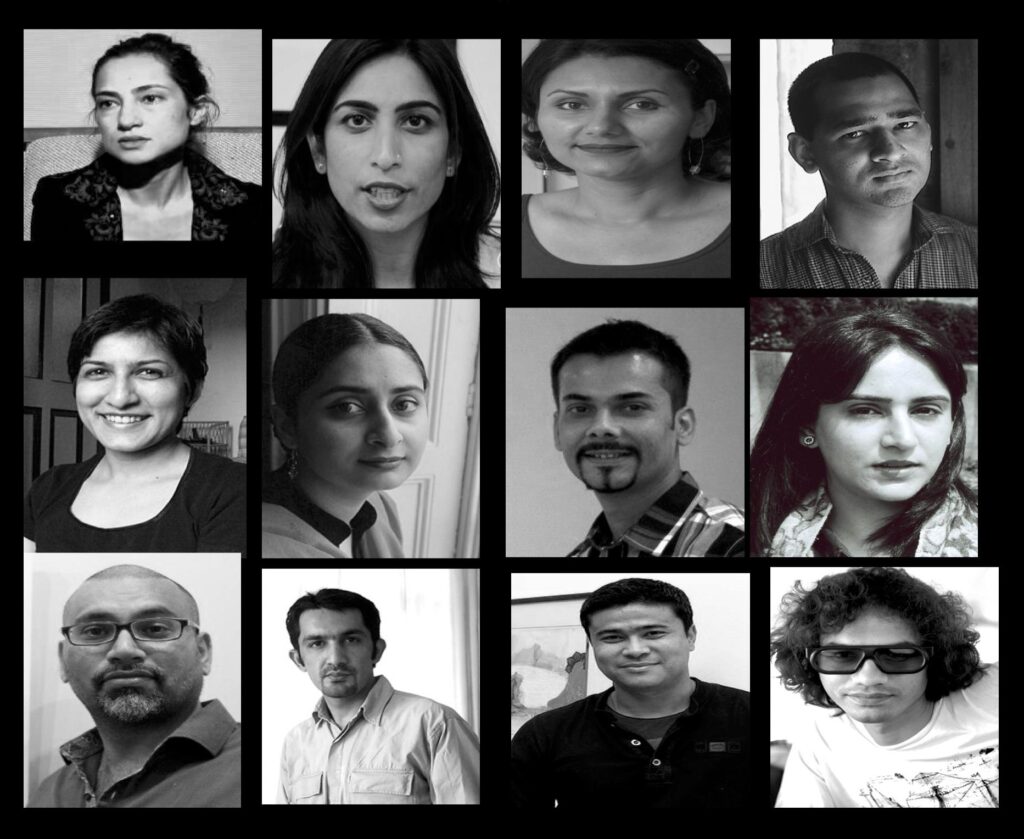
What followed at the NCA through the late 1990s and into the 2000s was nothing short of a quiet revolution. A generation of Pakistani artists who emerged from the institution broke off decisively from inherited conventions. Among them were Imran Qureshi, Ambreen Butt, Talha Rathore, Nusra Latif Qureshi, Aisha Khalid, Waseem Ahmed, Saira Wasim, Ahsan Jamal, Hasnat Mehmood, Khadim Ali, and Muhammad Zeeshan. They were later dubbed the ‘radical’ group by critics. Like Sikander, they too were drawn to the miniature tradition’s extraordinary richness that offered a uniquely Pakistani language to ask questions about their social and political realities. Their experiments would eventually pay off and bring renewed global interest in the layered visual vocabulary of the medieval art form.
Imran Qureshi exemplified this radical streak most visibly by pushing the miniature’s logic beyond the two-dimensional constraints of wasli paper. His large-scale works spread miniature motifs across floors and walls and turned the viewer from an observer into a figure moving within the composition. The miniature form, which had historically been held close and read slowly, would transform into a space to be inhabited. Qureshi demonstrated that the miniature painting was not limited to its characteristic visual surface. It had the flexibility to be scaled and reoriented without losing the discipline at its core. It was within this expanded context that three NCA alumni in particular — Tazeen Qayyum, Saira Wasim, and Sumaira Tazeen — carved out singular territories of their own.
Three Voices, One Inheritance
The multidisciplinary Pakistani-Canadian artist Tazeen Qayyum is one of the most formally adventurous practitioners who has emerged from NCA. She credits her rigorous training in miniature painting as the foundation that gave her the grounding to explore other mediums, such as video installations and performance art.
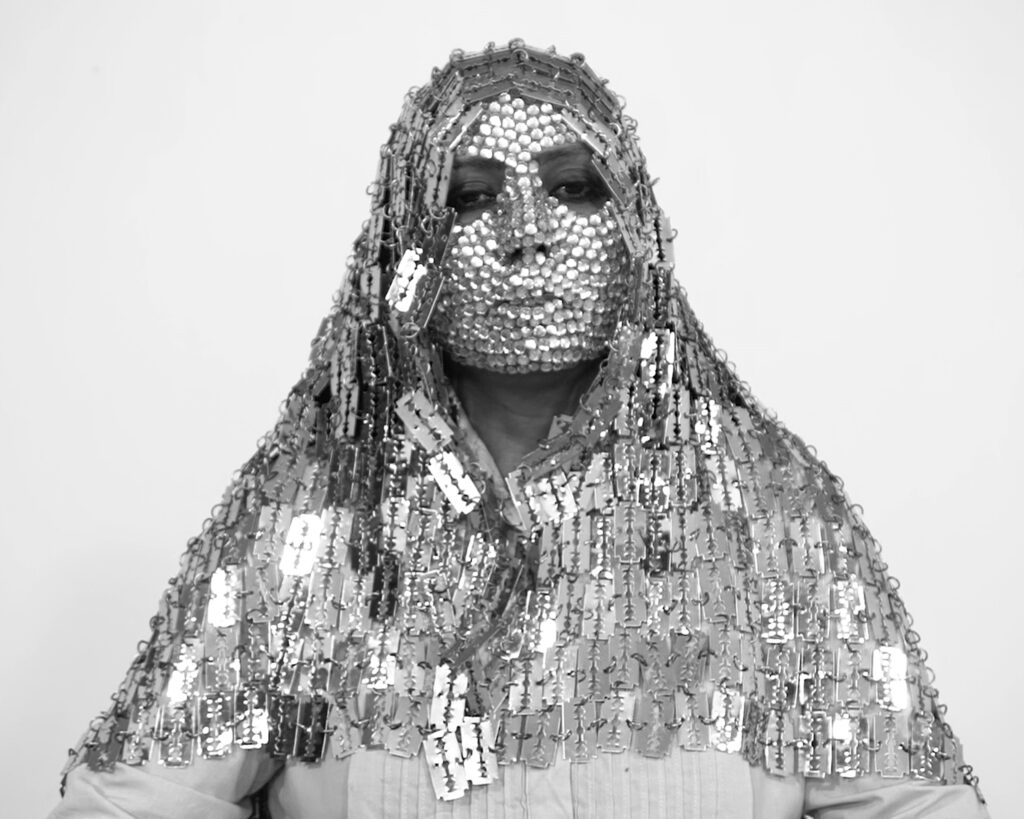
Her practice has evolved through increasingly radical material interventions — from creating box frames that turned wasli into three-dimensional objects to pasted strands of her own hair. Each rupture she has engineered is also an extension of the tradition’s obsessive attentiveness to surface details.
Her 2009 live performance, A Feast in Exile, in Karachi brought an eighteenth-century Kangra miniature to life as a tableau vivant. The selected painting at the centre of Qayyum’s work was The Pandavas in Drupad’s Court that depicts the Pandavas taking leave of their host, King Drupad, having revealed themselves at the end of their 12-year exile. The choice of painting was a subtle commentary on Pakistan’s political conditions at the time.
The work emerged during a teaching residency hosted by the Vasl Artists’ Collective at the Indus Valley School of Art and Architecture. Created by students and directed by Tazeen Qayyum and her artist-husband, Faisal Anwar, the final piece can be ‘read’ as a contemporary artistic collaboration. But the process of creation could also be compared to the classical Mughal karkhana model with Qayyum and Anwar spending four weeks with the students recreating a historical painting with the figures of the composition breathing, moving, and occupying the same space as a contemporary audience.
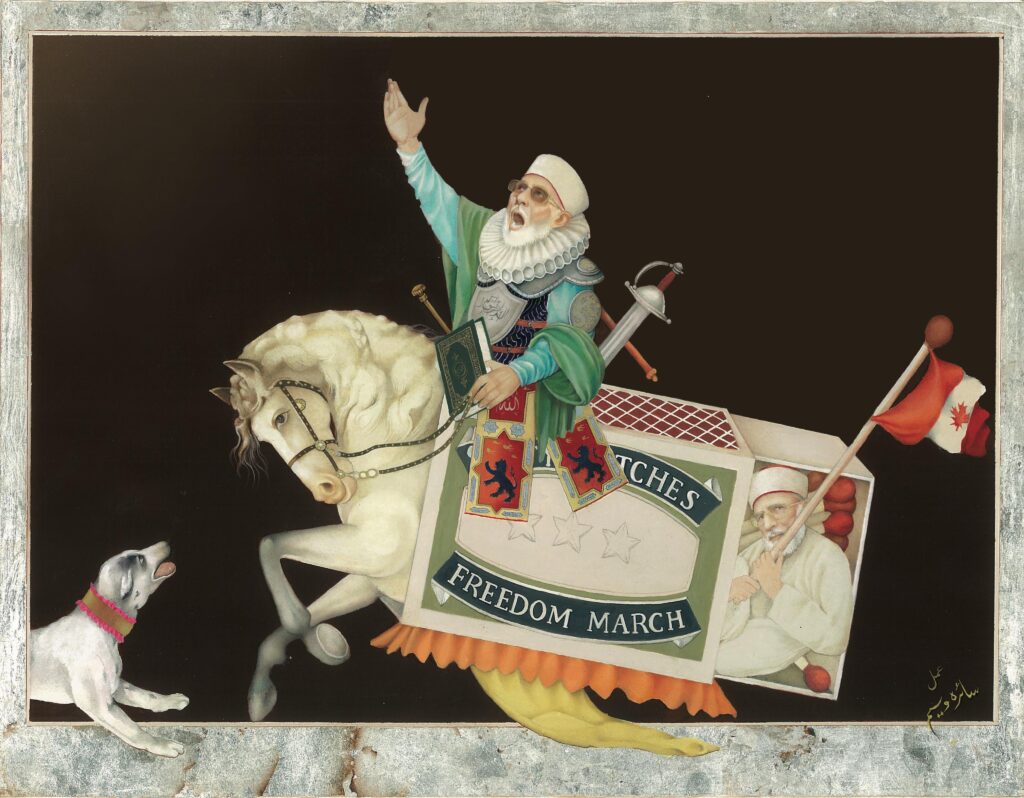
In contrast to Qayyum and Qureshi, US-based Saira Wasim has limited her creations to wasli paper, sometimes only ten or fifteen inches in dimension. She has however wielded the immense historical weight and expressive force of the miniature’s portraiture tradition with a satirist’s instinct. In her work, Wasim typically critiques all forms of extremism — both Eastern fundamentalism as well as Western imperialism.
For instance, in Divine Comedy of Errors II (2013), she translates the heroic grammar of French Neoclassicism into a Pakistani political context to provide commentary on Dr Tahir-ul-Qadri’s 2012 dharna. In the composition, Qadri appears twice — once as a carefully staged saviour, and, in the second instance, as a tiny comic figure concealed inside a matchbox. This doubling exposes how Qadri’s Urdu rhetoric was aligned with religious conservatism, while his English-speaking self enacted progressive moderation. Wasim offers hints rather than a complete answer, leaving space for curiosity about the socio-political realities that the subjects evoke.
In addition to material experiments, the Neo-Miniature movement has also fundamentally altered whose voice is heard as its most influential artists have been women, starting with Sikander who set the ball rolling. Continuing along that same trajectory is Canada-based Sumaira Tazeen who has built on the body of Neo-Miniature work exploring the culture of patriarchy.
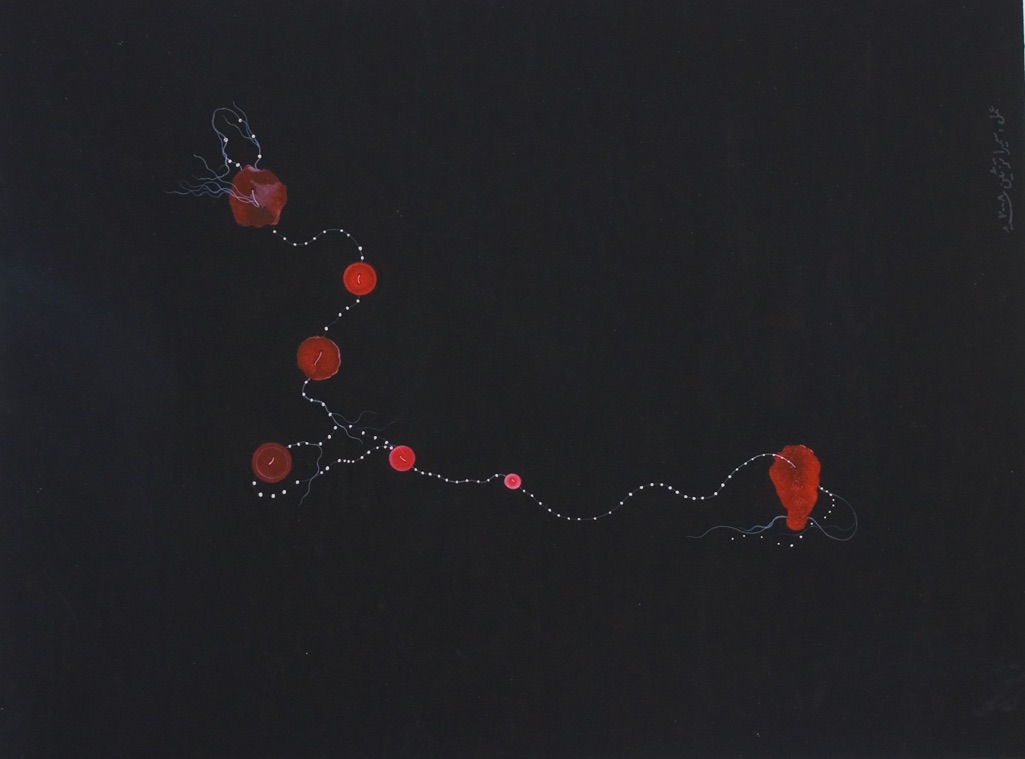
Tazeen grew up surrounded by stitch craft and embroidery before her miniature training gave her the critical framework to interrogate both traditions simultaneously. She recognised how the meticulous technique of pardakht — delicate rendering through countless fine brushstrokes — mirrors the repetitive stitches of embroidery. Both require precision and slow meditative engagement. In the past, however, miniatures were created only by male artists as the tradition historically developed within royal ateliers. In contrast, embroidery is ‘women’s work’, long associated with unpaid domestic labour — present everywhere and valued nowhere.
In her work Moti Tanka (2008), Tazeen orchestrated a direct conversation between these two traditions. Working on wasli, she used the fine brushwork of the miniature technique to depict French knots and thread, so that the two forms of making were inseparable. She also experimented with stitch crafts in some of her other Neo-Miniature pieces during this time period. The hierarchies between the two artistic traditions collapsed in her works because of their shared devotion to meticulous artistry. By placing both alongside each other, the artist also drew attention to how differently this devotion has been recognised. The quietly devastating argument reveals itself once the viewer looks closely in the manner that the miniature tradition itself demands. Tazeen explains that she intuitively connected the delicacy of thread with embroidery and female labour, while associating buttons — used to fasten and hold things together — with masculinity. In the past, Tazeen has referenced her personal history of facing domestic abuse within marriage, and continues to critique repressive cultural norms in her more recent work using representational imagery from old miniature paintings and through stitch craft.
Taken together, the works of all three artists exhibit critical thinking conducted through an inherited form. Their works are a collective testament to what Pakistan’s Neo-Miniature tradition has achieved in recent years.
Future Stakes
Neo-Miniature’s reception in mature art markets was shaped by a convergence of exhibition culture and institutional collecting. At prominent art events and biennales, such as Documenta, Venice, Art Basel, and Sharjah, Neo-Miniature pieces fell in the category of post-colonial art as well as being part of discourses about migration and the archive. Not-for-profit art foundations and academic institutions have introduced the larger public to the genre through exhibitions and specific commissions. Neo-Miniature pieces have also been featured in museum collections, such as the ones at the British Museum (UK), Royal Ontario Museum (Canada), and the Metropolitan Museum (USA), among others.
Most established NCA alumni now have representation through North American or European galleries with private collectors showing interest in the genre. In addition to Western art spaces, NCA artists also have a significant presence in Asia’s art circuit through institutions such as the Sharjah Art Foundation (UAE) and the National Museum of Qatar (Qatar) and events like the Dhaka Art Summit (Bangladesh), Singapore Biennale, Islamic Arts Biennale (Saudi Arabia), Gwangju Biennale (South Korea), and the Kochi-Muziris Biennale (India), in addition to the art platforms within Pakistan.
However, while the genre has carved a niche for itself, its future lies in continuing to push the boundaries of the miniature tradition but in ways that are meaningful rather than gimmicky. Unlike other art movements, Pakistani artists are still at the centre of conversations about Neo-Miniature as its originators, and hopefully, those from the Lahore School will continue to be the genre’s most rigorous practitioners.
First published: May 29, 2026