-
ChicagoLee, Macy Castañeda. "Islands Apart: Archipelagic Art and Organising in Southeast Asia." Impart Perspectives, October 27, 2026. https://imp-art.org/perspectives/dispatches/archipelagic-art-and-organising-in-southeast-asia/
-
MLALee, Macy Castañeda. "Islands Apart: Archipelagic Art and Organising in Southeast Asia." Impart Perspectives, Oct. 27, 2026, https://imp-art.org/perspectives/dispatches/archipelagic-art-and-organising-in-southeast-asia/. Accessed 31 Oct 2026.
-
HarvardLee, M.C. (2026) Islands Apart: Archipelagic Art and Organising in Southeast Asia, Impart Perspectives. Available at: https://imp-art.org/perspectives/dispatches/archipelagic-art-and-organising-in-southeast-asia/ (Accessed: 31 October 2026).
Islands Apart: Archipelagic Art and Organising in Southeast Asia
Centralised forms of art organising prioritises land-based locations and networks, which clashes profoundly with the indigenous cultures of archipelagic peoples.
By Macy Castañeda Lee
Link copied!
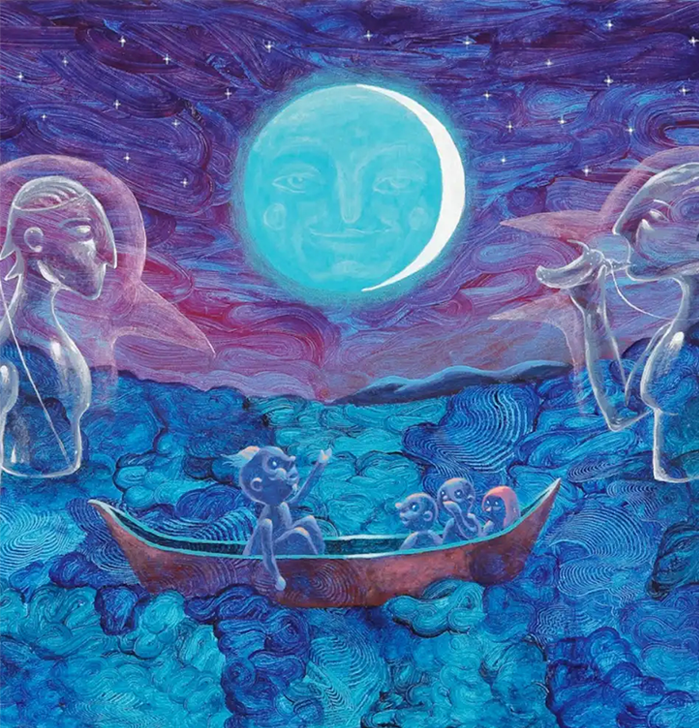
Conjunctions; Sergio Bumatay III; Philippines; 2017; Acrylic on canvas. Courtesy Center for Art New Ventures & Sustainable Development and Google Arts & Culture
Look at a map of the Philippines or Indonesia and the instinct is to see fragments. Thousands of islands scattered across open water, held together only by borders drawn on paper. It’s a colonial way of seeing; land as the only unit that counts and water as the space between the parts that matter. But this isn’t how archipelagic peoples have historically understood themselves, and rethinking this context is key to understanding what archipelagic art and organising actually mean.
In the pre-colonial Philippines, communities lived on moving boats, and identity was not built around fixed land-based locations. Instead, it revolved around seafaring relationships, trade routes, and shared fishing grounds. Even language carries this memory in Filipino culture. Tagalog descends from taga-ilog, ‘people of the river’, and Kapampangan from pampang, ‘riverbank’. The water was never the gap. It was always the foundation. Indonesia offers a parallel framework in adat, where indigenous domain runs seamlessly from mountain forest to coastal reef to open sea. A proverb from Pantar Island puts the same idea plainly that yams come down from the mountains, fish come up from the sea. In the Maluku islands, the traditional practices of sasi treat land and sea as a single, shared resource.
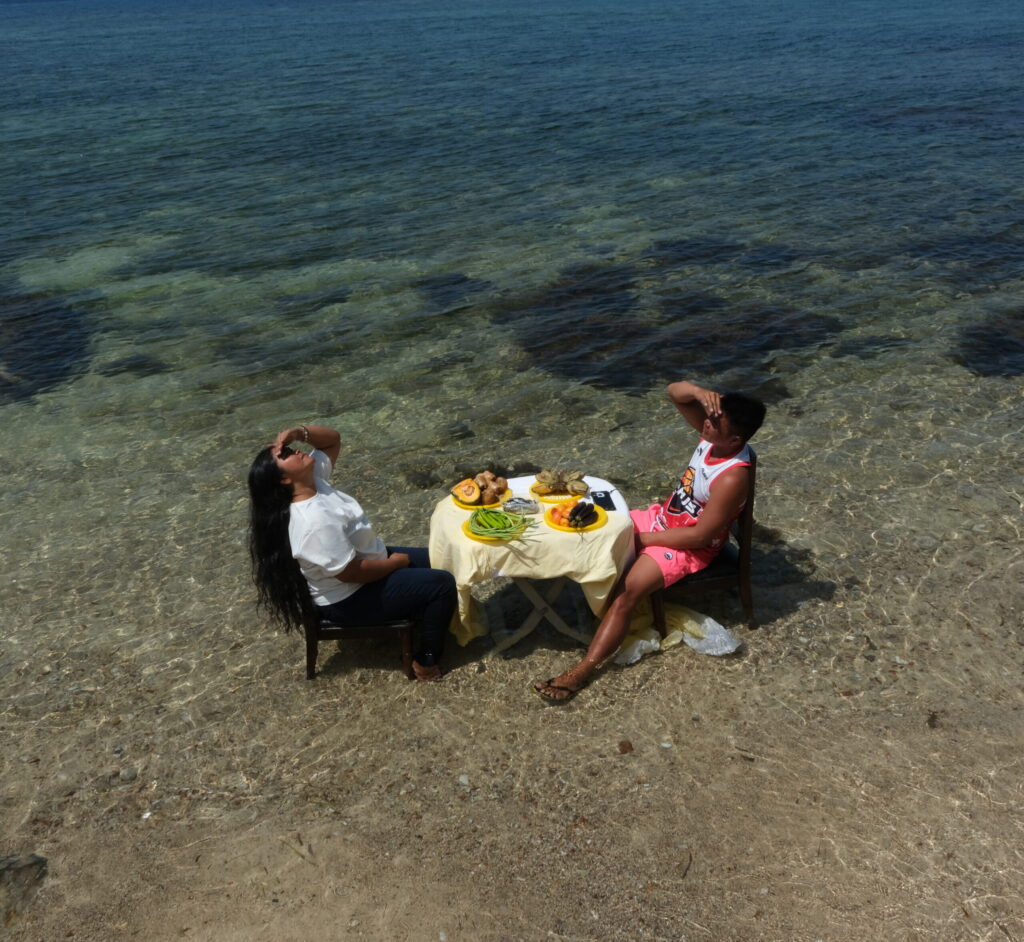
This complexity plays out island by island, even within one country. Kaleb Sitompul, the program manager at FOTO Bali, points to his hometown of Medan in North Sumatra, shaped by generations of Malay, Acehnese, Tamil, and Chinese communities who arrived through trade and gradually became part of the population. Travel east to Makassar, he notes, and the picture shifts toward “maritime culture, kingdoms, and clan structures.” For Sitompul, this is the point: archipelagic art “is not formed by one single identity. It comes from complexity and constant negotiation between people, place, history, and the environment.”
Beyond cultural inheritance, this maritime culture is an active theoretical framework. Writing on the Victoria & Albert (V&A) Museum’s photography archive, researcher Amarnath Praful draws on “Ocean as Method” to argue that any line of inquiry in the context of the oceans rather than land, disrupts our established notions around direction, periphery, centre, and terrestriality. Applied to art-organising, the implication is that all forms of ordering that require centralisation prioritises globally-dominant, land-based locations and networks, and this clashes profoundly with the indigenous culture of the archipelagic peoples.
The stakes of getting this wrong are real, and Sitompul has lived them firsthand. Even though his hometown Medan had a vibrant art scene, it stayed mostly buried — surfacing in the public eye only during official ceremonies. Real access for him only opened once he left for Jakarta. It was the quiet cost of centralisation. “When I was growing up in Medan, art felt centralised, something meant only for a specific demographic tied to a few key locations,” he says.
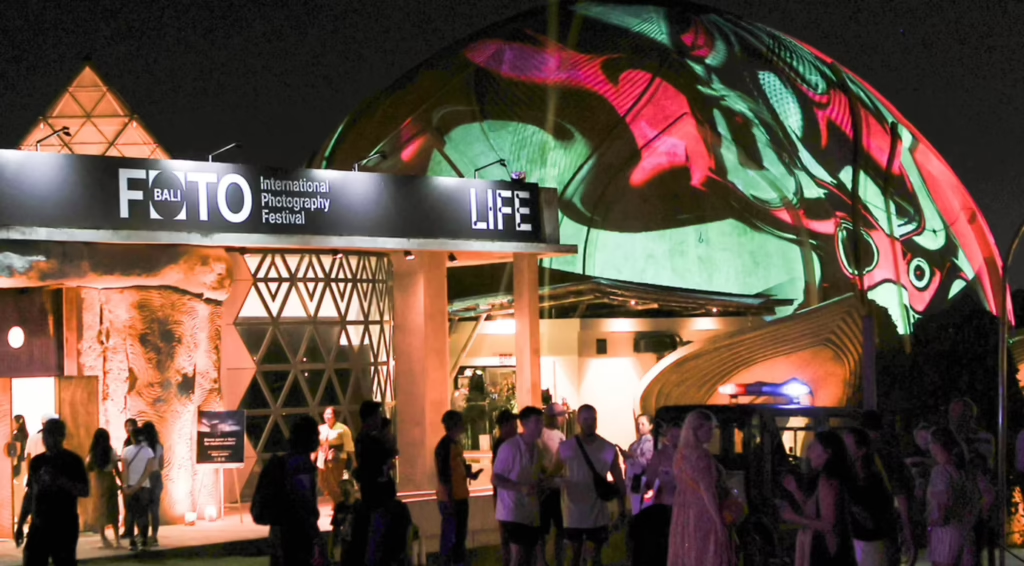
But art never disappears — it just stays invisible until someone ‘discovers’ it. There is no shortage of art being made across archipelagic countries. If anything, there’s a vast repertoire that goes unnoticed by the global art world, split between the few known art circuits cross-crossing capital cities. The problem lies in who keeps getting chosen to represent countries of Maritime Southeast Asia — why is it that editors, curators, and juries keep returning to the same names in the same cities because it’s familiar? Sitompul frames the alternative simply: “the more time we spend listening, learning, and making space for these different voices, the richer it [the art landscape] becomes.”
The process of decentralisation is, encouragingly, already underway. In the Philippines, Sachet Projects runs projects across Manila as well as the Visayas region. Many emerging Filipino curators and artists work across different mediums, events, and locations. There is Bea Mariano, whose latest and notable project is Dekada Ng Sama-Samang Pag-alala — a multi-site, multi-disciplinary exhibition that brings home the horrors of the decade-long ‘war on drugs’, giving voice to its victims across the Philippines. Alain Zedrick Camiling writing on the country’s art landscape points to the budding activity outside the Metro Manilla region, be it through art fairs such as Visayas Art Fair, or exhibitions like the ones FotomotoPH organises or the work of projects like Load na Dito. There are also artist residencies, such as the Icarus Island Residency, founded by Dennis Valdes, offering funded opportunities outside the usual capital-city circuit. Curator Mayumi Hirano and artist Mark Salvatus, who co-founded Load na Dito in 2016 as a “mobile” art and research project, in their interview to Camiling, speak about how the joint efforts of arts and cultural workers have led to a loosely structured art ecosystem that shapes “a sense of cohesion beyond social positions, affiliations, ideological inclinations, and geographical locations” in Philippines.
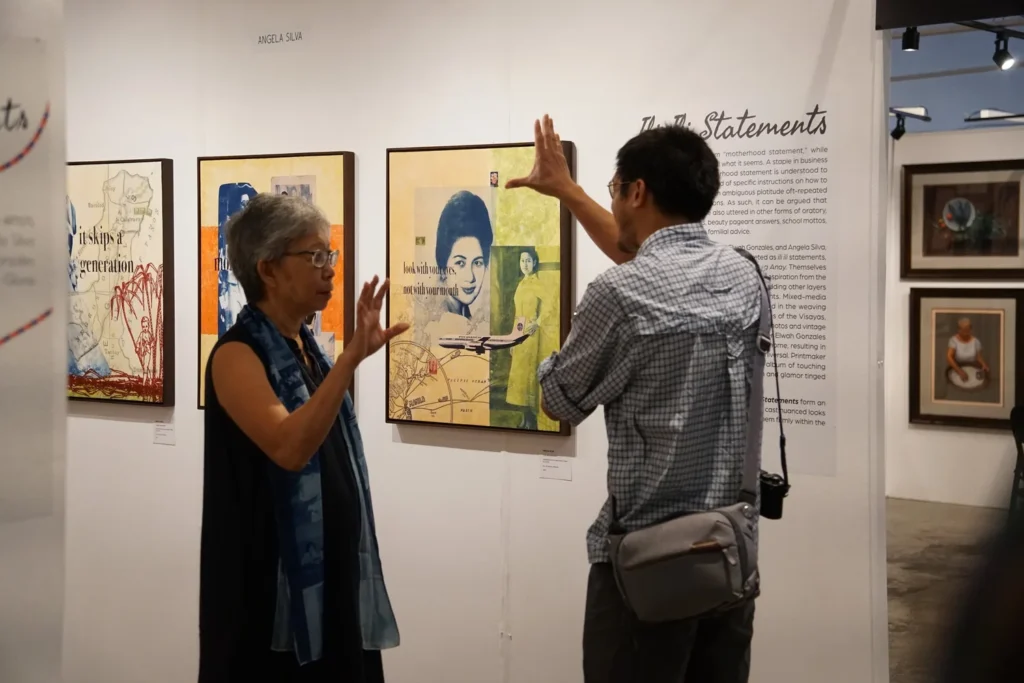
In Indonesia, Foto Bali and Jakarta’s JIP Fest, co-curated by Chelsea Chua and Yoppy Pitter, are building photography infrastructure beyond a single hub. For Chua, the motivation is extremely relational. “Curating and organising is a relational activity to me. I thrive on how my friendships and associations with individual practitioners and like-minded organisations offer camaraderie, mutual support, and inspiration to continue.”
Organising is itself a creative and logistical practice, not just scaffolding for “real” art and Chua is candid about its cost. “The biggest struggle is finding the capacity to be still, and not feel compelled to work all the time,” she says, citing limited resources and an inability to set boundaries for herself, even as she sets clear ones for her team. Sitompul describes a parallel reality, where funding remains scarce and artists often face more immediate questions of survival first. What emerges instead, he calls siasat — ways of navigating the waters with what you have — such as turning cafés into temporary galleries, partnering with businesses to bring in funds, and pooling community resources. “Every region has its own problems, and therefore its own siasat,” he says. “Indonesia is simply too vast for one model to work everywhere.”
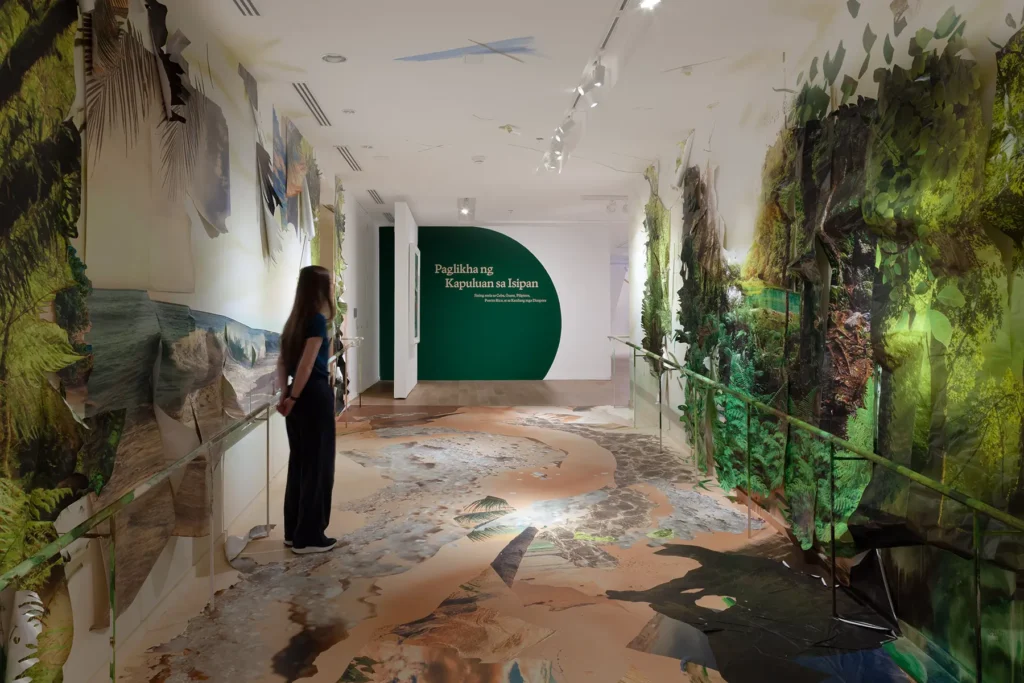
Scaling up this kind of thinking when it comes to organising matters too. A Filipino artist is also a Southeast Asian artist — part of a wider regional community where supportive connections can be nurtured, mimicking how island communities have always leaned on each other across waters. Pacific scholar Epeli Hauʻofa describes this kind of interdependence as a “sea of islands,” where the ocean connects rather than isolates. Curator Jessamine Batario put that into practice with Imagining an Archipelago, bringing together artists and diasporas from Cuba, Guam, and the Philippines. Not everyone frames this as a matter of geography, though. Chua is careful here. “I am not convinced that the ways that we organise can be so neatly differentiated in geographical terms.” What binds her collaborators isn’t proximity so much as “similar affinities and aspirations in wanting to build a community of image-makers and visual storytellers.”
Here is a challenge — looking at Asia itself as an archipelago, one of the largest, most interconnected networks of art and resistance movements in the world, its strength never dependent on proximity. Chua points to a recent example of what that resistance looks like in practice — her participation in PhotoKTM’s Assembly programme, where organisers built “a safe environment for us to explore issues of gathering and practicing solidarity.” That kind of resistance rarely announces itself. It starts, she says, with “figuring out what communities matter to you” with active listening and relationship-building, done slowly.
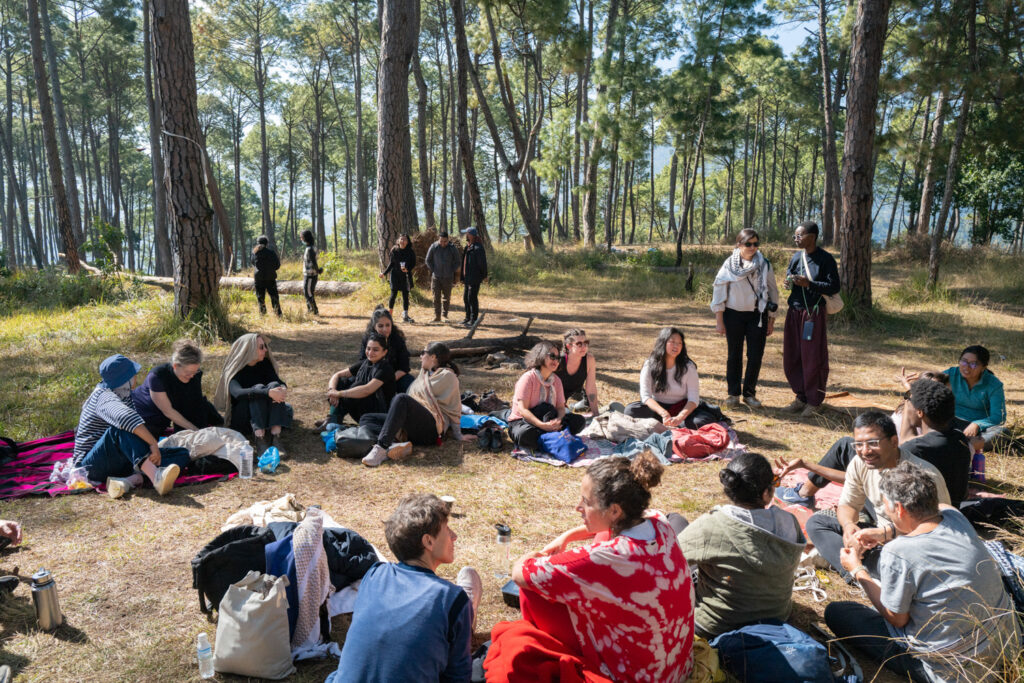
That shift doesn’t happen by theorising about it. It happens in the doing — in each residency launched, each collective formed, each artist chosen who wouldn’t have been chosen before. Sitompul frames this as continuity. “If the sea changes, livelihoods change. When livelihoods change, communities change… Everything is connected; nothing really stands on its own.” Chua puts it more simply that “there is no question that we are connected to everything and each other.” Seeing Asia and indeed the world as an archipelago, in the end, might be as straightforward as remembering that old oceans shaped new lands.
First published: October 27, 2026