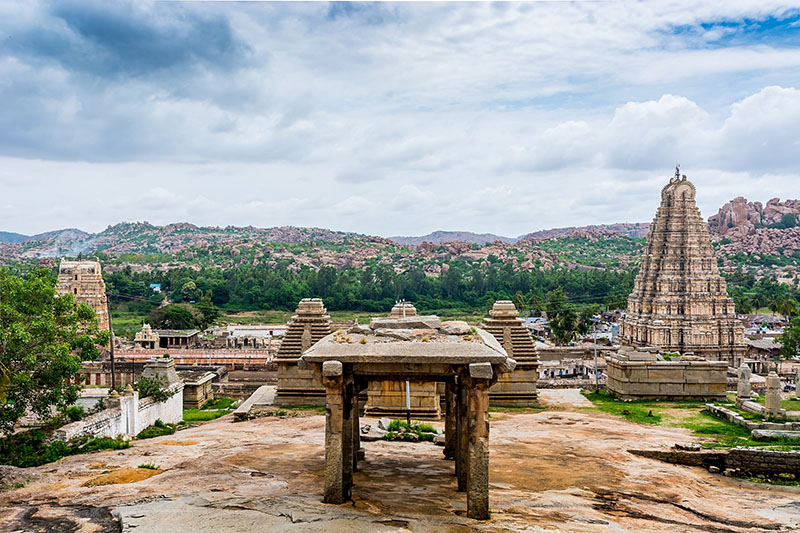
A form of Shiva, he was the tutelary deity of the Vijayanagara empire (1336–1646 CE). Within Hindu mythology, he is believed to have married Pampadevi, a local deity worshipped in Vijayanagara, and incorporated her and her followers into the religion.
More Definitions
Hinayana
A term coined by the Mahayana Buddhist tradition to denote followers of the contrasting, more orthodox school of Buddhism. Literally…
Kankaladhara
A form of the Hindu deity, Shiva, in which he is shown with a kankala-danda (a staff bearing the bones…
Adipurana
A Sanskrit poem on the life of Rishabnath, the first Tirthankara of Jainism and his sons Bharata and Bahubali. It…
Samavasarana
In Jain theology, it is a heavenly pavilion built by the gods for a Tirthankara’s (enlightened spiritual teacher) sermon after…
Gelugpa
A Tibetan Buddhist monastic order, founded by Je Tsongkhapa in the early fifteenth century. Tsongkhapa along with his disciples founded…
Shaivism
One of the largest and oldest sects of Hinduism, with Shiva and his consort Shakti as the supreme deities —…
Bodhisattva
Within the Mahayana tradition of the Buddhist faith, it refers to any figure who has renounced society and is on…
Ganas
In Hindu mythology, they are attendants of Shiva who live with him on Mount Kailasa. They are usually depicted alongside…