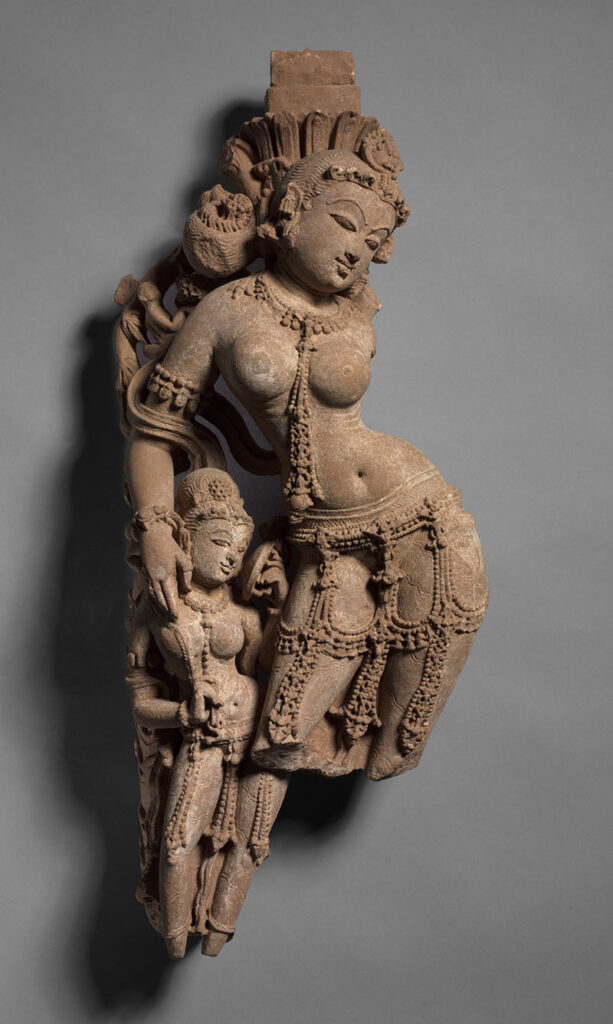
A prominent feature of Indian sculpture, it depicts a female deity with stylised and sometimes exaggerated feminine features, elaborate hairstyles and jewellery shown holding the branch of a tree, usually the sala tree, or standing near one. It is believed to have emerged from ancient Indian tree deities and signifying fertility. According to the Buddhist text Avadanasataka, the festival of salabhanjika parva was celebrated to mark the flowering of the sala tree. From the Sanskrit, meaning “breaking the branch of a sala tree”.
More Definitions
Bhudevi
A deity personifying the earth. She is also known as Bhumi Devi and is considered an incarnation of Mahalakshmi. She…
Bhaisajyaguru
Also known as the Medicine Buddha, he is the Buddha of healing and medicine in Mahayana Buddhism and is believed…
Kurma
Literally meaning "tortoise" in Sanskrit, it is second of the dashavatara or ten incarnations the Hindu deity Vishnu, wherein he…
matrika
Any of a group of mother goddesses (matrika, Sanskrit, ‘divine mother’) mainly in Hinduism, especially in Shakta and Shaiva cults;…
Theravada Buddhism
Meaning the "Way of Elders" in Pali, it is the major Buddhist sect in Sri Lanka, Laos, Myanmar and Cambodia.…
Adipurana
A Sanskrit poem on the life of Rishabnath, the first Tirthankara of Jainism and his sons Bharata and Bahubali. It…
Jataka
A large collection of approximately 550 stories about the Buddha’s former lives in both human and animal form. The stories…
Tenjur
A sacred text belonging to the Tibetan Buddhist canon, comprising commentaries, treatises and a collection of abhidharma (ancient Buddhist texts).…