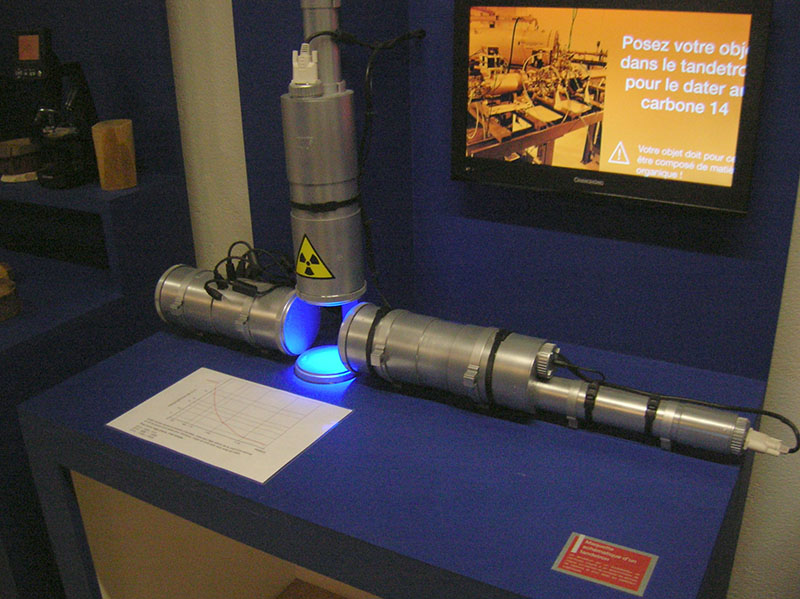
A method of determining the objective age of carbon-based materials by measuring the amount of carbon-14, formed when the nitrogen of radiocarbon decays, against an internationally used standard reference. William F Libby is credited with developing the method in 1946. It is used widely in disciplines such as archaeology and other natural sciences to determine the age of biological specimens and artefacts.
More Definitions
Linocut
A printmaking process in which a design is carved in relief on a sheet of linoleum, then inked. The sheet…
Selvedge
The edge of a fabric that does not require additional finishing work and prevents the textile from fraying and unravelling.…
Offset Oleography
A process of producing multicoloured prints using the offset technique. The inked image is printed on a rubber cylinder, then…
Stippling
A painting and drawing technique where a pattern of dots is used to produce the effect of shading.
Assemblage
Art made by assembling disparate elements from everyday or found objects. Assemblages are often associated with movements such as Dadaism,…
Schiffli
A multi-thread machine used to create machine embroidery and lace, invented in 1893 by Swiss inventor Isaak Grobli. The term…
Plain Weave
Also known as tabby weave, it is the most common weave in textiles. In this weave, each weft yarn passes…
Chain Stitch
A decorative embroidery technique in which the stitch consists of consecutive, interconnected loops that resemble the links of a chain.…