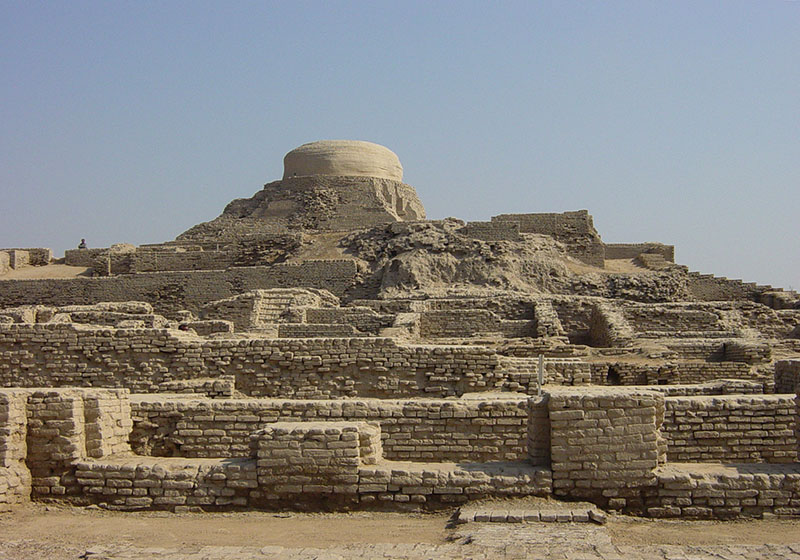
The mature period of the Indus Valley Civilisation that lasted from 2600–1900 BCE and was preceded by the Early Harappan Phase and followed by the Late Harappan Phase. The period is marked by sculptures, seals, jewellery, pottery and human figurines made using bronze, terracotta and gold in large urban centres such as Mohenjo-daro, Harappa and Lothal.
More Definitions
Harappa Museum, Punjab
A museum in Punjab, Pakistan, that houses artefacts from the Indus Valley Civilisation. The museum was established in 1926 and…
Vedic Period
The period between the late Bronze Age and the early Iron Age in the northern portion of the Indian subcontinent,…
Radiocarbon Dating
A method of determining the objective age of carbon-based materials by measuring the amount of carbon-14, formed when the nitrogen…
Upper Palaeolithic Period
The final stage of the Palaeolithic period, lasting from roughly fifty thousand to twelve thousand years ago. This period was…
Neolithic Period
The period succeeding the Paleolithic and the Mesolithic periods, dated from approximately 10,000–4,500 BCE. Also known as the New Stone…
Petroglyph
A form of prehistoric art created by engraving images onto rock surfaces. Petroglyphs are created by scraping away the outer…
Late Harappan Phase
The last phase of the Indus Valley Civilisation that lasted from c. 1900 to 1300 BCE and was preceded by…
Taxila
An archaeological site in present-day Rawalpindi, Pakistan. Founded c. 1000 BCE, the site was located along trade routes between Central…