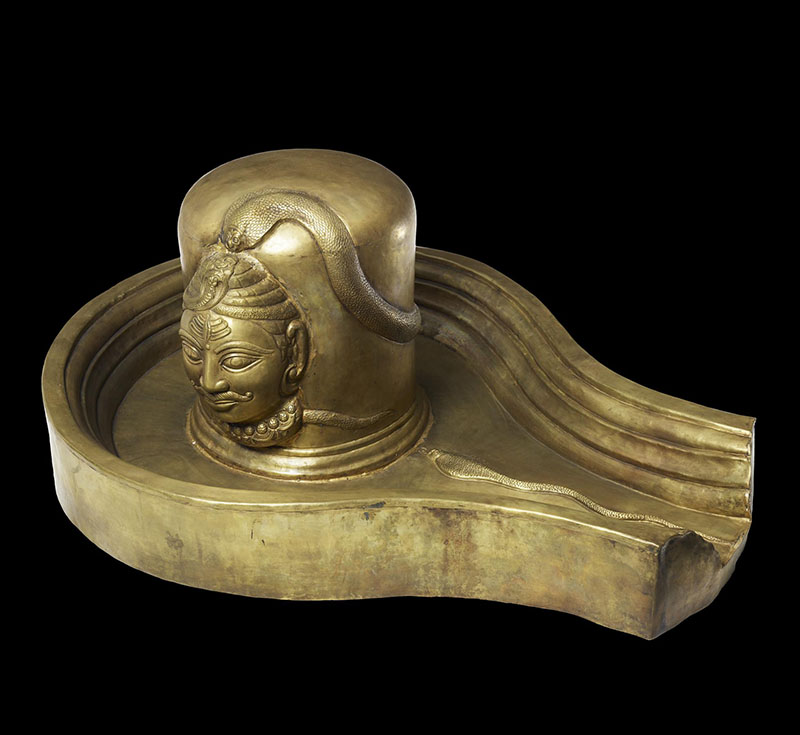
The disc-shaped pedestal upon which a linga, the aniconic form of the deity Shiva, is mounted within the garbhagriha or inner sanctum in Hindu temple architecture. Some instances of square lingapithams have also been found. The word is sometimes also used to refer to the entire form including the linga and its base.
More Definitions
Pindika
Sanskrit for 'stool' or 'pedestal', it is the platform on which idols are installed in the garbhagriha or innermost sanctum…
Ionic Style
One of the three canonical orders of Western Classical architecture, it originated in the mid-sixth century in Ionia (present-day Turkey).…
High Relief
Also known as alto-relievo, it is a technique of relief sculpting where the image projects significantly from the ground. The…
After-Cast
The process of making a cast using a mould taken from a finished sculpture. In sculpture, casting refers to the…
Entablature
A horizontal band resting on pillar capitals, they are divided into three parts — the architrave (the bottom), the frieze…
European Realism
A movement originating in France in the 1840s, which rejected then-prevalent ideals of Romanticism in French art and literature in…
Linga-Pitham
The round, disc-shaped pedestal on which a linga is traditionally mounted. However, some linga sculptures with square-shaped pedestals have also…
Earthwork
Art that is made by shaping or making forms on land or by using natural materials such as grass, rocks…