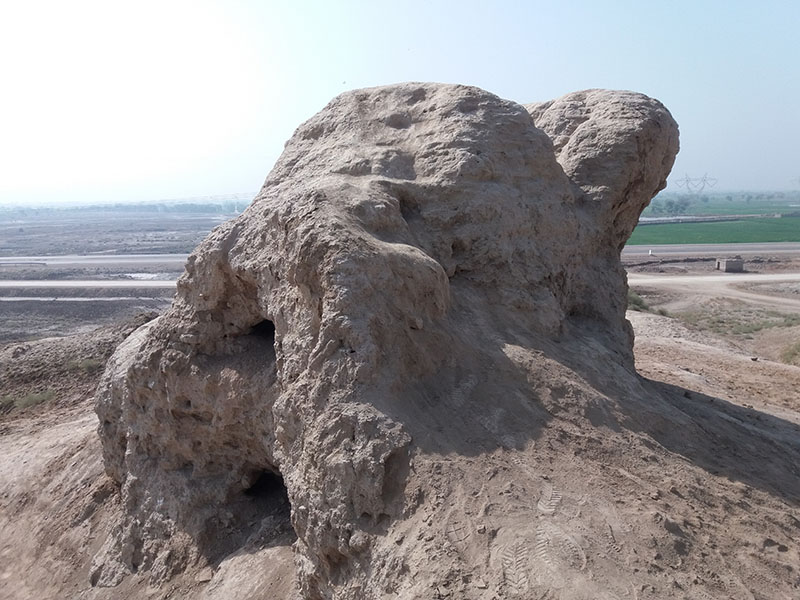
The last phase of the Indus Valley Civilisation that lasted from c. 1900 to 1300 BCE and was preceded by the Early Harappan Phase (c. 3300–2600 BCE) and Mature Harappan Phase (c. 2600–1900 BCE). The period marks the gradual decline of the civilisation, with a breakdown of urban centres and the establishment of rural networks. Towards the end of the phase, most post-urban sites were abandoned. Important sites from this phase include Jhukar in Sindh and Rangpur in Gujarat.
More Definitions
Tube Drill
A technology for drilling developed during the Mature Phase (c. 2600–1900 BCE) of the Indus Valley Civilisation. It was made…
FO Oertel
Friedrich Oscar Oertel (b.1862; d.1942) was a German engineer and archaeologist best known for his excavations at Sarnath in 1904–05,…
Upper Palaeolithic Period
The final stage of the Palaeolithic period, lasting from roughly fifty thousand to twelve thousand years ago. This period was…
Bronze Age
A prehistoric period characterised by the production and use of bronze as well as signs of urbanisation. Its commencement varies…
National Monument
Also termed Monument of National Importance, this is a designation conferred by the Archaeological Survey of India to an ancient…
Indus Valley Civilisation
A Bronze Age civilisation located along the basin of the Indus river, in the northwestern regions of South Asia comprising…
Mesolithic Period
The period between Upper Paleolithic and Neolithic periods, characterised by the presence of material culture, including pottery and cave art,…
Harappa Museum, Punjab
A museum in Punjab, Pakistan, that houses artefacts from the Indus Valley Civilisation. The museum was established in 1926 and…