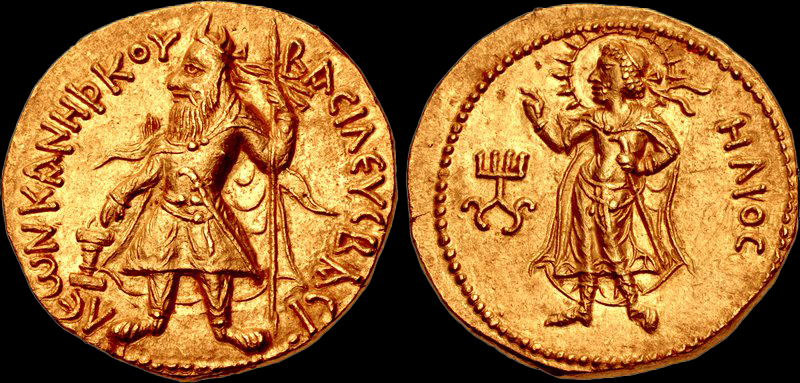
A syncretic empire founded in the Bactrian region of central Asia around the first century CE, it spread to Uzbekistan, Afghanistan and parts of the Indian subcontinent, stretching as far as present-day Varanasi, Uttar Pradesh. The empire’s rulers, who were great patrons of Buddhism and Zoroastrianism, were instrumental in the development of the Gandhara and Mathura schools of art.
More Definitions
Maharaja Jai Singh III
Maharaja Jai Singh III (b. 1819; d. 1835) was the ruler of the Jaipur princely state from 1819 to 1835,…
Abu’l-Fazl ibn Mubarak
An official in Akbar's court, Abu'l Fazl (b. 1551; d. 1602) was a close confidante of the emperor and wrote…
Shunga
A dynasty from the Magadha (in present-day Bihar) region that ruled large parts of north, central and eastern India from…
Bahmani Sultanate
Muslim kingdom of the northern Deccan in India, founded in 1347 by Zafar Shah, a soldier in the service of…
The Partition
The division of British India in 1947 into India and Pakistan, spurring a great migration of people from and to…
Chamunda Raya
Chamunda Raya (b. n.d.; d. n.d.) was a general and minister of the Ganga kingdom in medieval southern India. He…
Driglam Namzha
Code of public etiquette in Bhutan, based on the founding principles of Bhutanese culture, namely humility, compassion and respect. It…
Syed Ahmad Khan
Syed Ahmad Khan (b. 1817; d. 1898) was an educator, philosopher and reformer who is considered to be one of…