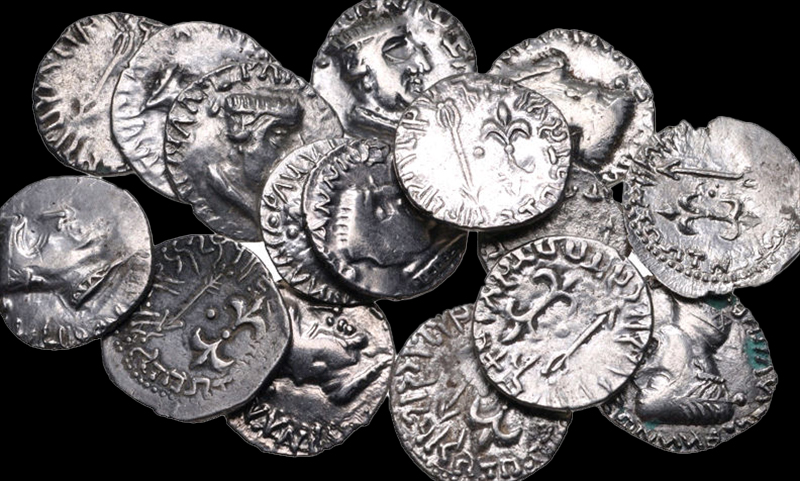
The title given to local governors who administered territories in several parts of north-western, northern, western and central India during the first centuries of the common era. They were administrative feudatories — first of the Indo-Scythian rulers (first century BCE to first century CE) and, later, the Kushan dynasty (first century CE to third century CE) — who enjoyed considerable autonomy over their territories and are documented in several inscriptions and coins from the period. One such dynasty of rulers gained control in parts of northwestern, western and central India from the second to the fourth centuries CE and is known as the Western Kshatrapa dynasty.
More Definitions
Aurangzeb
Aurangzeb (b. 1618; d. 1707) was the sixth Mughal emperor of India. He succeeded his father Shah Jahan, and ruled…
Narasimha II
Narasimha II (b. n.d. ; d. 1505 ; r. 1491-1505) was a ruler of the Saluva dynasty, who governed the…
Bangladesh Liberation War
Nine-month-long war (March–December 1971) was fought between the Pakistani army aiming to suppress the self-determination movement in East Pakistan, and…
Rajaraja Chola I
Rajaraja Chola I (b. n.d.; d. 1014) was king of the Chola Empire in southern India from 985 to 1014…
Timur
Timur (1336–1405; r. 1370–1405), also known as Tamerlane, was a Turkic conqueror of Mongol descent. He rose from among the…
Bahmani Sultanate
Muslim kingdom of the northern Deccan in India, founded in 1347 by Zafar Shah, a soldier in the service of…
Narasimhavarman II
Also called Rajasimha, he was a ruler of the Pallava Dynasty and ruled parts of present-day Tamil Nadu and Andhra…
Kanishka
Kanishka (b. n.d.; d. n.d.) was the third emperor of the Kushan Empire (first century CE to third century CE).…