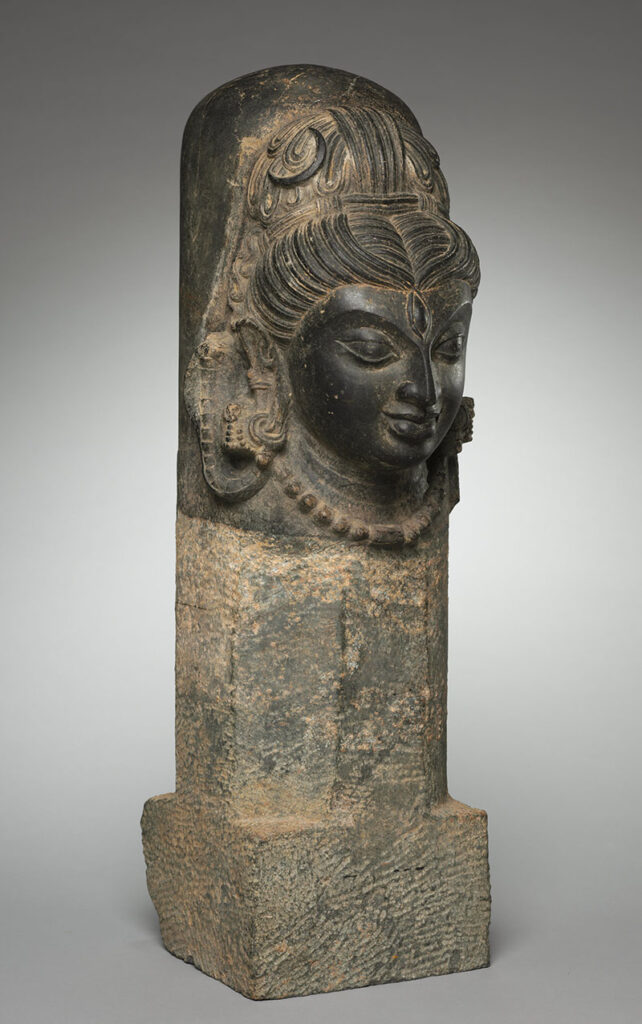
An aniconic representation of the Hindu deity Shiva in the form of a lingam (phallus), representing Shiva as a stambha (pillar) with no beginning or end. According to the Shiva Purana, there are believed to be sixty-four jyotirlinga sites in the Indian subcontinent, which are considered shrines to the deity. Twelve of these, considered the holiest, are known as Maha Jyotirlingam.
More Definitions
Dabbi
Meaning “small box,” it is a single, squarish motif found in the Rajasthani style of tie-dyed bandhani fabric, which depicts…
Ayudhapurusha
The anthropomorphic representation of divine weapons in the Hindu pantheon. These personified weapons are depicted either in human form or…
Rasamandali
A traditional Gujarati design, commonly seen in bandhani silk saris, it depicts a circle of dancing women within a medallion…
Chameli
From the Hindi word for the jasmine flower, it is a popular floral motif across several Indian textile practices, from…
Dharmachakra
A symbol in Buddhist, Jain and Hindu traditions, it is depicted as the wheel of dharma (a religious concept representing…
Ithyphallic
The depiction of a figure, usually a deity, with an erect phallus. This portrayal is primarily associated with the Hindu…
Guldasta
A motif depicting flowers in a vase, popularly found in textiles such as Banarasi saris and Himroo. It is also…
Chamaradhara
A term used with reference to Hindu, Buddhist and Jaina religious art, it refers to an attendant who is depicted…