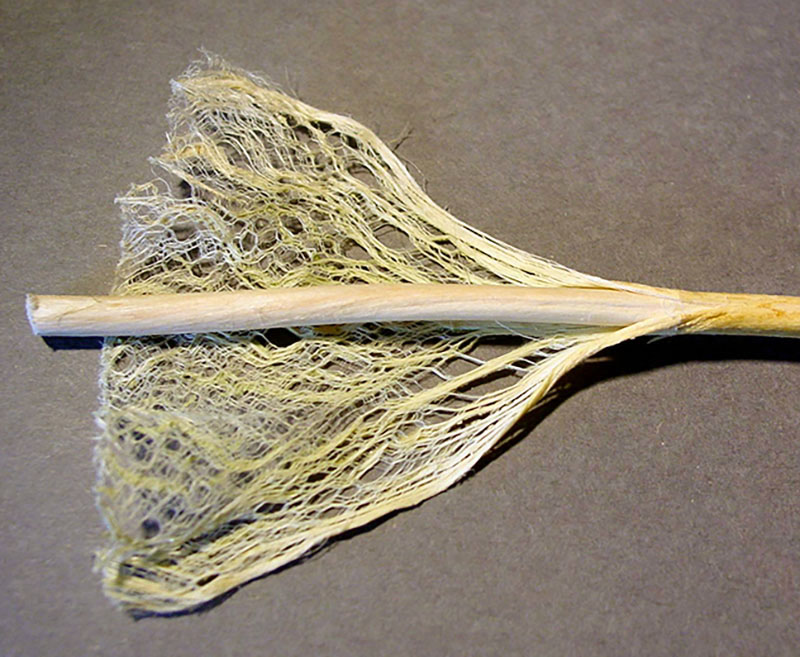
Textile fibre derived from the hemp plant Cannabis sativa, which also yields oilseeds, and leaves and flowers with psychoactive properties when cultivated differently. Hemp is a bast fibre, grown and processed in a similar way to flax (used for linen), though hemp fibres are longer, stiffer and difficult to dye. Strong, lightweight, shrink-resistant and moisture-absorbent, it is used for making garments as well as footwear, ropes, sacking, canvas and paper; in recent years it is also used to synthesise composites used in construction. Thought to have originated in Central Asia, it was cultivated in China as early as 2800 BCE and popularly used in various parts of the world across history. In the contemporary era hemp production has been affected by various legal restrictions on cannabis cultivation, production and trade.
More Definitions
sandstone
Porous sedimentary rock formed from compressed silicate grains, found in many regions across the world and varying widely in colour.…
Chaunsa Khaddar
A handspun and handwoven textile made of fine yarn that is used as a base fabric for Phulkari or Bagh…
Jhalar
A strip of brightly coloured paper, cloth or plastic that is used to craft decorative pieces for festive occasions. The…
schist
Metamorphic rock with large grains typically visible to the naked eye, and generally easy to break into flakes or sheets.…
Harda
The fruit of the black myrobalan plant (Terminalia Chebula), it is used to make a natural dye for textiles such…
Papier-Mâché
Meaning “chewed paper” in French, it is a composite material made of pulped paper mixed with a glue or adhesive…
Gara
A colloquial term for a coarse, textured cotton fabric.
Patta
A Sanskrit term meaning "cloth."