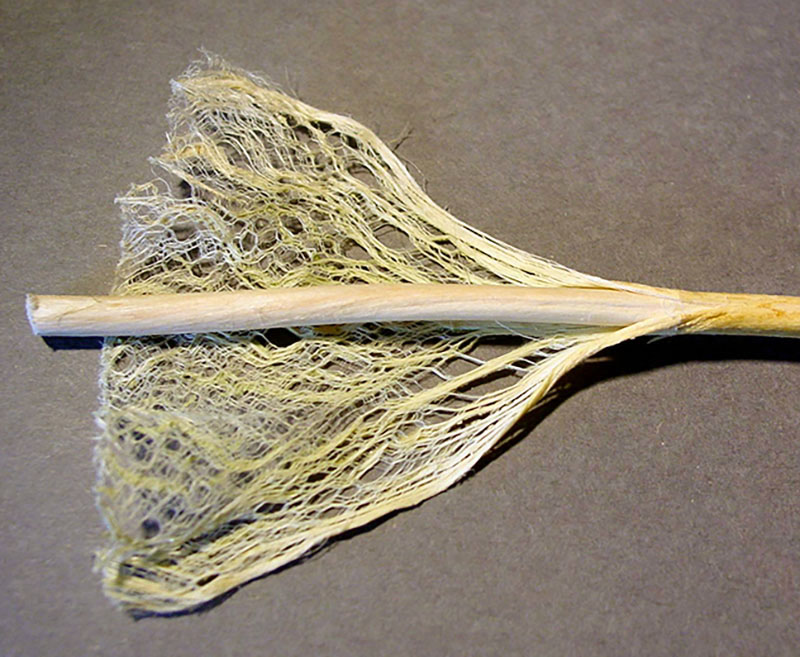
Textile fibre derived from the hemp plant Cannabis sativa, which also yields oilseeds, and leaves and flowers with psychoactive properties when cultivated differently. Hemp is a bast fibre, grown and processed in a similar way to flax (used for linen), though hemp fibres are longer, stiffer and difficult to dye. Strong, lightweight, shrink-resistant and moisture-absorbent, it is used for making garments as well as footwear, ropes, sacking, canvas and paper; in recent years it is also used to synthesise composites used in construction. Thought to have originated in Central Asia, it was cultivated in China as early as 2800 BCE and popularly used in various parts of the world across history. In the contemporary era hemp production has been affected by various legal restrictions on cannabis cultivation, production and trade.
More Definitions
Tusche
A greasy ink used in lithography, etching and silkscreen printing. In lithography, artists use it to create the desired image…
India Ink
Also known as Chinese ink or Indian ink, it is a black pigment commonly used for draughtsmanship. A carbon-based ink…
Khadi Paper
A traditional Indian handmade paper produced from khadi rags.
Georgette
A lightweight, sheer fabric made of fine silk, it is named after the French dressmaker Georgette de la Plante. Known…
Washi Paper
A traditional Japanese handmade paper produced using fibres of trees such as gampi, mitsumata and paper mulberry. Because of its…
Mordant
Mordant is a substance that allows natural textile dyes to bond or fasten to a fabric. It is usually made…
Alum
A double salt of aluminium and potassium that is used as a mordant in textile-dyeing processes, particularly when dyeing natural…
Gara
A colloquial term for a coarse, textured cotton fabric.