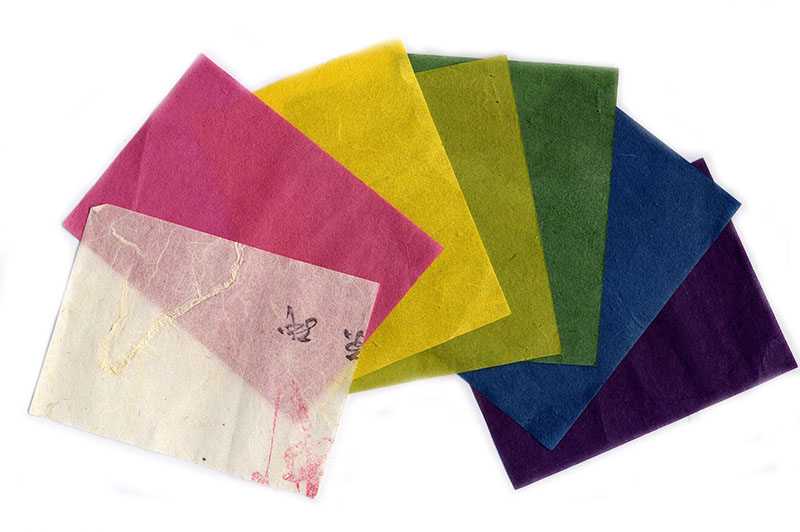
A traditional Japanese handmade paper produced using fibres of trees such as gampi, mitsumata and paper mulberry. Because of its durability, it is used for many traditional arts, especially origami, shodo and ukiyo-e prints. Additionally, it is used to make everyday items such as clothes, household goods, toys and ritual objects for Shinto and Buddhist practices. It is recognised by the UNESCO as an intangible cultural heritage.
More Definitions
breeze block
Lightweight construction brick developed during the 1800s in the US, Europe and Australia by binding Portland cement with coke breeze,…
fixer
In photography, a chemical solution used in the final stage of processing photographic film. It contains sodium or ammonium thiosulphate,…
Khadi Paper
A traditional Indian handmade paper produced from khadi rags.
Albumen Paper
Photographic printing paper that is coated with albumen, or egg white, and salt before being dipped in a silver nitrate…
Gouache
An opaque water-soluble paint that contains a gum binder and a white pigment such as chalk mixed with a high…
Kerang
A coarse bark cloth made by women of the Gadaba community in Odisha. The fibres are derived from the inner…
Reducing Agent
A chemical used in the process of indigo textile dyeing. Indigo is a vat dye, or an insoluble dye, which…
stop bath
An acidic solution that is used to stop the development of photographic film once it is sufficiently developed. It acts…