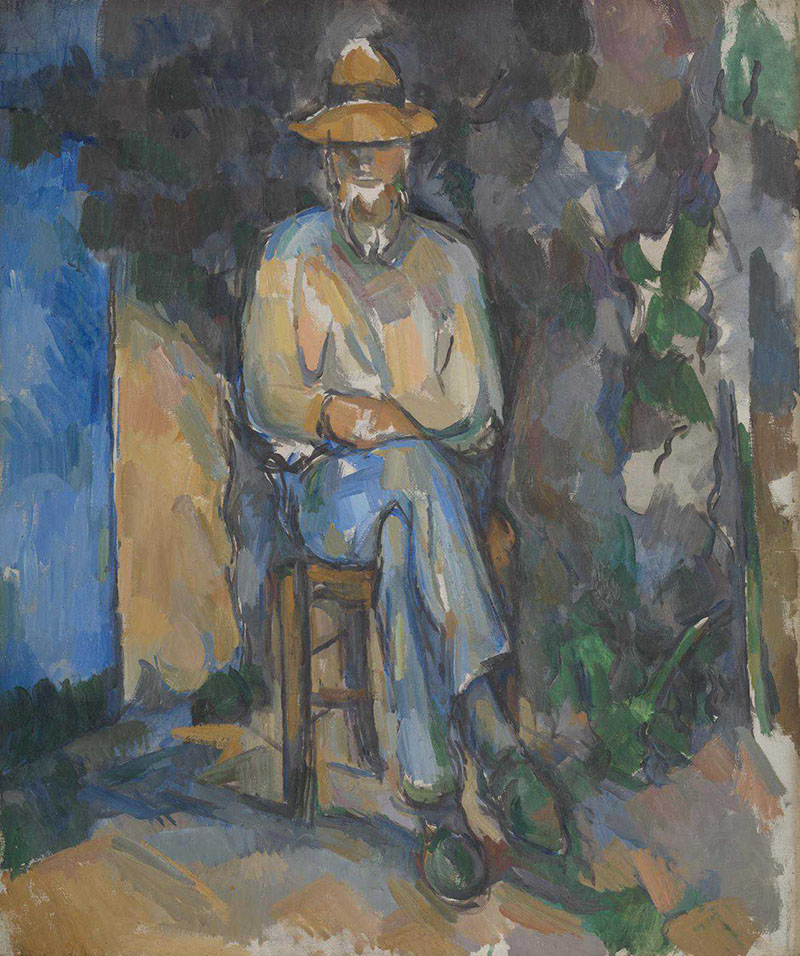
An approach to art which emphasises aspects of form, such as line, shape and colour. Formalism engages with the visual qualities of a work of art as opposed to its narrative or symbolic contents.
More Definitions
Naturalism
A painterly style where elements are depicted in their natural setting, without the use of ornamentation and idealised forms. Naturalist…
Neoclassicism
An eighteenth century cultural movement that drew inspiration from the arts and culture of classical antiquity. It embraced classical themes…
Surrealism
An art movement that emerged in twentieth-century France and aimed to express the creativity of the unconscious mind through the…
Victorian Salon Painting
A number of painting styles that gained popularity in English salons during the reign of Queen Victoria (1837–1901), such as…
German Expressionism
An art movement that emerged in early twentieth-century Germany, characterised by irregular brushstrokes and gestural marks which eschewed realist depictions…
Cubism
A modern art movement developed in the twentieth century by artists such as Pablo Picasso and Georges Braque which rejected…
International Style
Style of architectural design characterised by lightweight, rectilinear structures using industrial materials such as steel, concrete and glass, often featuring…
Pointillism
Also known as Divisionism or Chromoluminarism, it is a technique in painting that involves applying small, distinct dots or strokes…