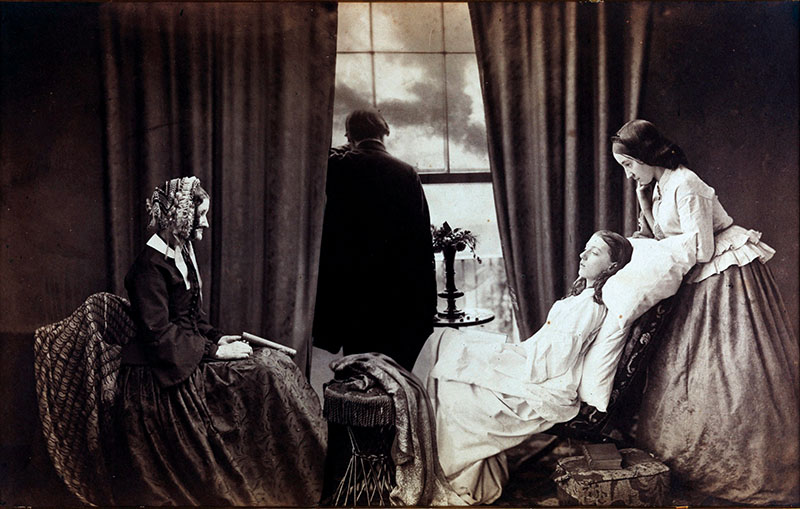
An early photographic technique wherein two or more negative images are combined to create a single image. This technique allowed for additional details to be added through selective exposure, rendering a finer and detailed touch to the images. The method was first proposed by French photographer Hippolyte Bayard in the mid-nineteenth century.
More Definitions
Radiocarbon Dating
A method of determining the objective age of carbon-based materials by measuring the amount of carbon-14, formed when the nitrogen…
Kajli Siyahi
A technique associated with the Patna School, where paintings are rendered directly by paintbrush on the surface, without using pencilled…
Impasto
A painting technique in which paint is thickly applied to the canvas, creating a surface texture. This can aid in…
Satin Stitch
Also known as damask stitch, it is a technique in embroidery that uses flat stitches to cover sections on a…
Kani
A term referring to both the weaving technique and the final textile created by this method. It may also refer…
lens-based practice
Any mode of communication or creative expression involving the use of cameras and related technology — spanning across photography, video,…
Sapma and Thrima
Discontinuous patterning techniques in Bhutanese weaving, using supplementary weft to create single-faced motifs and patterns (invisible on the reverse of…
Amli
Also known as amlikar, it is a needle-embroidered Kashmiri shawl dating to the nineteenth century. While it is likely to…