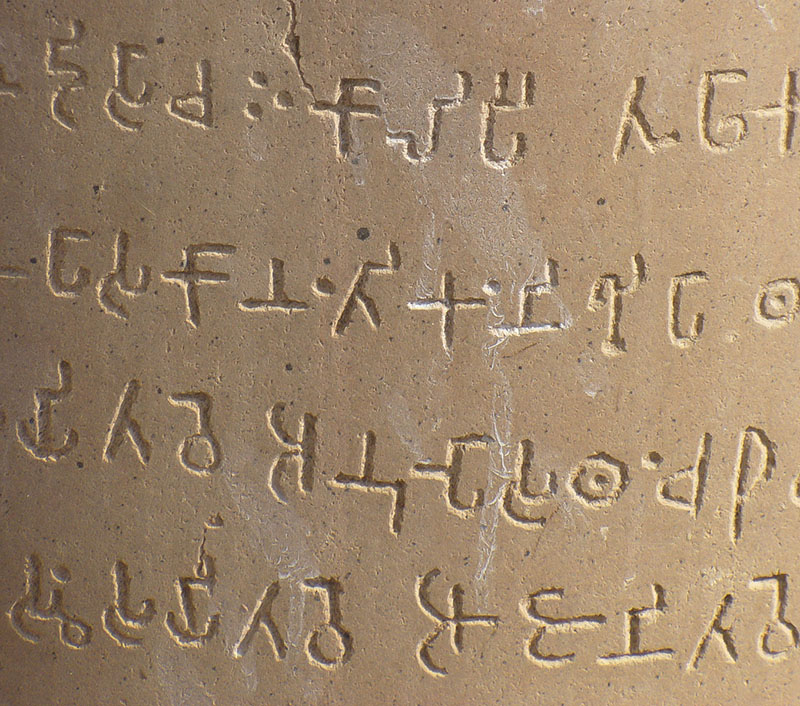
A writing system or script that appeared as a fully developed universal system in Asia c. third century BCE. It is believed to be the ancestor of later South Asian and Southeast Asian scripts. The earliest evidence of the use of the script is from the pillar and rock-cut edicts of Ashoka, dated c. 250–232 BCE. It was first deciphered in 1837 by James Prinsep, an archaeologist with the East India Company.
More Definitions
Appar
A Shaivite poet-saint from seventh century Tamil Nadu. He was one of the Nayanar poet-saints and is believed to have…
Amuktamalyada
A sixteenth-century epic poem in Telugu, authored by the Vijayanagara king, Krishnadevaraya. It narrates the story of Andal, one of…
Heer-Ranjha
An epic love story popular in the Punjab region across present-day Pakistan and India, it narrates the story of lovers…
Baburnama
The memoir of Zahiruddin Babur, the founder of the Mughal Empire. Written in the Chagatai language in an autobiographical style,…
Nastaliq
A style of Persian calligraphy that originated in Timurid Iran and gained popularity from the fifteenth century onwards. Written in…
Mahakapi Jataka
One of the Jataka tales, it tells the story of the bodhisattva's life as a monkey king who stretched his…
Purusha
The conception of man according to Hindu philosophy as established in the Vedas and the Upanishads. The purusha is a…
Abhinaya
According to the Natyashastra, it may be understood as a combination of two words — abhi meaning "towards" and naya…