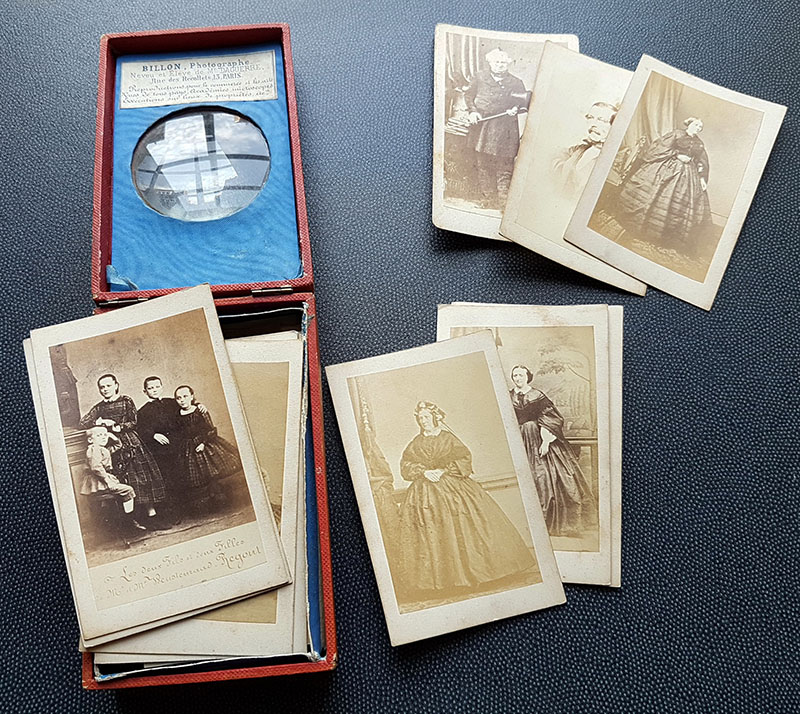
Photographic printing paper that is coated with albumen, or egg white, and salt before being dipped in a silver nitrate solution to make it light-sensitive. Developed by Louis Désiré Blanquart-Evrard around 1850, the albumen print was the most extensively used photographic printing method in the late nineteenth century. It was used for the small-format photographs known as carte de visite whose popularity in Europe helped establish the wide prevalence of photography.
More Definitions
Crepe
Also known as crape, it is a fabric characterised by a rumpled, crimped or rippled surface texture. These effects may…
rattan
Any of several fast-growing climbing palm species of the family Calamoideae, as well as their stems and outer skin that…
fixer
In photography, a chemical solution used in the final stage of processing photographic film. It contains sodium or ammonium thiosulphate,…
Jati Dor
A local plant found in Odisha, its inner bark is used by the women of the Gadaba community to make…
Gouache
An opaque water-soluble paint that contains a gum binder and a white pigment such as chalk mixed with a high…
Aniline Dye
A category of synthetic dyes made with a base material of coal-tar derivatives. Aniline is an organic compound derived from…
Papier-Mâché
Meaning “chewed paper” in French, it is a composite material made of pulped paper mixed with a glue or adhesive…
Wasli
A type of handmade paper originally conceived as a surface for Mughal miniature paintings. The paper was developed in India…