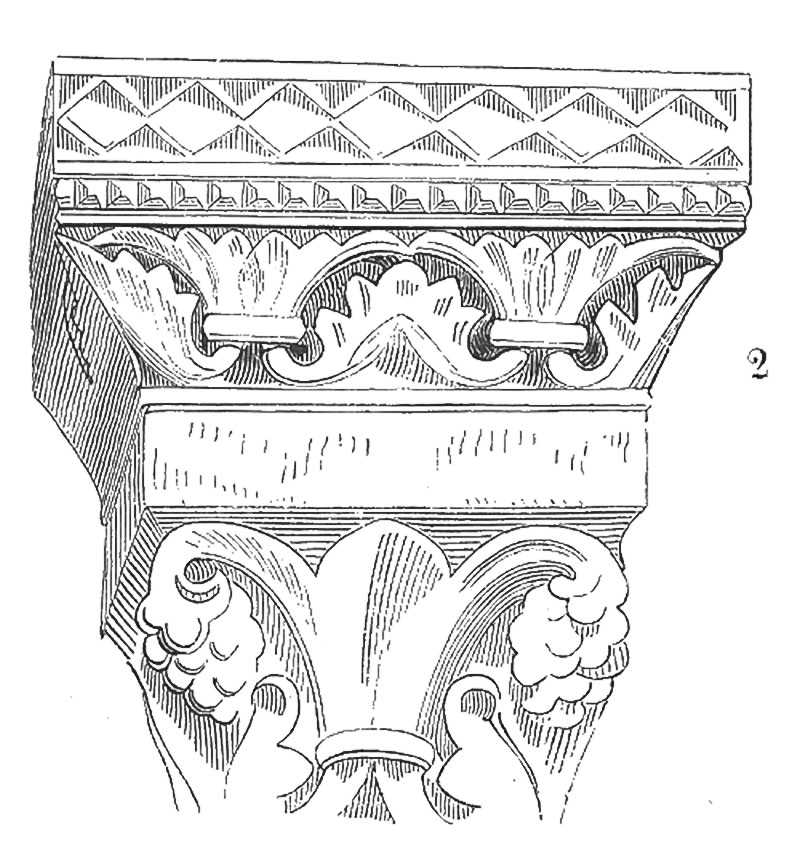
In architecture, a wide slab at the top of a load-bearing column, forming the uppermost section of the capital and helping transfer the weight of the supported beam or arch to the column’s shaft. In freestanding columns the abacus may be mounted with decorative or emblematic sculptures. From the Ancient Greek ábax, meaning ‘slab’.
More Definitions
Palisade
A fence or defensive wall made of closely packed wooden or iron stakes or tree trunks and typically serves as…
Frieze
The central section of the entablature (a capital on the top of a pillar), situated below the cornice and above…
pitched roof
A roof form featuring one or more inclined surfaces rising to meet at a ridge, point, or wall surface. The…
stringcourse
Horizontal band running along the exterior surface of a building or a boundary wall, serving aesthetic and sometimes functional purposes.…
Sukhanasa
An ornamental feature in Hindu temple architecture which lies over the entrance to the garbhagriha (the inner shrine). It literally…
Groyne
A long, rigid hydraulic structure constructed perpendicular to the seashore or riverbank to interrupt flow of water. They are usually…
Kapotabandha
In Indian temple architecture, it is a style of decorative moulding seen on a tier of the adhisthana, the raised…
Chaitya
Meaning ‘shrine’ or ’sanctuary’ in Sanskrit, chaitya or chaitya griha (‘chaitya hall’) refers to a pillared hall in Buddhist architecture,…