Job Openings
Pitch Us
Republish Us
Fellowships & Grants
There are no active job postings right now. We update this page regularly, so please revisit us for future openings. For any queries, you can reach out to us at careers@imp-art.org
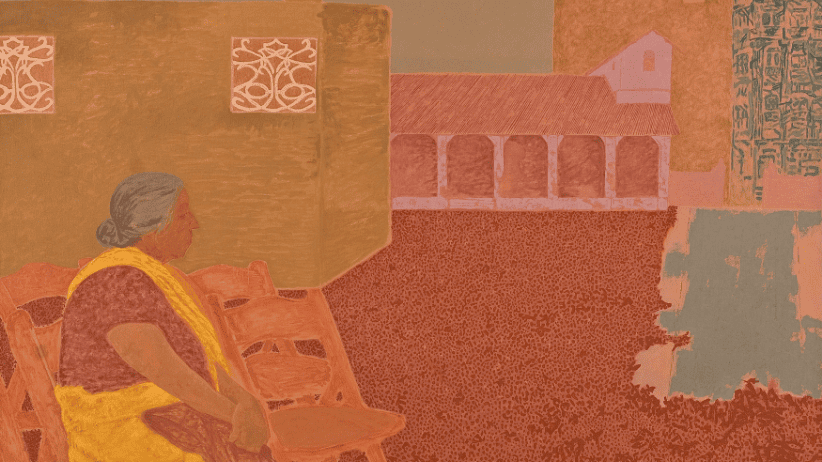
Early Guest; Gieve Patel; India; 1981; Oil on canvas; 136.8 x 137.2 cm. Courtesy Peabody Essex Museum, Gift of the Chester and Davida Herwitz Collection, 2003, and Google Arts and Culture
Perspectives, Impart’s digital publication on art, art history, and visual culture in South Asia, seeks to present original and nuanced observations and analyses based on research and reportage. Perspectives provides readers an entry point to explore South Asia’s art and cultural histories more critically, evaluating existing assumptions, biases, power dynamics, and contexts.
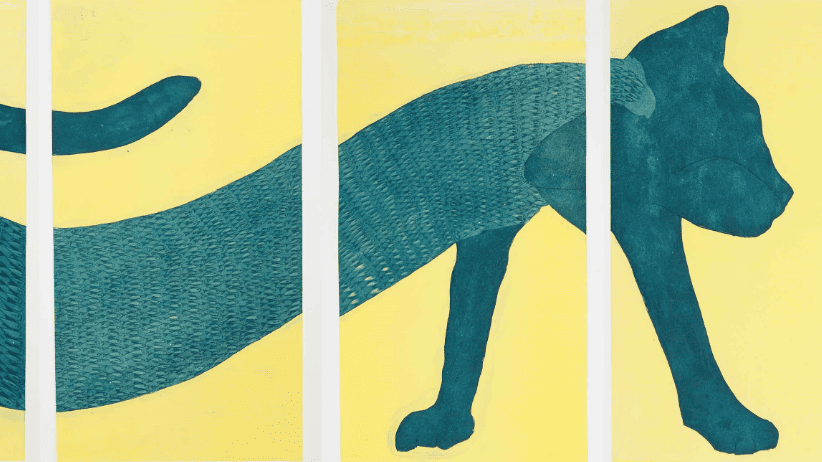
One Thousand Twenty Three Fishes Fell In The Stomach; Tanujaa Rane-Hambardikar; 2003; Etching on paper; 48.9 x 25.4 cm. Courtesy of Museum of Art & Photography (MAP), Bengaluru
We commission thoughtful, unique, and interdisciplinary editorial pieces in three main formats:
Features: Longform essays with a central argument or idea that is based on rigorous research. Features should prioritise considered interpretations and original angles supported by vetted sources, visual analysis, and sometimes, reportage. They should ask big questions bolstered by clear evidence; they may have a contemporary hook, but may equally explore historical subjects, especially previously understudied sub-histories and genres, forgotten artworks and processes, or fresh perspectives on existing art.
Interviews: Longform conversations with art experts and practitioners — from artists, designers, and curators to archivists, art scholars, and art historians — that focus on their work, ideas, and practice. Interviews can span the length of the subject’s career, or focus on a specific dimension of their work. The questions must respond to the answers, and should not be overly pre-determined, formulaic, or rigid.
Dispatches: Brief commentaries and meditations on visual culture with a singular subject that make an engaged and engaging case for why they merit a closer look. This includes, but is not limited to, writing on new artists, exhibitions, fairs, and interesting topical takes, but also unique perspectives on established art and art practices, built forms, books, sentences, works, places, and so on.
How to Pitch Us
You can pitch us over email with the subject line “PITCH: [Story Title],” a 200-word brief, and a projected word count. Your brief should address the ‘what’ and ‘why’ of your story, with examples and an explanation for why you should write this piece or conduct this interview. Please also mention visual elements (photographs, artwork, digitised ephemera) that can be used to illustrate your story, and provide a few links to your past work.
All accepted contributors are paid. The fees for published stories will depend on the level of research, complexity of the subject matter, and story length — ranging from INR 5,000 to INR 20,000. Please note that while we read every pitch we receive, we are unable to respond to each one.
Impart is committed to making knowledge on South Asia’s art and cultural histories openly accessible. To maintain the integrity, reach, and respectful usage of our educational resources, we request all republication partners, especially museums and cultural institutions, to follow these comprehensive republishing guidelines.
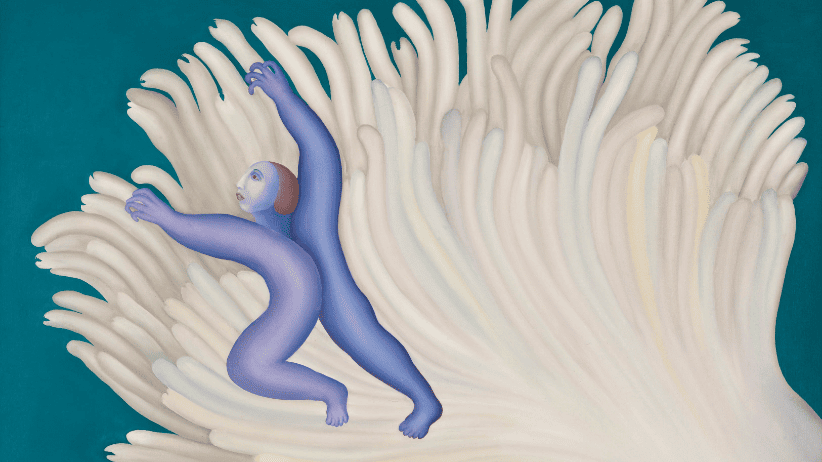
Untitled; Manjit Bawa; India; 1987; Oil on canvas; 175.9 x 165.7 cm. Courtesy Peabody Essex Museum, Gift of the Chester and Davida Herwitz Collection 2001
You must not edit our content without prior written permission. All Impart articles are thoroughly researched, peer-reviewed, and fact-checked. To preserve scholarly integrity, republication must not involve any edits or changes. In case any contextual adaptation is essential, prior written approval must be sought from shivani.gandhi@imp-art.org.
You must always credit the original author and Impart. Every republished article must include a byline crediting the author, followed by a strapline at the top or bottom of the piece stating: “This article was originally published on Impart, an online platform encouraging greater public engagement with South Asia’s art and cultural histories.” (You can find a downloadable version of our logo here.)
You must maintain internal links within articles when technically possible. Our articles often reference glossary entries, related essays, artworks, and other resources on our site. Where feasible, include these in your reproduced content to preserve the educational depth intended in the original narrative.
You must request permission before using any accompanying images. Impart does not hold image rights for the materials shown on our website. Image rights typically remain with the museums, collections, or institutions cited in our image captions. If you wish to republish any images, you must check the respective copyright owner’s terms or seek direct permission. Do not misattribute image rights to Impart.
You must not use Impart content as part of marketing or promotional campaigns. Republishing our articles in curated newsletters, blogs, or collections is allowed — but the use of such content in organisational advertisements, fundraising collateral, or commercial campaigns is strictly prohibited.
You must credit Impart in all associated social media posts. If you share republished articles across social media platforms, tag us and clearly state that the article originates from Impart. Our official handles include Instagram, Facebook, and LinkedIn.
You may not license, sublicense, or allow third-party syndication of Impart work through your platform. Republishing partners may not allow others to reuse Impart content through their own websites, aggregators, or print/digital platforms. This includes re-syndicating individual articles or curated compilations.
You may republish our articles behind a paywall, although this is discouraged. While we recommend open access to our work, we recognise the varying models of content delivery across institutions. If your platform requires paywalls for access, you may proceed, provided all other guidelines are strictly followed.
You must receive explicit permission before translating Impart content. Translation requires rigorous fidelity to the original scholarly content. We prefer to collaborate with institutional partners or translators vetted by us. Please contact shivani.gandhi@imp-art.org to discuss translation requests and processes.
You must not distort the intent or positioning of any Impart article. All republished content must represent the original article’s core analysis, frame, and scope accurately. Do not manipulate titles, surrounding context, or content excerpts to suit unrelated institutional agendas or point of view.
You can use extracts from Impart articles in the following two formats:
1) Publish the first paragraph of an Impart article with a strapline that reads, “Read the full article on the Impart website. Impart is an online platform encouraging greater engagement with South Asia’s art and cultural histories.”
2) Quote a section from an Impart article, with proper attribution and a link back to the original article for online publications. For print publications, give proper attribution that includes Essay Title, Author Name, and the words “published by Impart.”
You must not represent Impart’s scholarship as your organisation’s intellectual property. All work remains the copyrighted materials of the authors and Impart. Republishing permission does not transfer ownership, nor does it authorise branding Impart content as your institution’s research.
You must not archive Impart content on your digital repository or records without permission. Permanent hosting of Impart articles on institutional archives, academic repositories, or collection management systems requires prior approval. We retain the right to request takedowns or formatting corrections.
You must inform Impart about publication upon going live. To ensure proper tracking and archival credit, alert us by email upon releasing our content on any medium, print or digital. This supports transparency, potential collaborations, and proper credit to original authors.
Impart offers fellowships and grants that support projects on South Asia’s art and cultural histories. Designed to strengthen and diversify the field, these programmes encourage interdisciplinary work and enable researchers, practitioners, and creative communities to pursue projects that might otherwise remain under-resourced.
Through these initiatives, Impart aims to support critical inquiry and enable substantive contributions to the study of the region’s artistic and cultural practices.
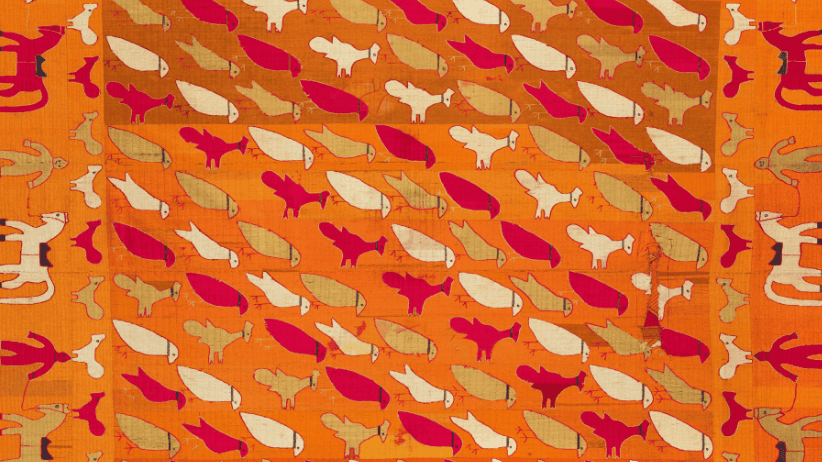
Tota Bagh Phulkari; India; First half of the 20th century; Handspun cotton plain weave (khaddar) with silk and cotton embroidery in darning, buttonhole, and chain stitches; 235.6 × 142.2 cm. Courtesy Philadelphia Art Museum, The Jill and Sheldon Bonovitz Phulkari Collection
The Impart & Nalli Fellowship supports original research and educational initiatives on the textile histories, practices, and traditions of South Asia. Awarded in multi-year cycles, the Fellowship enables year-long projects that may involve archival study, material exploration, documentation, practice-led inquiry,among other approaches. It brings together Nalli Silks’ long-standing engagement with textile production and design and Impart’s commitment to deepening research on South Asian art and cultural histories. Applications for 2025–27 cycles are now closed.
Our research grants support independent projects that deepen the field of South Asian art history. Funding may support academic research, writing, fieldwork, documentation, or collaborative projects with external partners. Click here to read more about our past grants.