The Impart & Nalli Fellowships
The Impart & Nalli Fellowships is a collaboration between Nalli Silks — a heritage textile brand established in 1928 — and Impart, an online platform dedicated to developing accessible resources on South Asia’s art histories. Since its inception in 2024–25, the programme has supported two research projects annually.
The application window for the Impart & Nalli Fellowships 2027–28 is now closed, and all applications are currently under review.
Two Research Fellowships will be awarded, each carrying a grant of INR 5.5 lakhs to support one year of independent research and project development. The final awardees will be announced in December 2026, and the fellowships will run from January to December 2027.
Areas of Focus
This Fellowship supports research into underexplored textile-related histories, practices, and traditions across South Asia. Applicants may propose projects on any textile-centric subject. The following areas of research are encouraged:
- Textiles in religious, literary, liturgical, and mythological contexts
- Environmental impact of textile production and consumption
- Endangered or disappearing textile traditions
- Critical perspectives on textile revivalism, digitisation, archives, and material afterlives
- Labour in textile production, with particular attention to caste, class, and gender
- Relationships between textiles and other cultural forms, including storytelling, poetry, music, architecture, and material culture
- Techniques, technologies, and tools associated with specific textile traditions
- South Asian textiles within the contemporary global design economy
- Intellectual property, ownership, and cultural rights in textile production
- Socio-cultural perspectives on the relationship between handmade and industrial textiles
Eligibility
The Fellowship is open to applicants aged 18 years or older, residing anywhere in the world, whose proposed projects engage with textile practices across the wider South Asia region. We welcome applications from early- and mid-career researchers, designers, archivists, journalists, writers, educators, practitioners, collectives, and small organisations.
Supported Project Formats
The Fellowship supports a range of outcome formats, including but not limited to:
- Journalistic inquiry
- Documentary film
- Archive activation
- Practice-based research
- Archive generation
- Digitisation and documentation initiatives
- Exhibition or book projects
Expected Outcomes
The grant must be used to support one year of work, which may be part of a longer-term project. At the end of the Fellowship period, the following deliverables are required:
- Project Report — A comprehensive report written by the Fellow, submitted at the end of the grant period.
- Research Dossier — Produced from the Project Report, co-developed in collaboration with Impart. This document will present key questions and findings related to the research process and subject. It will be hosted on Impart’s website for public benefit.
- Project Outputs — A set of final works developed through the Fellowship. These may include:
- Audio-Visual: Interviews or short films
- Visual Essays: Photographic or process-based documentation
- Written Pieces: Essays, features, or interviews
- Curatorial Work: Exhibition or digital curation
Collaborative projects are permitted. Applicants should appropriately credit all co-creators and contributors and include their details in the application.
Application Process
Application Process
The application form is structured to serve as a comprehensive project proposal. Guidance on the application process and requirements is available in the FAQ section on the Impart + Nalli Fellowships page.
Applications for the 2027–28 Fellowship cycle are now closed. Information about the successful applicants and the next Fellowship cycle will be updated on this page in due course.
Selection Process and Announcement
Applications are currently being reviewed. Proposals will be assessed on the basis of the information provided in the application form.
Given the anticipated volume of applications, only shortlisted candidates will be contacted. Shortlisted applicants will be invited to participate in an online interview, following which the final selection will be made.
The jury is composed of Ms. Noorjehan Bilgrami, Dr Toolika Gupta, Ms. Paola Manfredi, and Ms. Lavanya Nalli. You can learn more about them, and past jurors, on this page.
Successful applicants will be notified by email, and the results will be announced through Impart’s official channels. The Fellowship period will run from January to December 2027.
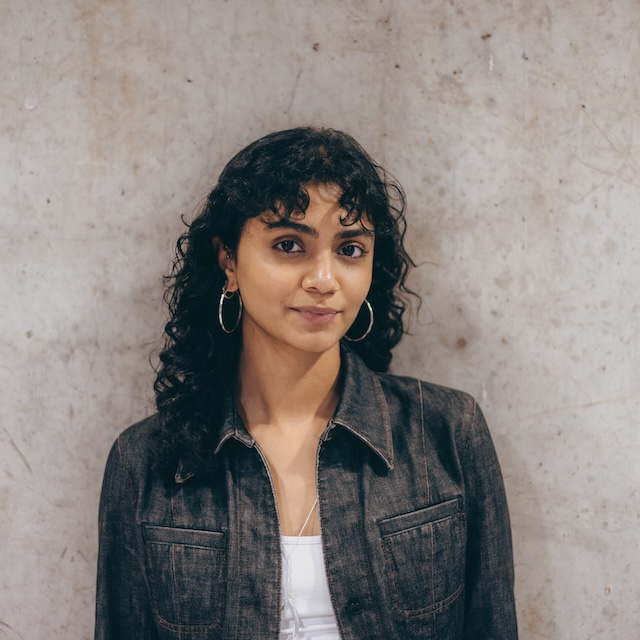
Vibhuti Amin
Fellow 2026–27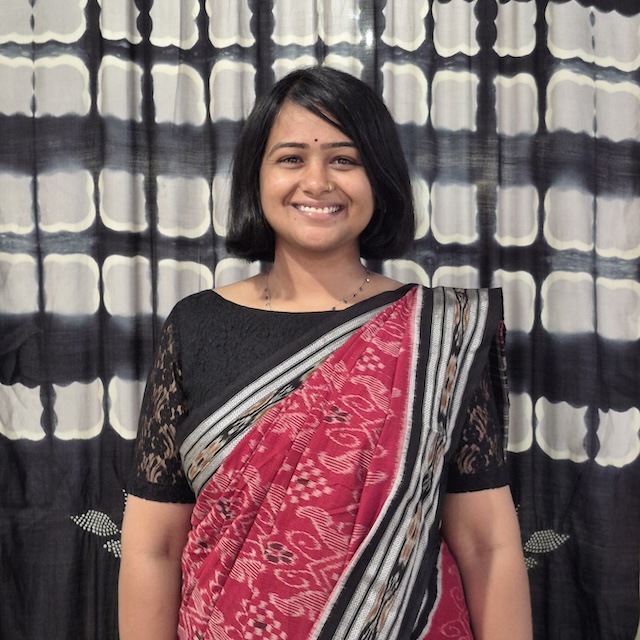
Bansari Soni
Fellow 2026–27
K Malsawmtluangi
Fellow 2025–26
Sadqain Riaz, Hassaan Gondal, Sabeen Yameen
Fellow 2025–26
Anna-Louise Meynell
Fellow 2024–25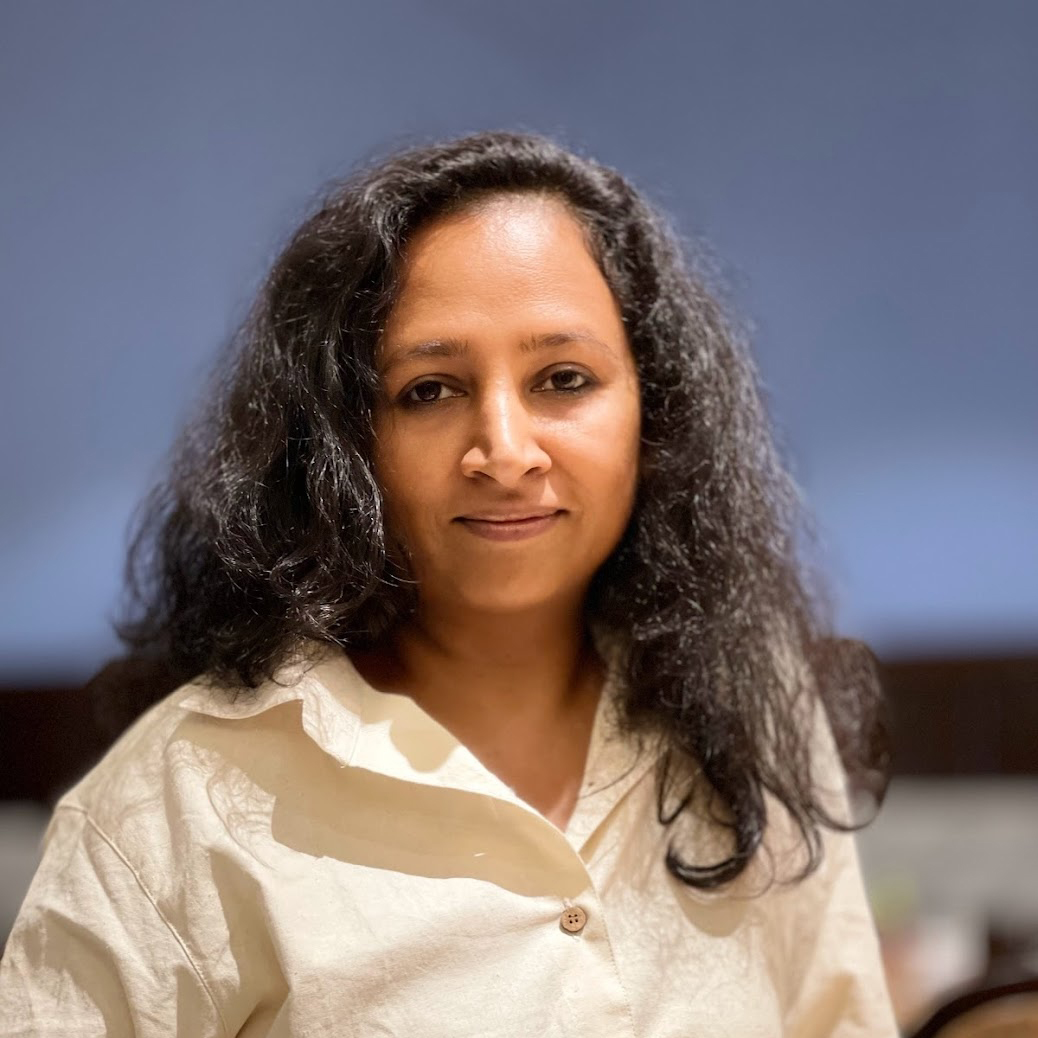
Namrata Bhutoria
Fellow 2024–25The Advisory Committee comprises leading scholars and specialists in textiles, design, and arts education. Its members help shape the Fellowship’s vision and structure, guide the selection process, and remain actively engaged with the progress and outcomes of the supported projects.
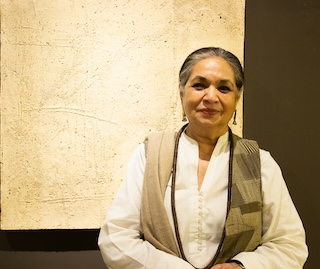
Noorjehan Bilgrami (2027–28)
Visual Artist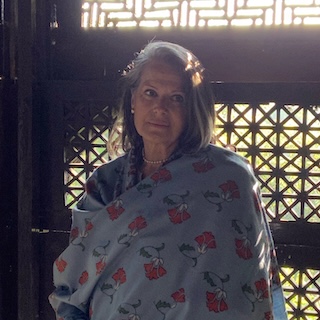
Paola Manfredi (2027–28)
Designer and Independent Researcher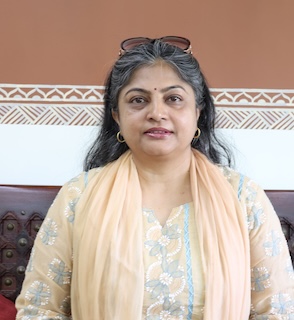
Dr Toolika Gupta (2027 –28)
Director, Indian Institute of Crafts and Design (IICD)
Lavanya Nalli (2024-28)
Vice Chairperson, Nalli Silks
Dr Annapurna Garimella (2024-27)
Art Historian
Mayank Mansingh Kaul (2024-27)
Researcher & Curator
Uthra Rajgopal (2025-27)
Researcher & Curator
Manju Sara Rajan (2024-25)
Co-founder, KAASH- What is the deadline for applying to the Impart & Nalli Fellowships 2027–28?
The deadline for applying to the 2027–28 Fellowship cycle was 31st August 2026. Information about the successful candidates and next Fellowship cycle will be updated on this page in due course. - What is the duration of the Fellowship?
The duration of the Fellowship is for one year from the date of commencement.
- When will the Fellowship commence?
The Fellowship will commence in January 2027. - What is the grant amount for selected projects?
Successful applicants to the Fellowships will each receive up to INR 5.5 lakhs towards project execution. - Who is eligible to apply for the Impart & Nalli Fellowships?
The grant is open to applicants residing anywhere in the world and aged 18 years or older. Their projects must be focused on South Asian textiles. - What is the geographical focus of the Fellowship?
The Fellowship supports projects examining textiles from South Asia — covering Afghanistan, Bangladesh, Bhutan, India, the Maldives, Myanmar, Nepal, Pakistan, Sri Lanka and Tibet. - Can organisations, collectives or groups of people apply for the Impart & Nalli Fellowships?
Yes. - Can the Fellowship support fieldwork and travel expenses?
Yes. Fellowship funds may be used to support research-related expenses, including travel, fieldwork, documentation, and other project costs, subject to approval. - What materials do I need to prepare for the application process?
Applicants will be required to complete a Google Form, which is structured to function as a comprehensive project proposal. You may preview the form here.
To complete your application, please prepare the following documents:- Project Budget: A document outlining your anticipated expenses and proposed allocation of fellowship funds. This can be a percentage-based distribution; however, please be as specific as possible.
- Project Timeline: A document detailing your proposed plan for the one-year fellowship period, including key phases, activities, and milestones. The timeline should be realistic, and manageable.
- Supporting Documents (Single PDF): Please combine the following into one PDF and upload it as a single file:
- An up-to-date Curriculum Vitae (CV)
- Selected work samples that best represent your practice, research, or professional capabilities
- Up to two letters of support or recommendation relevant to your proposed project and qualifications
We recommend preparing these materials in advance to ensure a smooth application process.
- What is expected of Fellows during the Fellowship period?
Fellows will be required to participate in periodic check-ins, submit progress reports, and complete agreed project deliverables within the Fellowship period. - Who owns the copyright for the Fellowship’s final output?
While copyright arrangements will be determined on a case-by-case basis, all final outputs produced through the Fellowship are required to be made openly and freely accessible to the public. - What languages are accepted for project proposals?
Currently the application form is only available in English. If you would prefer to apply in any language other than English, please write to us and we will find a suitable resolution. - Should the proposed project be entirely new? Can I revise a previous project?
The Fellowship supports both new and ongoing projects, as long as they align with the criteria outlined above. Applicants should specify which aspect of their project will be developed using the Impart & Nalli Fellowships’ support. Applicants are required to disclose any current or previous funding from other organisations/platforms in the application form. - Can I take assistance from any Artificial Intelligence (AI) & Large Language Model (LLM) to complete the application form?
The fellowship follows a strict no-tolerance policy on the use of AI in the application form or any materials submitted with it. Any violation of this policy will result in the application being rejected. - Will applicants receive feedback on unsuccessful applications?
Due to the volume of applications received, individual feedback cannot be provided to unsuccessful applicants.