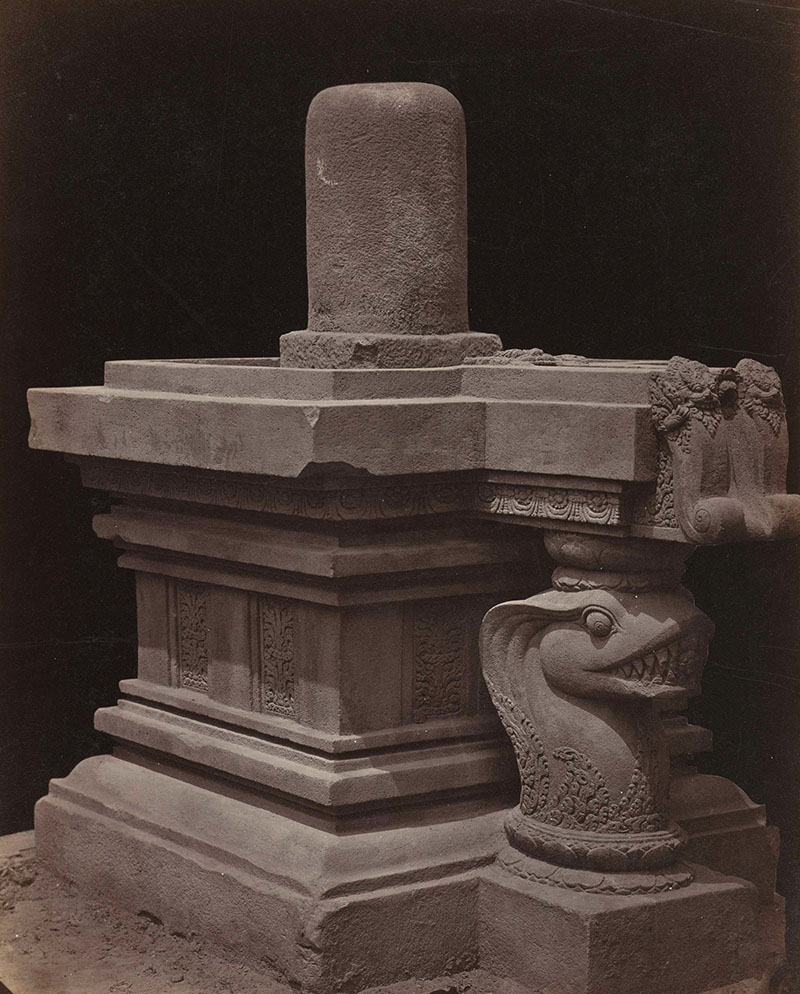
It symbolises the goddess Shakti as well as the feminine procreative power within Hindu iconography. The word itself literally translates to “abode,” “source,” “womb,” or “vagina.” In the sect of Shaivism, the yoni and the lingam (an aniconic form of Shiva) are believed to represent the male and female principles of the universe and, collectively, signify the eternal process of creation and destruction. In Hindu temples, the two often appear together, with the yoni acting as the receptacle on which the lingam lies.
More Definitions
Vedas
A body of religious texts composed in Sanskrit and considered the oldest scriptures in Hinduism. There are four primary texts…
Prahlada
In the Vaishnava tradition of Hinduism, he is the the son of the daitya king Hiranyakashipu and his queen Kayadhu.…
Vittala
A Hindu deity who is considered to be a form of Vishnu and is popularly worshipped in present-day Maharashtra and…
Drupada
In the epic Mahabharata, the ruler of Southern Panchala and the father of Draupadi, Shikhandi, Satyajit, Dhrishtadyumna, Uttamaujas and Yudhamanyu.…
Andhaka
A malevolent asura king from the Hindu pantheon who fought a war with Shiva and other devas after being granted…
Bhringi
In Hindu mythology, Bhringi is a sage and an attendant of the deity, Shiva. In iconographical convention, he is often…
Mahakala
A deity common to Buddhism, Hinduism and Sikhism, whose name is composed of the Sanskrit maha, meaning "great," and kala…
Chandesanugrahamurti
A benevolent form (anugrahamurti) of the Hindu deity Shiva, in which he is depicted bestowing his blessings upon his devotee,…