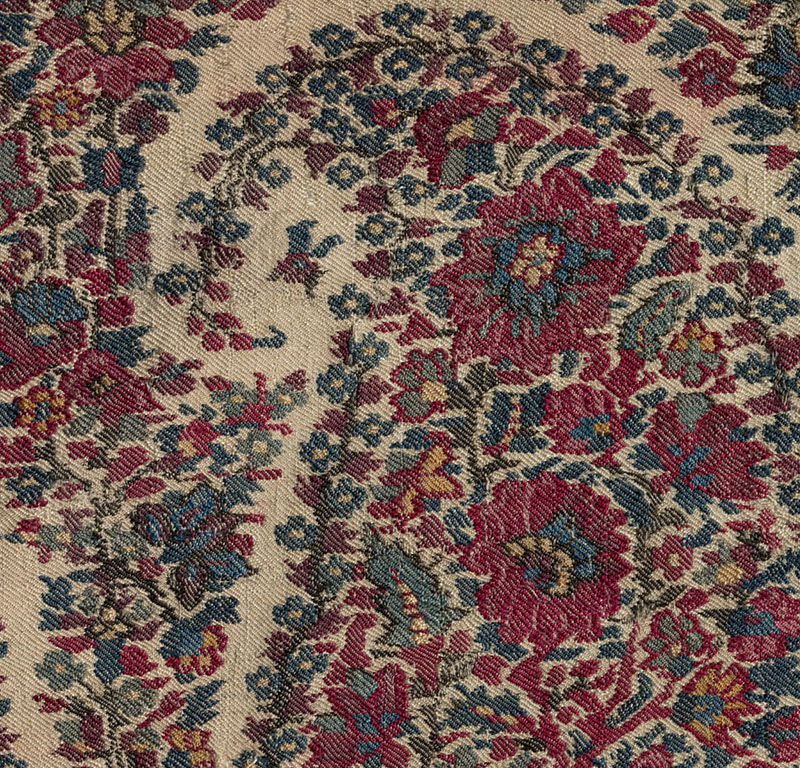
A weft-facing technique of weaving, wherein coloured weft yarns are interlaced with plain-coloured warp. The design is created using the discontinuous weft technique, where weft threads are woven back and forth across a specific section of the warp to create a block of colour. The weft yarns disproportionately outnumber the warp, which is beaten down to display the coloured weft. The weave is typically executed on a tapestry loom.
More Definitions
Combination Printing
An early photographic technique wherein two or more negative images are combined to create a single image. This technique allowed…
chamfer
A slope or bevel, typically at 45º, at the intersection between planes in woodwork, architectural and engineering detailing, and other…
Extra Weft
Also known as the supplementary weft technique, it is a design method where additional weft threads are added to the…
Amli
Also known as amlikar, it is a needle-embroidered Kashmiri shawl dating to the nineteenth century. While it is likely to…
Plain Weave
Also known as tabby weave, it is the most common weave in textiles. In this weave, each weft yarn passes…
Kashika Vastra
Meaning “clothes from Kashi” in Sanskrit, it is a possible reference to the brocaded fabric produced in Kashi (now Varanasi).
Satin Stitch
Also known as damask stitch, it is a technique in embroidery that uses flat stitches to cover sections on a…
En Plein Air
Meaning “in open air” in French, it is the style of creating a finished landscape painting outdoors. Before the practice…