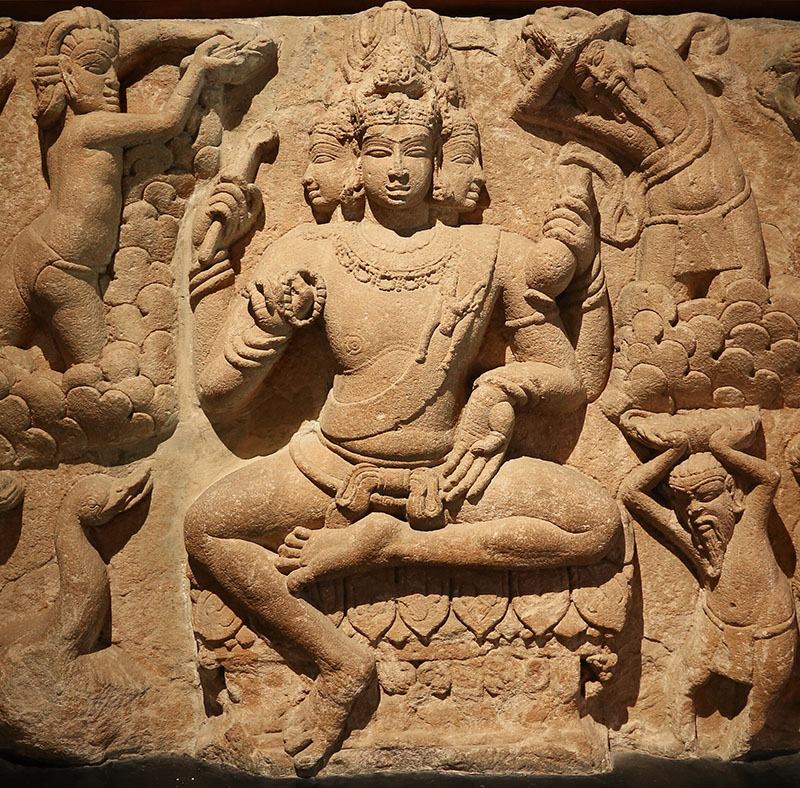
Meaning “creation” in Sanskrit, it is one of the cosmic acts of deities in the Hindu religious tradition. It is primarily associated with the Hindu deity, Brahma, and is also one of the five acts (panchakriya) of Shiva in his form as Nataraja.
More Definitions
Kamasutra
An ancient Sanskrit text on sexuality and eroticism, dating to c. 400 BCE–300 CE and attributed to Vatsyayana. It is…
Chandayana
A Sufi romance written in Hindi by the poet Mulla Da'ud during the reign of Firoz Shah Tughlaq (r. 1351–38).…
Sangha
A monastic order comprising bhikkhus (monks) and bhikkhunis (nuns), it is one of the Three Jewels of Buddhism. From the…
Sahitya Akademi
Established in 1952 and inaugurated in 1954, it is India’s National Academy of Letters, created for the promotion and preservation…
Mahasiddha
A term used in Tibetan and Tantric Buddhism for someone who embodied the perfect siddhi (psychic or supernatural abilities) through…
Nayanar
A group of sixty-three Shaivite poet-saints in Tamil Nadu between the third to eighth century CE. Belonging to diverse castes,…
Mahabharata
The longest Indian epic poem, traditionally attributed to the legendary sage Vyasa and compiled into its extant recension sometime between…
Gita Govinda
A Sanskrit poetic epic that describes the love between the Hindu god Krishna, his chief consort Radha and the gopikas…