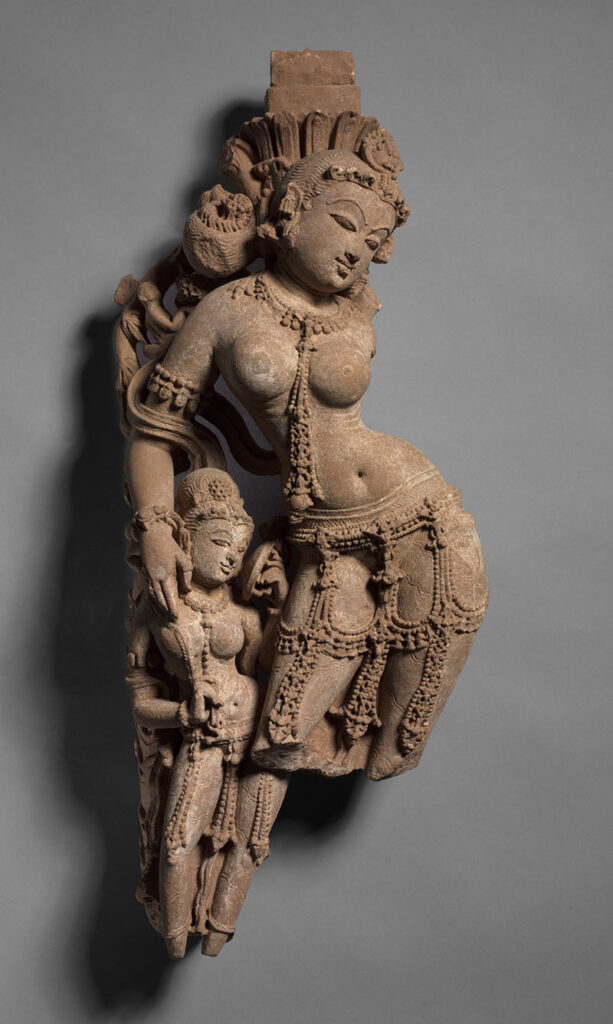
A prominent feature of Indian sculpture, it depicts a female deity with stylised and sometimes exaggerated feminine features, elaborate hairstyles and jewellery shown holding the branch of a tree, usually the sala tree, or standing near one. It is believed to have emerged from ancient Indian tree deities and signifying fertility. According to the Buddhist text Avadanasataka, the festival of salabhanjika parva was celebrated to mark the flowering of the sala tree. From the Sanskrit, meaning “breaking the branch of a sala tree”.
More Definitions
Mandhata
According to Hindu mythology, Mandhata was the son and heir of Yuvanshva, a king belonging to the Ikshvaku Dynasty. Also…
Jyotirlinga
An aniconic representation of the Hindu deity Shiva in the form of a lingam (phallus), representing Shiva as a stambha…
Kali
Also known as Dakshina Kalika, she is a Hindu goddess and aspect of Shakti and is regarded as the destroyer…
Andhaka
A malevolent asura king from the Hindu pantheon who fought a war with Shiva and other devas after being granted…
Ikshvaku
The solar dynasty (Suryavansha) founded by King Ikshvaku. It finds mentions in the Puranas and holds significance in Hindu, Buddhist…
Nrittamurti
The term used for a deity’s dancing form in Hindu religious iconography. It is most commonly associated with the Shiva,…
Amoghasiddhi
Within the Mahayana and Vajrayana traditions of Buddhism, Amoghasiddhi is one of the five Dhyani Buddhas and presides over the…
Varuna
A Vedic deity associated with the moral values of rita (justice) and satya (truth), he also represents the natural elements…