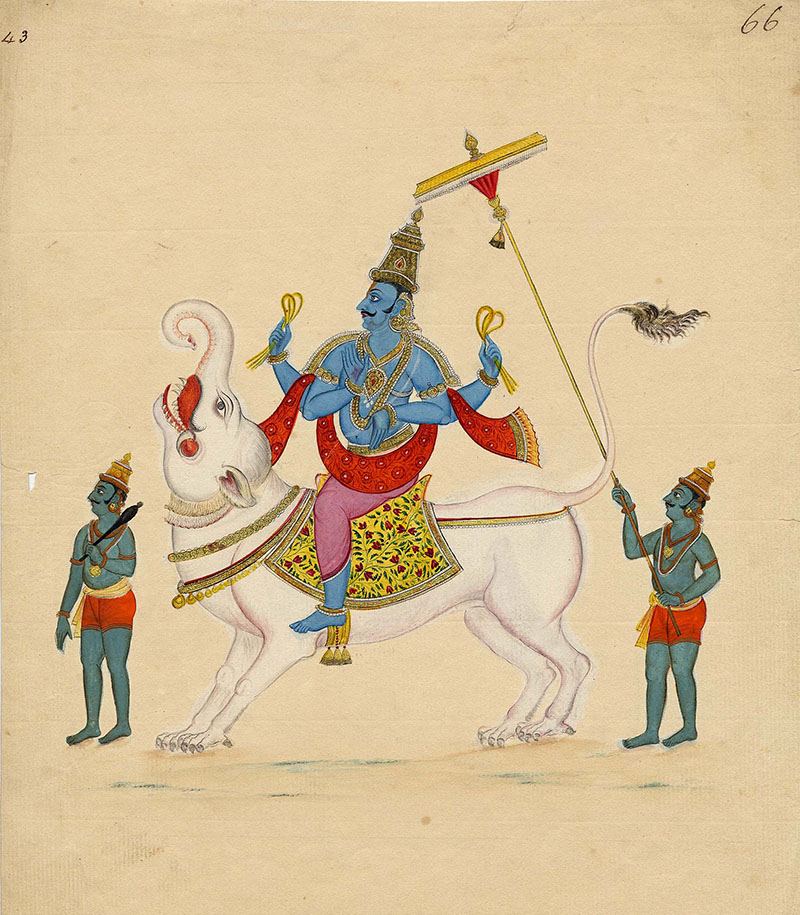
A Vedic deity associated with the moral values of rita (justice) and satya (truth), he also represents the natural elements of the sky and the ocean. The deity is typically represented with the head of a deer, legs of an antelope and the body and tail of a fish. His iconographic attributes include a nagapasha (noose) and his mount, the makara (a composite crocodile-like aquatic creature).
More Definitions
Yoni
It symbolises the goddess Shakti as well as the feminine procreative power within Hindu iconography. The word itself literally translates…
Quran
The primary religious scripture of Islam, containing the word of God as revealed by the archangel Jibrail (Gabriel) to the…
Chakravartin
A title referring to an ideal ruler in Buddhist, Jain and Hindu traditions and often used for the Mauryan emperor…
Dharmachakra
A symbol in Buddhist, Jain and Hindu traditions, it is depicted as the wheel of dharma (a religious concept representing…
Triratna
Also known as the Three Jewels of Buddhism, triratna comprises the Buddha, dharma (his teachings) and sangha (the community). In…
Vajrapani
A bodhisattva from Mahayana Buddhism and the protector and guide of the Gautama Buddha as well as a manifestation of…
Pasupatastra
A destructive weapon attributed to the Hindu deities Shiva, Kali and Mahadevi. The weapon is considered powerful enough to destroy…
Bharata (Jainism)
In Jain mythology, he is the first chakravartin ("universal emperor") and the oldest son of Rishabha Deva, the first Tirthankara.…