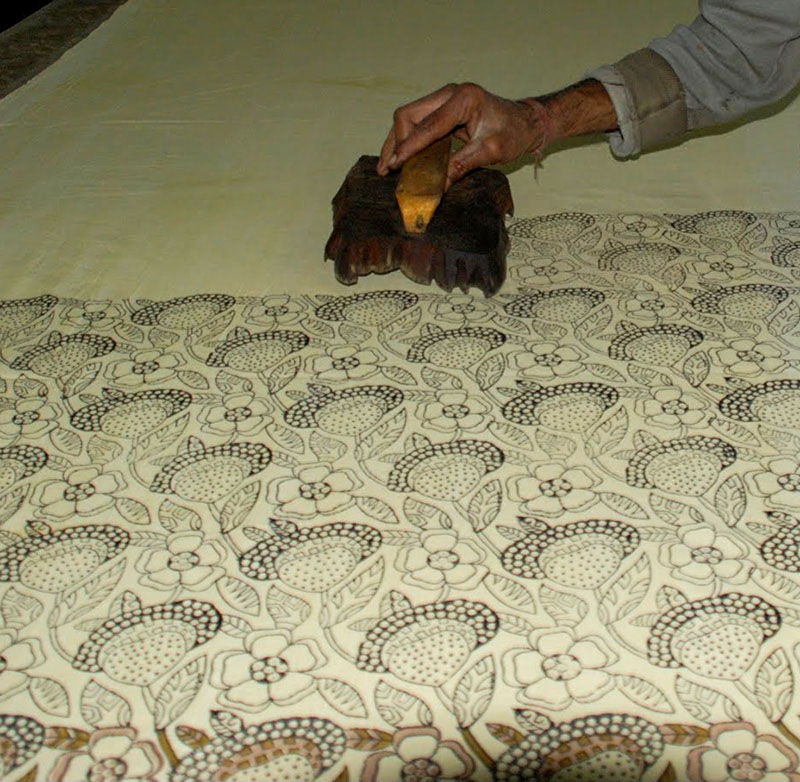
Derived from the Hindi and Urdu word for “outline,” it is a step in some Indian block-printing processes, in which the design is outlined and stamped on the base fabric using a resist of lime and gum. It also describes the wooden blocks used to create outlines for printed motifs in these traditions.
More Definitions
Cable-Edging
A motif with a raised surface, it is often found in textiles. Cables are created by knitting out of order,…
Overdye
In textile production, it is the practice of dyeing a fabric or yarn that has already been dyed.
Faience
A broad term used for fine glazed pottery made after the nineteenth century, comprising mineral grains such as quartz or…
Single-Spindle
A technique of spinning yarn that incorporates one spindle, as seen in the charkha used to spin khadi.
Size
A solution that is applied to warp threads before they are set on a loom for weaving, it protects the…
Termeh Tapestry
A Persian handwoven woollen cloth produced primarily in Isfahan, Iran, and characterised by a jujube red, green or black ground.…
Somak Weaving
A flat-weave tapestry weaving technique where weft yarns are wrapped over four warp threads before being twisted back under the…
Pietra Dura
A form of mosaic work wherein hard semi-precious stones are inlaid onto stone to form images. The decorative technique flourished…