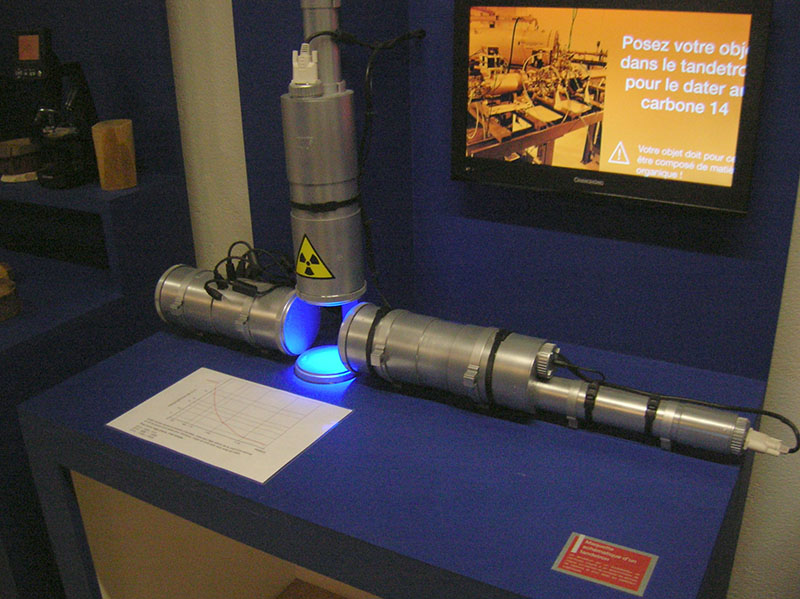
A method of determining the objective age of carbon-based materials by measuring the amount of carbon-14, formed when the nitrogen of radiocarbon decays, against an internationally used standard reference. William F Libby is credited with developing the method in 1946. It is used widely in disciplines such as archaeology and other natural sciences to determine the age of biological specimens and artefacts.
More Definitions
Tapestry Weave
A weft-facing technique of weaving, wherein coloured weft yarns are interlaced with plain-coloured warp. The design is created using the…
Serigraphy
A stencil-based printing process which involves forcing ink through a fine screen, usually made of silk, polyester or nylon, onto…
Rekh
Derived from the Hindi and Urdu word for “outline,” it is a step in some Indian block-printing processes, in which…
Somak Weaving
A flat-weave tapestry weaving technique where weft yarns are wrapped over four warp threads before being twisted back under the…
Block-Printing
Also known as woodblock printing, it is the process of stamping coloured designs on base fabrics such as cotton and…
Inlay
An ornamentation technique in sculpture and the decorative arts, where wood, metal, stone and fabric are embedded with different materials…
Linocut
A printmaking process in which a design is carved in relief on a sheet of linoleum, then inked. The sheet…
Warp
It refers to yarn or threads fixed longitudinally on a loom. Weft threads are passed horizontally over and under the…