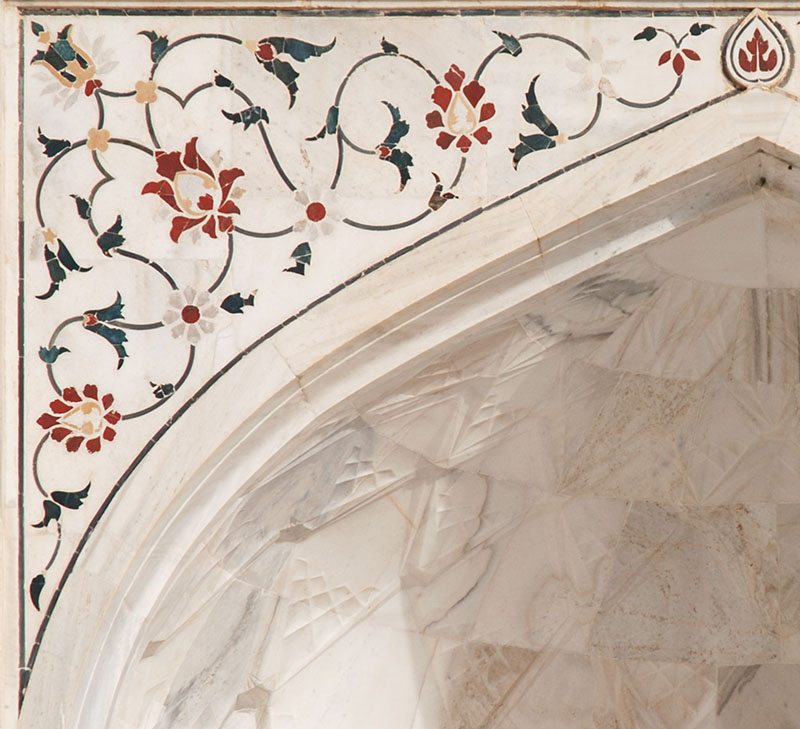
A form of mosaic work wherein hard semi-precious stones are inlaid onto stone to form images. The decorative technique flourished during the sixteenth and seventeenth centuries in Florence, Italy. A variation of the technique, known as parchin kari (mosaic work), was adapted by artisans in the sixteenth century, seen most prominently in the Taj Mahal, Agra. From the Italian pietre dure, meaning “hard stone.”
More Definitions
Wax Resist-Dyeing
A technique of resist-dyeing in which molten wax is applied to portions of a textile, using blocks or a pen-like…
Faience
A broad term used for fine glazed pottery made after the nineteenth century, comprising mineral grains such as quartz or…
Ginning
The process of removing debris and dirt from raw cotton fibre, either manually or by running it through a mechanical…
Pastiche
A style associated with postmodern trends in visual art, music and literature, pastiche indicates works of art that imitate or…
Bargello Stitches
An embroidery technique in which patterns are made by sewing vertical stitches of different lengths in a row, according to…
Katorna
The process of trimming extra threads on the reverse side of a brocade after weaving. The term is derived from…
Dovetail
A method of tapestry weaving where wefts of two different colours are woven onto the same warp threads. This method…
Khat
A motif found predominantly in kota doria, which uses cotton as warp and silk as weft threads. The warp and…