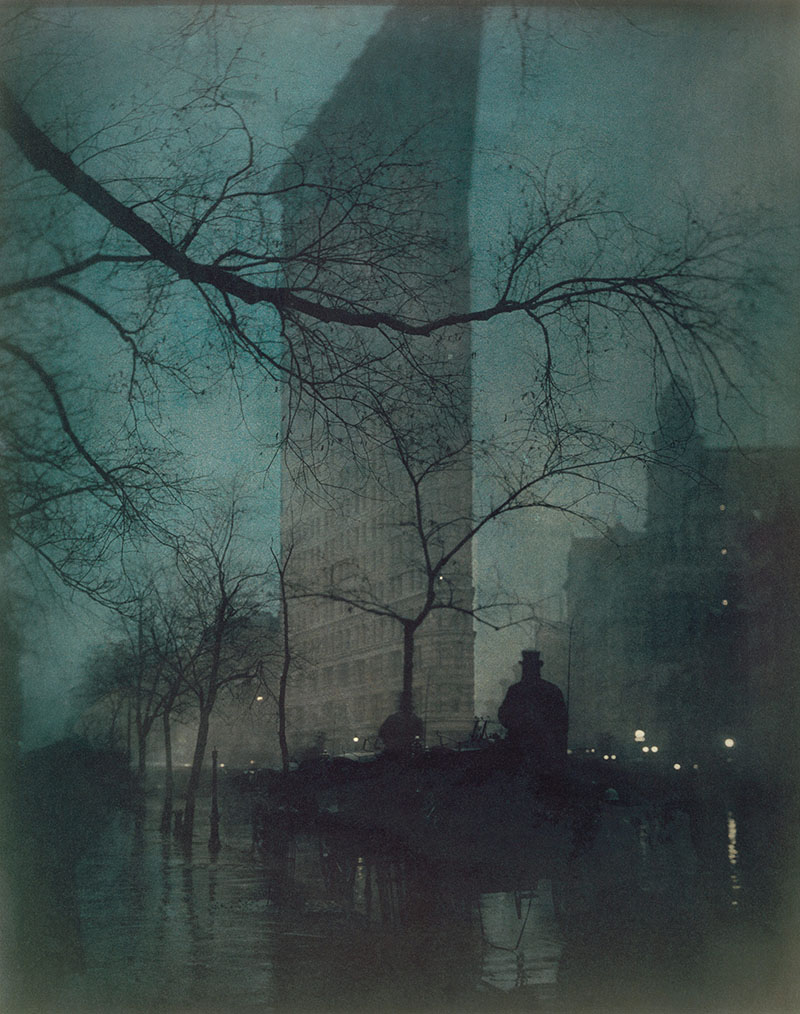
An aesthetic movement in photography during the late nineteenth and early twentieth century that focused on composition, light and subject matter rather than accurate representation of reality. It was first suggested in the writings of Henry Peach Robinson in his book Pictorial Effect of Photography (1869). Alfred Stieglitz, Clarence H White and Alvin Coburn were among the American photographers who had a significant influence on the movement. In India, photographers such as Shapoor Bhedwar, Jehangir S Taraporewala, Pestonji S Batliwala and Karl Khandalawala were also making photographs with a distinct pictorial and artistic quality to them.
More Definitions
Constructivism
An early twentieth century artistic and architectural movement that was started in Russia by painter and architect Vladimir Tatlin and…
Geometric Abstraction
A form of abstract art that uses geometric forms, usually in a non-illusionistic space, to create non-representational or non-objective compositions.…
Bauhaus
A school of art and design founded by German architect Walter Gropius in 1919, which emphasised an interdisciplinary approach to…
International Style
Style of architectural design characterised by lightweight, rectilinear structures using industrial materials such as steel, concrete and glass, often featuring…
Lyrical Abstraction
Romantic, expressive and abstract paintings made using loose and gestural brushstrokes. The style developed in France and the United States…
Vesara Architecture
A term for an architectural style primarily associated with medieval-era temples in the Deccan region, especially north Karnataka. Derived from…
Narrative-Figurative Art
A tendency in early Modernist painting in India, marked by the presence of both narrative and figuration and deviating from…
Art Nouveau
A cultural movement in art, architecture and applied and decorative arts that sought to modernise design and free it from…