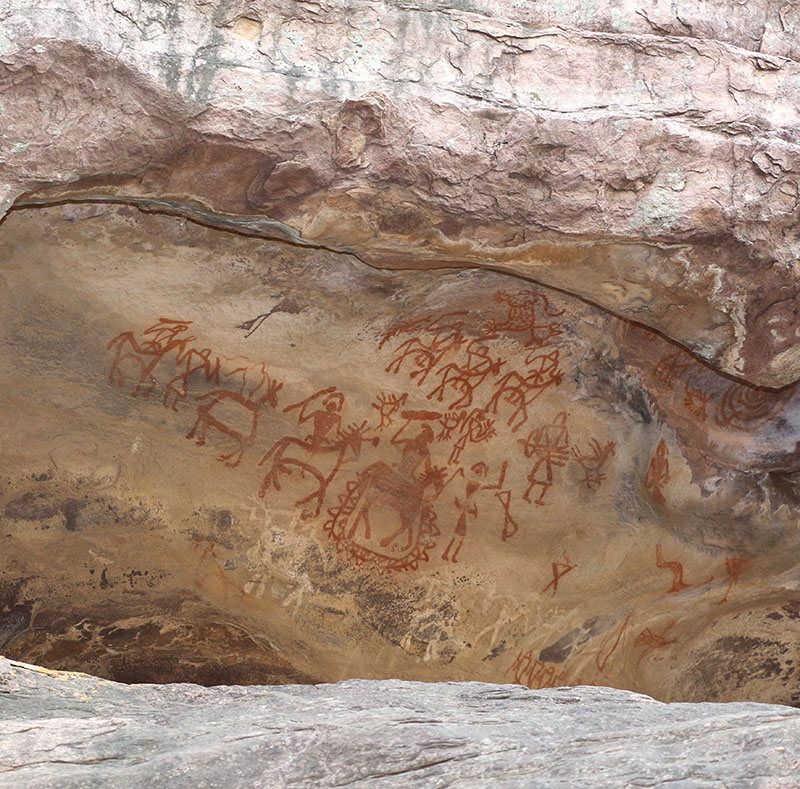
Also called the Old Stone Age, this is the period of human history marked by the development and use of stone tools. The period ranges from the first use of stone tools around 3.3 million years ago to the end of the Pleistocene Epoch around 11,650 years ago. Tools made from obsidian and chert, as well as bone tools, are associated with this period. The earliest examples of cave art are also dated to this era.
More Definitions
Radiocarbon Dating
A method of determining the objective age of carbon-based materials by measuring the amount of carbon-14, formed when the nitrogen…
Taxila
An archaeological site in present-day Rawalpindi, Pakistan. Founded c. 1000 BCE, the site was located along trade routes between Central…
Brahmagiri
An archaeological site in Chitradurga, Karnataka, that contains evidence of habitation from the Megalithic and Neolithic periods in India. It…
Kurkihar Hoard
A hoard of 226 bronzes dating between the ninth and twelfth centuries and discovered in 1930 at Kurkihar, Bihar. Most…
Mesolithic Period
The period between Upper Paleolithic and Neolithic periods, characterised by the presence of material culture, including pottery and cave art,…
State Archaeological Museum, Gwalior
A museum located in the Gujari Mahal Palace in Gwalior, Madhya Pradesh, it is also known as the Gujari Mahal…
Harappa Museum, Punjab
A museum in Punjab, Pakistan, that houses artefacts from the Indus Valley Civilisation. The museum was established in 1926 and…
Hollowed Bone
A tool made from shaping human or animal bone and used by prehistoric people as tools as well as to…