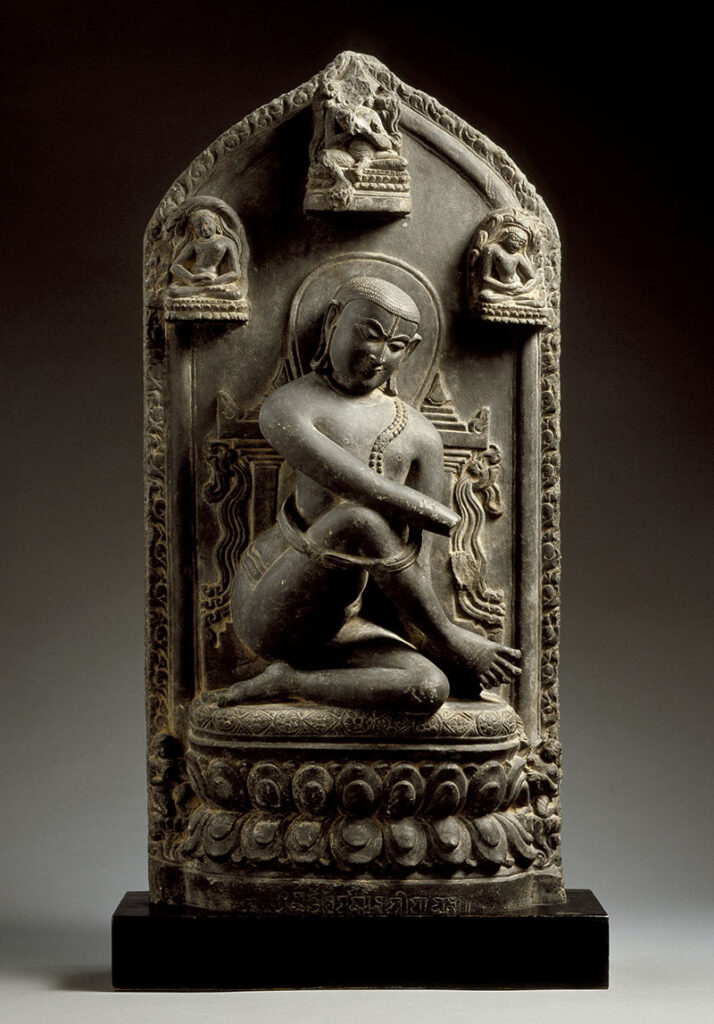
A term used in Tibetan and Tantric Buddhism for someone who embodied the perfect siddhi (psychic or supernatural abilities) through their sadhana (practice) of yoga and tantra. There are about eighty-four mahasiddhas that have been referenced in hagiographies and poetic verses, and they are considered to be the founders of Vajrayana Buddhism. Scholars have suggested that these figures likely lived between c. 750–1150 CE. From the Sanskrit mahasiddha, meaning “great adept.”
More Definitions
Ramayana
One of the two major ancient Indian epics written in Sanskrit, it is believed to have been composed by Valmiki…
Heer-Ranjha
An epic love story popular in the Punjab region across present-day Pakistan and India, it narrates the story of lovers…
Gita Govinda
A Sanskrit poetic epic that describes the love between the Hindu god Krishna, his chief consort Radha and the gopikas…
Sutra
Literally meaning "string" or "thread," it refers to literature from the ancient and medieval periods that was originally preserved and…
Humanism
A term coined in the nineteenth century to describe philosophical doctrines that originated in thirteenth and fourteenth-century Italy that emphasised…
Shaivite Upanishads
A body of fourteen Upanishadic texts dedicated to Shaiva traditions and practice, which expound on the worship of the Hindu…
Sangha
A monastic order comprising bhikkhus (monks) and bhikkhunis (nuns), it is one of the Three Jewels of Buddhism. From the…
Devi Upanishad
A minor Upanishad often classified as one of the eight Shakta Upanishads, it is one of the nineteen late-Vedic texts…