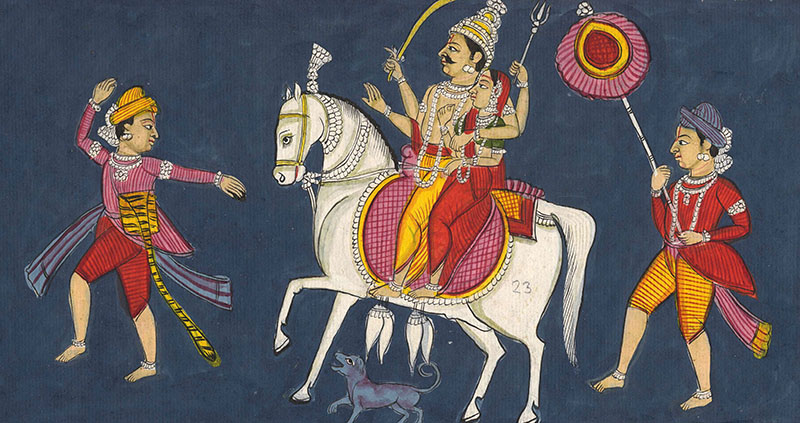
The tutelary deity of a family or a clan. The term is derived from the Sanskrit words kul, meaning “family” or “clan,” and devata, meaning “deity.
Kuladevata
Link copied!
The tutelary deity of a family or a clan. The term is derived from the Sanskrit words kul, meaning “family” or “clan,” and devata, meaning “deity.
Link copied!
Section of the Sanskrit epic Mahabharata, composed as a dialogue between the Pandava prince Arjuna and his charioteer and companion…
A deity of marriage, worshipped in parts of Madhya Pradesh and Gujarat, and the principal deity in Pithora paintings.
In Tantric Buddhism, she is a female form of the Buddha, which is associated with enlightenment and wisdom. Within iconographic…
The Hindu goddess of war, identified as the principal form of the goddess Parvati. Durga is depicted as riding a…
A deity who represents the combined aspects of Vishnu (Hari) and Shiva (Hara). Also known as Shankaranarayana, the fused body…
A Vedic deity associated with the moral values of rita (justice) and satya (truth), he also represents the natural elements…
The name of the anthropomorphic form of Varaha, an avatar (manifestation) of the Hindu deity, Vishnu. As Varaha, Vishnu assumes…
Also known as the Medicine Buddha, he is the Buddha of healing and medicine in Mahayana Buddhism and is believed…