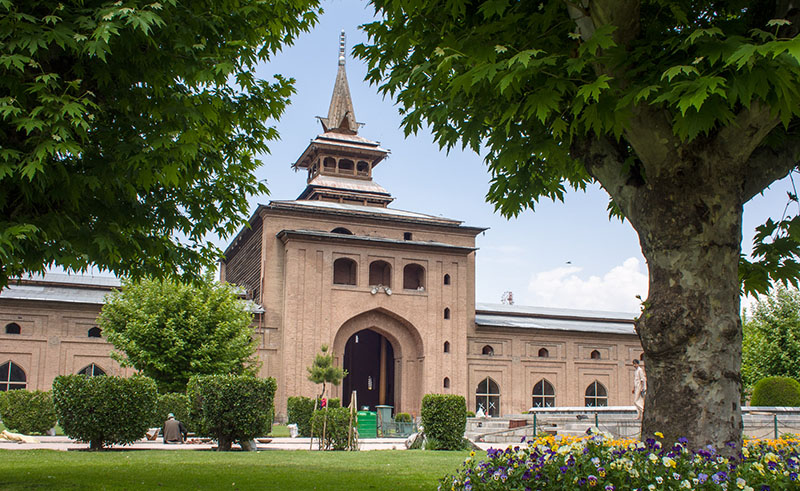
Muslim monarchy (1320–1586) centred in the Kashmir Valley in the northern Indian subcontinent. Its primary capital was Srinagar and its maximum territorial extent — in the fourteenth and fifteenth centuries — included Ladakh and Jammu in present-day India and Baltistan and the Swat Valley in present-day Pakistan. The Kashmir Sultanate emerged amid the collapse of the Hindu Lohara dynasty following Mongol invasions. Its founder was Rinchan Bhoti, a Ladakhi Buddhist noble who converted to Islam under a Sufi preacher and took the title Sultan Sadr al-Din (r. 1320–1323). After his death, power returned to Lohara monarch Udayanadeva until Shah Mir — a former minister of Rinchan and Udayanadeva’s governments — seized power in 1339, founding the Shah Mir dynasty, which ruled until displaced by the Chak dynasty in 1561; the Chaks governed until eventually surrendering to Mughal conquest in 1589. The sultanate’s nobility included Dardic, Tibetan and Turco-Persian elites. Its most celebrated ruler was Zain-ul-Abidin (r. 1420–1470), known for his cultural patronage and promotion of religious tolerance. Sanskrit and Persian served as official languages; Kashmiri was granted official status later. Sufi orders — Suhrawardiyya, Kubrawiya, and the indigenous Rishi order — profoundly shaped the region’s cultural character during this period. The Kashmir Sultanate also saw the emergence of a distinctive Kashmiri architecture blending Buddhist, Hindu and Islamic influences, exemplified by such structures as Srinagar’s Khanqah-e-Maula and Jamia Masjid.
Kashmir Sultanate
Link copied!