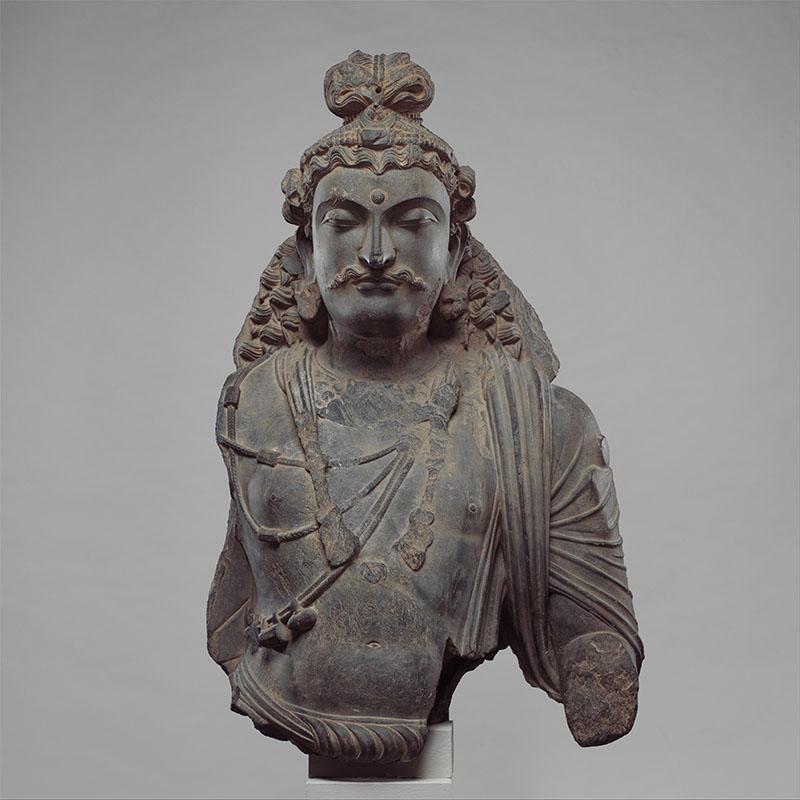
Sculptural art characterised by the merging of Indian and Hellenistic traditions, it overlaps with the reign of the Indo-Greeks in Bactria and the Indian subcontinent, beginning c. 200 BCE. Sculptural pieces from Mathura are believed to display Indo-Greek features such as realistic physiological details, frontal perspectives, iconographic details and the display of folds in sculpted drapery. The Gandhara school, particularly its earliest statues of Buddha, are considered to embody some of the last traces of this tradition of sculpture.
More Definitions
Surrealism
An art movement that emerged in twentieth-century France and aimed to express the creativity of the unconscious mind through the…
Picturesque
An aesthetic category accorded to pictures that have an agreeable and appealing visual quality, and is particularly used for idealised…
Art Informel
Coined by French art critic and curator Michel Tapie in 1952, the term signifies French artistic and painting styles of…
Intermedia
Similar to multimedia art, this is a term used to describe interdisciplinary works of art that collapsed existing genres of…
European Realism
A movement originating in France in the 1840s, which rejected then-prevalent ideals of Romanticism in French art and literature in…
Neo-Romanticism
A cultural movement in Britain during the 1930s and '40s which was influenced by eighteenth-century Romanticism and emphasised individualism and…
Photorealism
A genre of painting, drawing and graphics where the image is produced after studying a photograph and rendering a reproduction…
Happenings
A precursor of performance art, they are events or situations where the artwork is created by the conditions produced by…