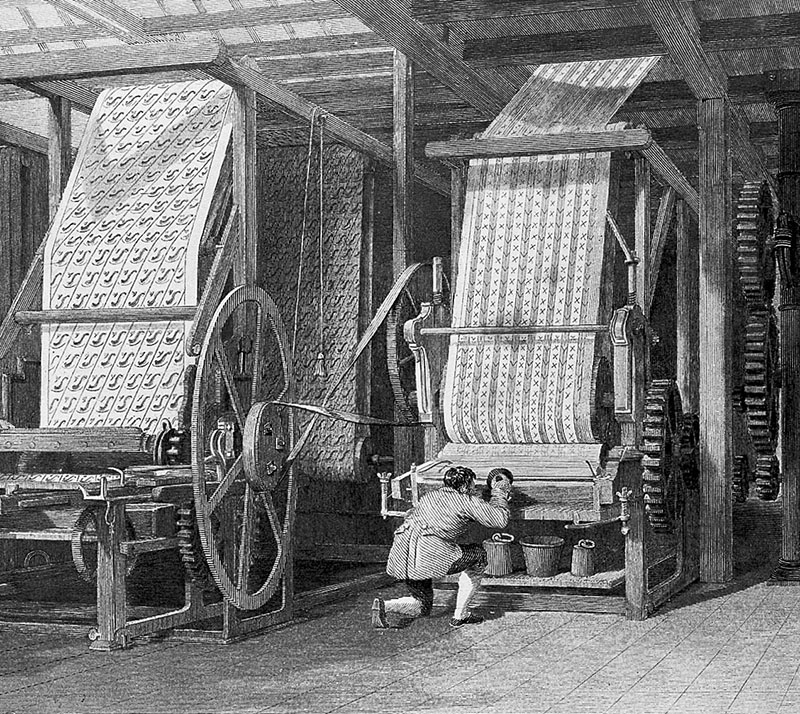
Passed by the British Parliament in 1700 and 1721, these acts banned the sale and use of imported calico cloth in Britain. At the time, calico cloth was imported primarily from India. This measure was aimed at protecting British textile industries from the more competitively priced printed cotton cloth.
More Definitions
Khanzada Begum
Khanzada Begum (b. c.1478; d. 1545) was the elder sister of the Mughal emperor Babur. She finds mention in his…
Kushan Empire
A syncretic empire founded in the Bactrian region of central Asia around the first century CE, it spread to Uzbekistan,…
The Partition
The division of British India in 1947 into India and Pakistan, spurring a great migration of people from and to…
Chera
A dynasty that ruled over areas of present-day Kerala and Tamil Nadu from c. second century BCE. There were multiple…
Lepel Griffin
Lepel Griffin (b. 1838; d. 1908) was a British diplomat, photographer and writer and frequent collaborator of photographer Lala Deen…
Dutch East India Company
Founded in 1602, the United East India Company or Vereenigde Oost Indische Compagnie was a commercial organisation comprising several trading…
Devanampriya Priyadarshi
A title used by the emperor Ashoka to refer to himself, it derives from the Pali Devanampiya Piyadassi, meaning "He…
Vijayanagara Kingdom
Established in 1336, it was one of the dominant kingdoms of southern India in the late medieval and pre-modern periods,…