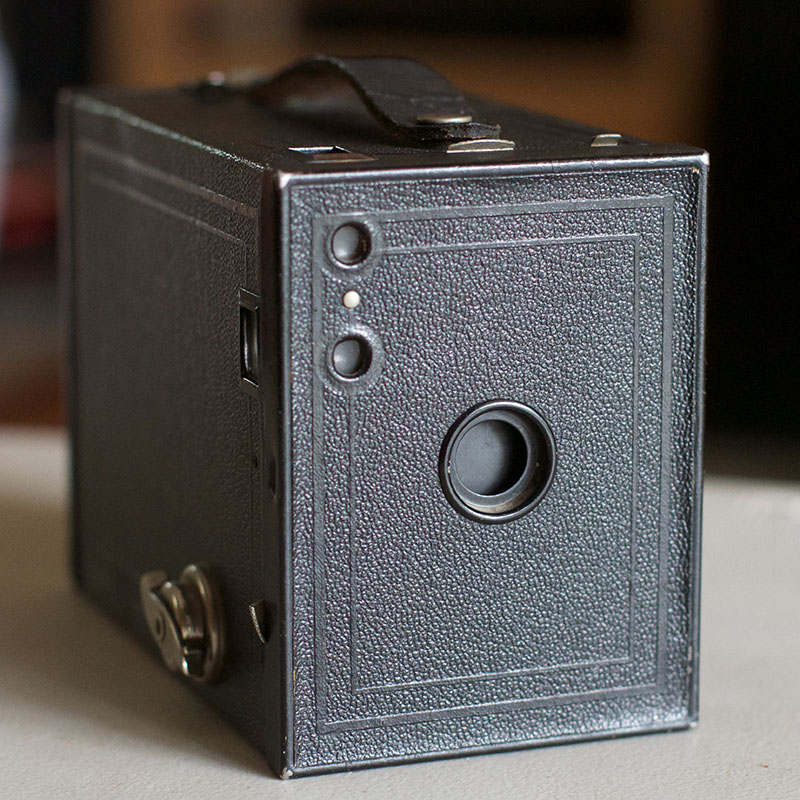
Also known as the Kodak brownie, it is a series of box cameras with a meniscus lens and roll film, invented by Frank A Brownell and made by Eastman Kodak in 1900. The camera was marketed primarily to children, with a low starting price of USD 1. The camera had different versions throughout the years and are generally credited with making photography accessible to the public and giving rise to amateur photography.
More Definitions
developer
In photography, a chemical solution used to reveal the latent image that has been captured on the photographic film, as…
Dobby
A mechanism attached to a loom that controls warp threads to allow for the weaving of small, usually geometric or…
Single-Lens Reflex Camera
A camera that allows the photographer to view the subject through the lens while simultaneously seeing the image that will…
Schiffli
A multi-thread machine used to create machine embroidery and lace, invented in 1893 by Swiss inventor Isaak Grobli. The term…
Plate Camera
A camera with a single piece of glass or loaded with single pieces of film coated with light-sensitive chemicals. These…
Lamprey’s Grid
A grid system developed in 1869 by John H Lamprey that was used to photograph subjects for anthropological studies. It…
Paper Negative
A photographic negative created on paper, rather than on modern cellulose film or a glass plate. William Henry Fox Talbot's…
Heald
Also known as a heald wire or heddle, it is the part of the loom through which warp threads are…