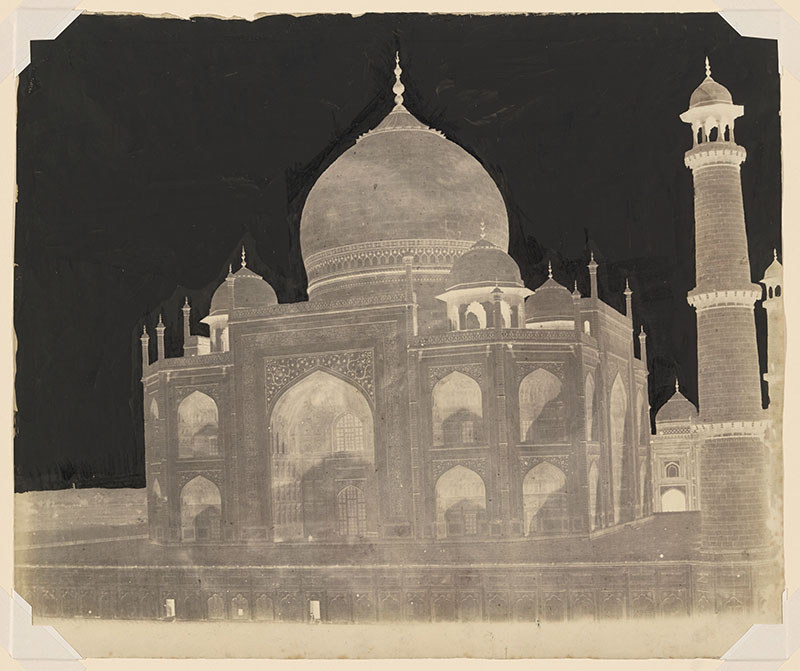
A photographic negative created on paper, rather than on modern cellulose film or a glass plate. William Henry Fox Talbot’s calotype process from the 1830s was among the earliest techniques to use paper negatives, with several variations emerging around 1850, such as those using waxed paper. It remains in use as an alternative photographic medium, as the texture of the paper and the possibility to scratch or draw on it before printing create room for artistic expression.
More Definitions
Throw-Shuttle
A type of loom in which the shuttle, containing the weft yarn, is passed through the warp threads by hand.…
developer
In photography, a chemical solution used to reveal the latent image that has been captured on the photographic film, as…
Fixed Heddle Loom
Also known as rigid heddle looms, they feature a single shaft wherein heddles are fixed in place and resemble the…
Tanari
A wooden implement, it comprises vertical rods fixed on a plank around which the warp thread is wound.
fixed-focus lens
Camera lens whose focal distance is pre-determined at the time of manufacture and cannot be adjusted by the user. It…
Heald
Also known as a heald wire or heddle, it is the part of the loom through which warp threads are…
Magic Lantern Projector
An early image projector developed in the seventeenth century, where pictures were showcased through transparent plates, typically made of glass.…
Enlarger
A transparency projector used to produce photographic prints from negatives and transparencies. Enlarging became popular in the mid to late…