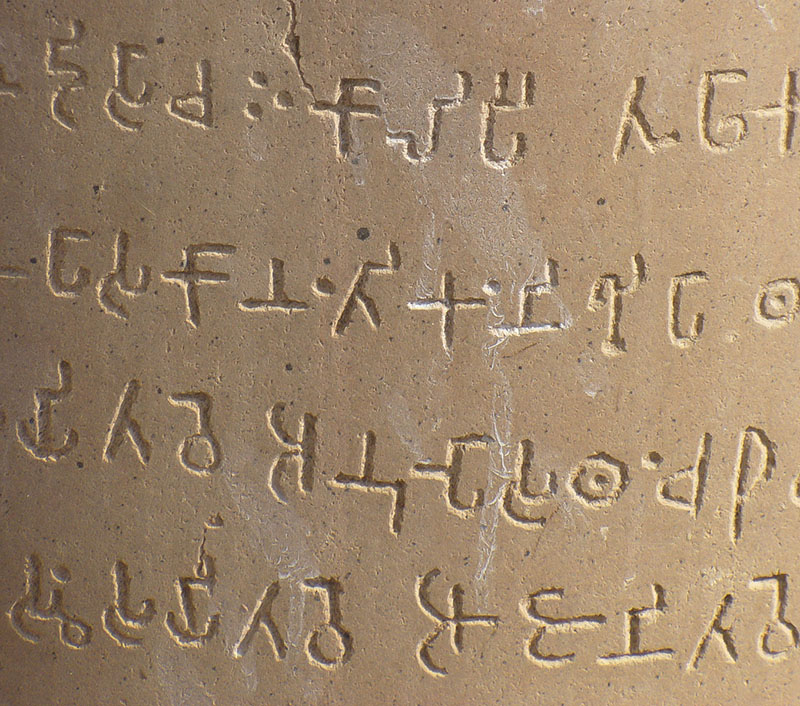
A writing system or script that appeared as a fully developed universal system in Asia c. third century BCE. It is believed to be the ancestor of later South Asian and Southeast Asian scripts. The earliest evidence of the use of the script is from the pillar and rock-cut edicts of Ashoka, dated c. 250–232 BCE. It was first deciphered in 1837 by James Prinsep, an archaeologist with the East India Company.
More Definitions
Abhiniskramana Sutra
A treatise on the life of the Buddha, it retells, among other episodes, how he left his palace to lead…
Mahabharata
The longest Indian epic poem, traditionally attributed to the legendary sage Vyasa and compiled into its extant recension sometime between…
Ramayana
One of the two major ancient Indian epics written in Sanskrit, it is believed to have been composed by Valmiki…
Rigveda
Earliest extant text from the Vedic corpus, dated roughly between 1700 and 1200 BCE. Like the other Vedas, the Rigveda…
Shaivite Upanishads
A body of fourteen Upanishadic texts dedicated to Shaiva traditions and practice, which expound on the worship of the Hindu…
Srishti
Meaning "creation" in Sanskrit, it is one of the cosmic acts of deities in the Hindu religious tradition. It is…
Nayika
The heroine in dramatic representation, as outlined in the Natyashastra, who is represented in different scenarios with the nayaka, who…
Vedas
A body of religious texts composed in Sanskrit and considered the oldest scriptures in Hinduism. There are four primary texts…