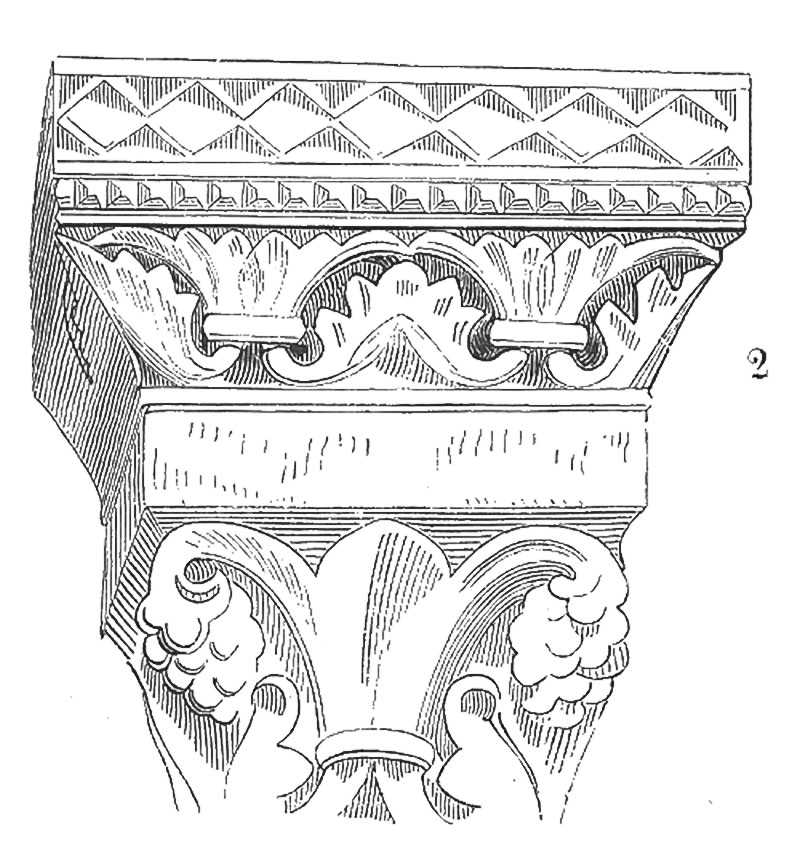
In architecture, a wide slab at the top of a load-bearing column, forming the uppermost section of the capital and helping transfer the weight of the supported beam or arch to the column’s shaft. In freestanding columns the abacus may be mounted with decorative or emblematic sculptures. From the Ancient Greek ábax, meaning ‘slab’.
More Definitions
pitched roof
A roof form featuring one or more inclined surfaces rising to meet at a ridge, point, or wall surface. The…
Monolith
A structure that is excavated or carved out of a single block of rock. Monoliths are usually not moved from…
Vedika
Meaning ‘railing’ or ‘raised platform or altar’ in Sanskrit and Pali, vedika refers to the outer railing around a sacred…
Ikshvaku Architecture
Architecture patronised by the Andhra Ikshvakus (c. fourth to third century BCE) (not to be confused with the legendary Ikshvaku dynasty…
belfry
Bell tower; or the upper part of this or a steeple, which houses bells; or specifically the timber structure by…
Kudu
The Tamil term for an arch that is shaped like a horse-shoe. It is also known as the chaitya arch,…
Krishna Mandapa
A open-air bas relief sculpture in Mamallapuram, Tamil Nadu, attributed to the reign of the Pallavas. It is 8.8 meters…
Kuta
A type of roof in Dravida temple architecture shaped like a hut, with a square base.