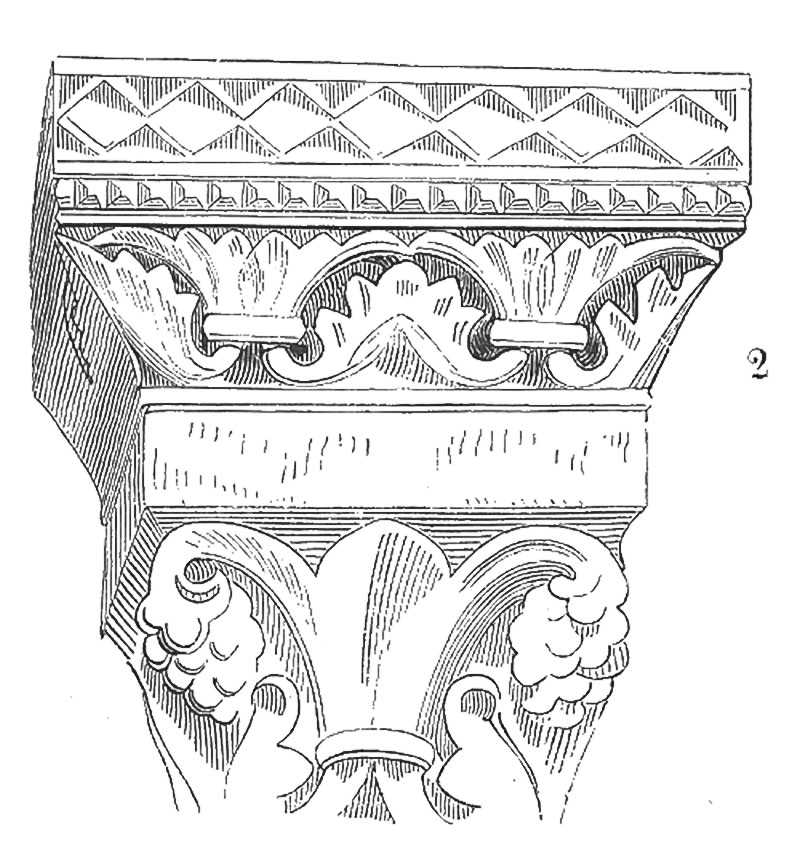
In architecture, a wide slab at the top of a load-bearing column, forming the uppermost section of the capital and helping transfer the weight of the supported beam or arch to the column’s shaft. In freestanding columns the abacus may be mounted with decorative or emblematic sculptures. From the Ancient Greek ábax, meaning ‘slab’.
More Definitions
mezzanine
Platform or balcony projecting as a partial, intermediate storey between the floor and ceiling of a full-heighted space. The mezzanine…
Mahendra Style
The style of cave temple architecture developed under the patronage of the Pallava king Mahendravarman I, characterised by simplicity of…
Vihara
Referring to the act of leisurely strolling as well as a garden or dwelling place in Pali and Sanskrit, vihara…
Roll Bracket
Also known as taranga potika, it is a corbel-bracket with a roll-like pattern or moulding.
Entablature
A horizontal band resting on pillar capitals, they are divided into three parts — the architrave (the bottom), the frieze…
pediment
Triangular gable-like structure surmounting the end of a portico or doorway at the entrance of buildings, especially religious or other…
Dormer
A triangular or cylindrical projection from a roof that usually contains a window. It is an architectural motif commonly found…
Groyne
A long, rigid hydraulic structure constructed perpendicular to the seashore or riverbank to interrupt flow of water. They are usually…