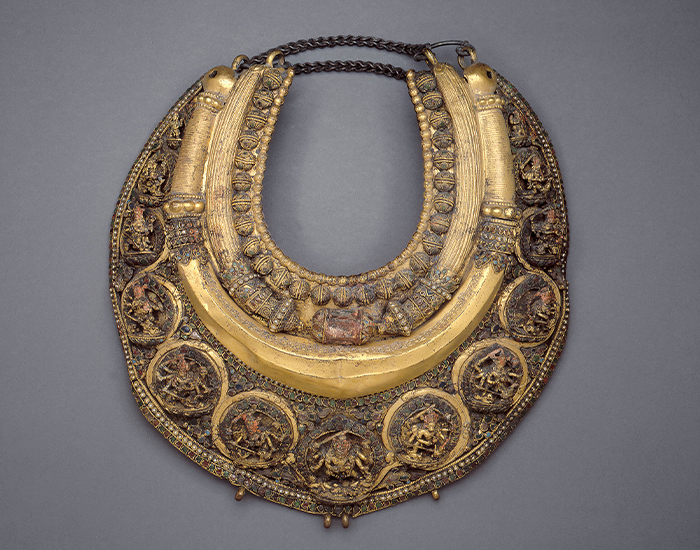
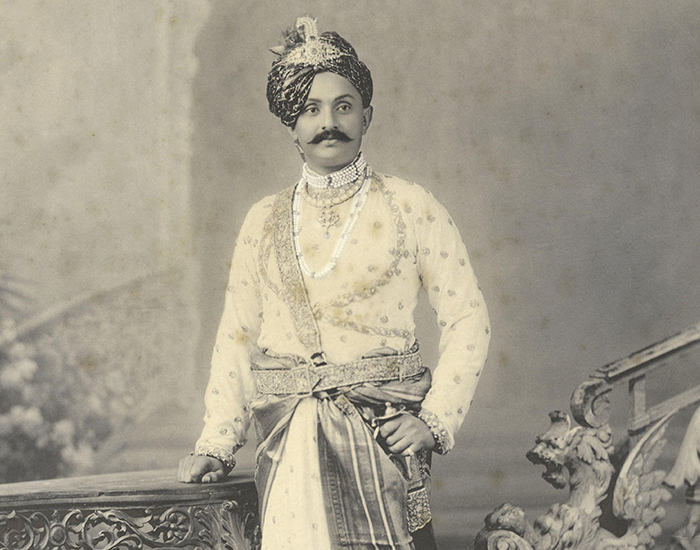
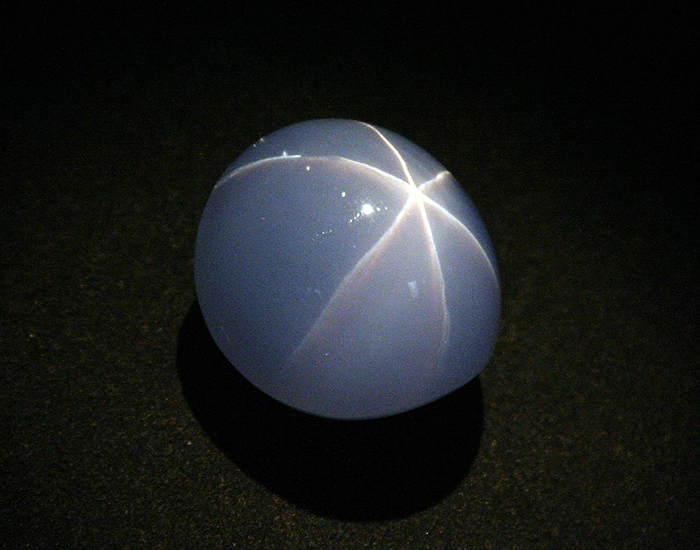
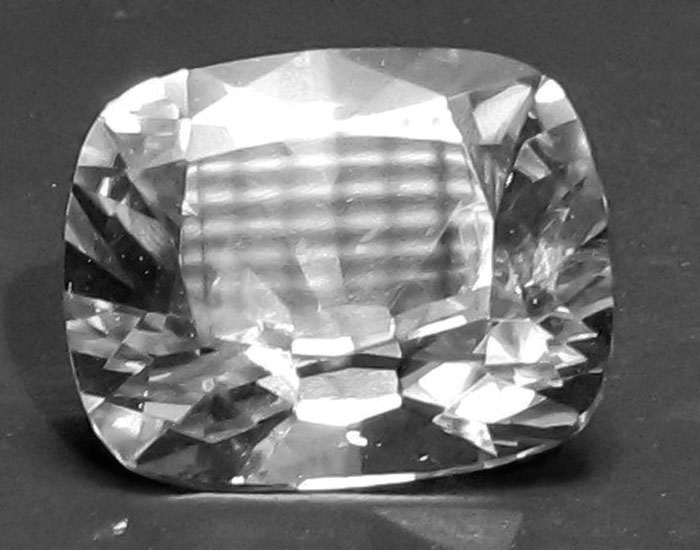
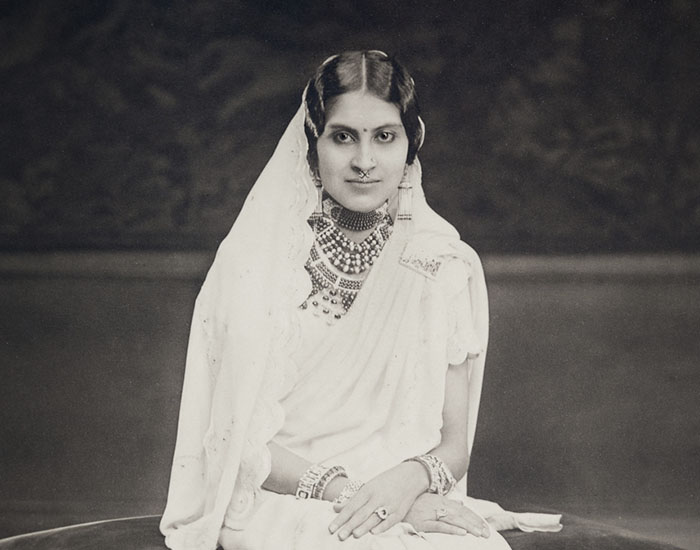
Central to traditional costumes and ceremonies in South Asia, elaborate jewellery has a long history in India. Ornaments, especially of gold, form a significant part of Indian family heirlooms to this day. Creativity and excellence in craftsmanship were fostered in Indian jewellery as the associated traditions of meenakari, thewa, ivory-carving, gem-cutting and others received royal support and patronage. Royal families through the ages have commissioned unique accessories that have gone on to become culturally significant objects — often by design, as these objects were custom-made to symbolise the wealth, influence and resources of their owners. As the only known source of diamonds until the early eighteenth century, the Indian subcontinent also has a uniquely long and violent history of these and other gemstones changing hands as spoils of war.
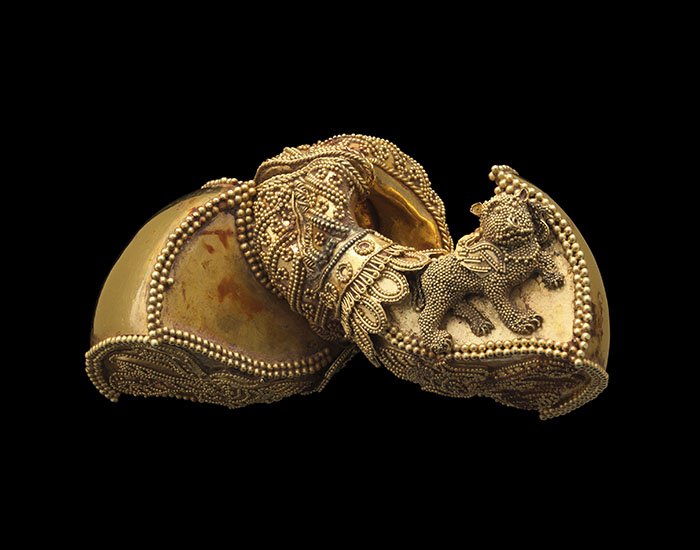
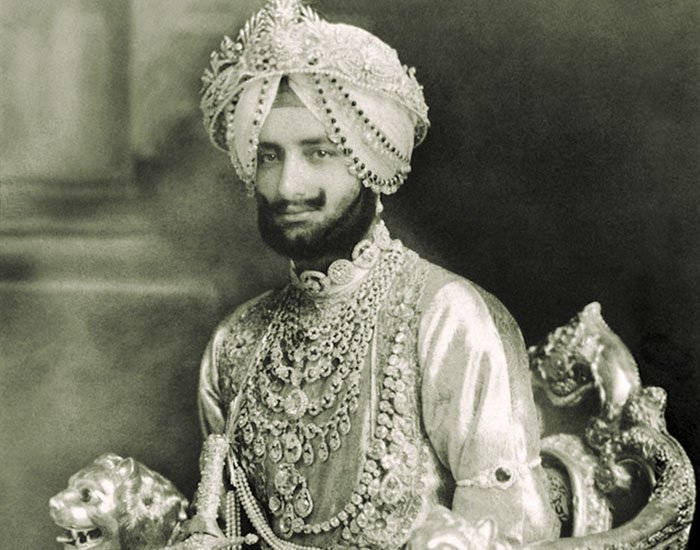
A pair of gold earrings from the first century BCE — extraordinarily large and heavy by modern standards — is among the oldest jewellery discovered in the subcontinent. Associated with deified rulers, it finds representation in ancient Buddhist sculpture. More recent examples such as the Toussaint Necklace, the Pearl Carpet of Baroda, the Patiala Necklace and the Patiala Ruby Choker, serve as testament to the wealth and access, if not political power, that certain Indian royal families enjoyed under British rule. Often designed and set by leading jewellery firms in Europe, these commissions also embody the aesthetic fusions of East and West being explored in these elite circles at the time. For later generations of royalty, these iconic pieces of jewellery became reliable ways to avoid bankruptcy, through distress sales.
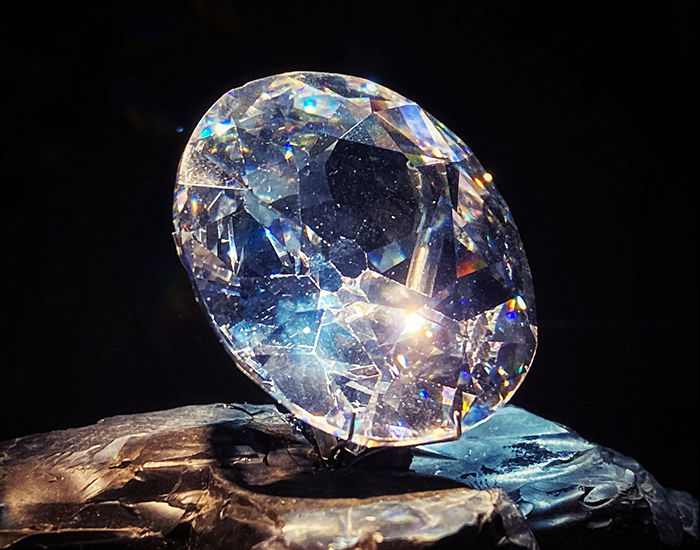
Royal jewels have changed hands not only through sales, inheritance and gifts but also often through war and theft — perhaps most famously in the case of the Koh-i-Noor diamond, which had already seen several conquests in its legendary history by the time it was handed over to the British Crown through the Treaty of Lahore. Many such objects have been part of a complex global — and not always legal — trade in precious goods, as much for their historical significance as for their intrinsic value. The provenance and mystique of these jewels — many of which disappeared from the historical record for decades at a time, or were modified with changing fashions — add to their rich legacy.
Follow these jewels’ journeys of pomp and intrigue through these articles.