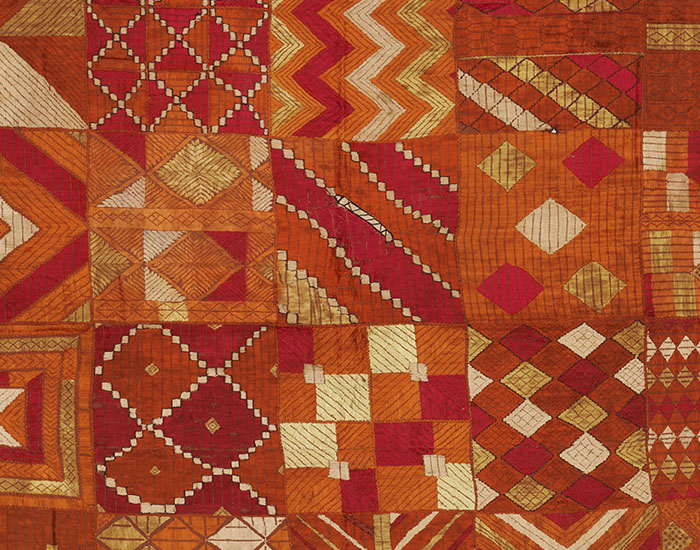
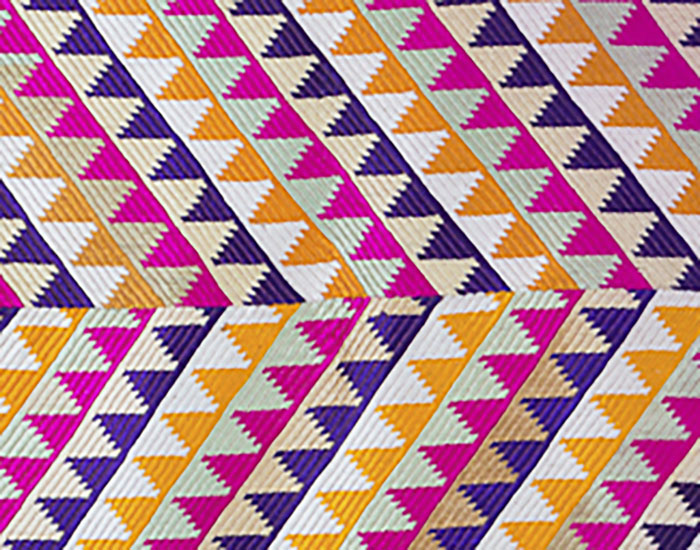
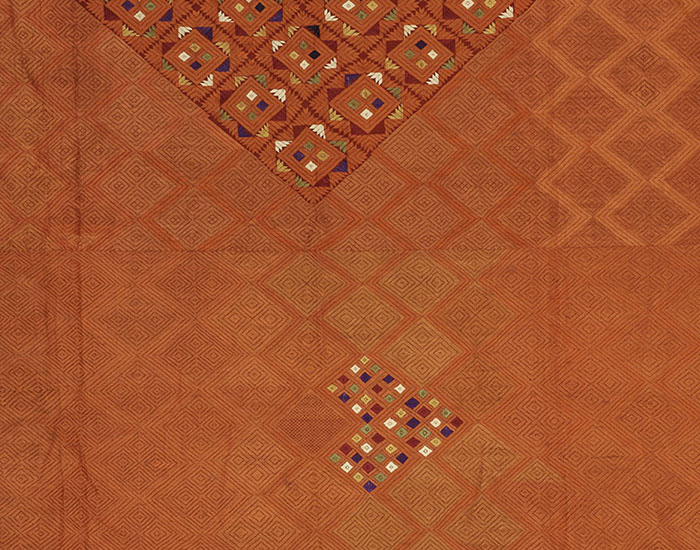
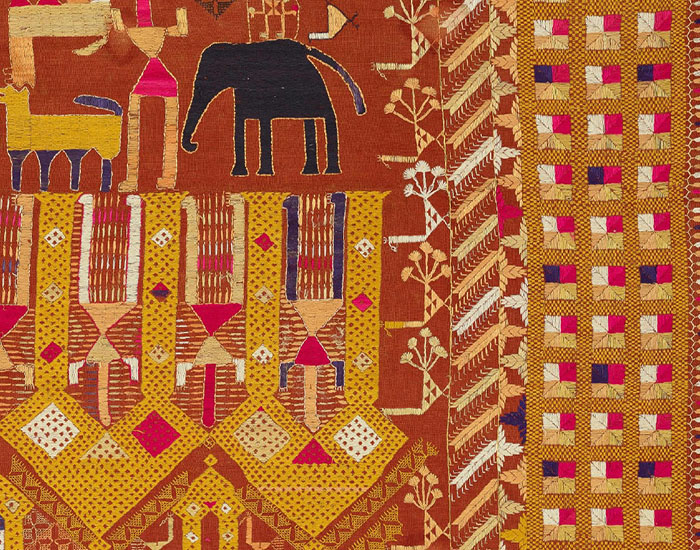
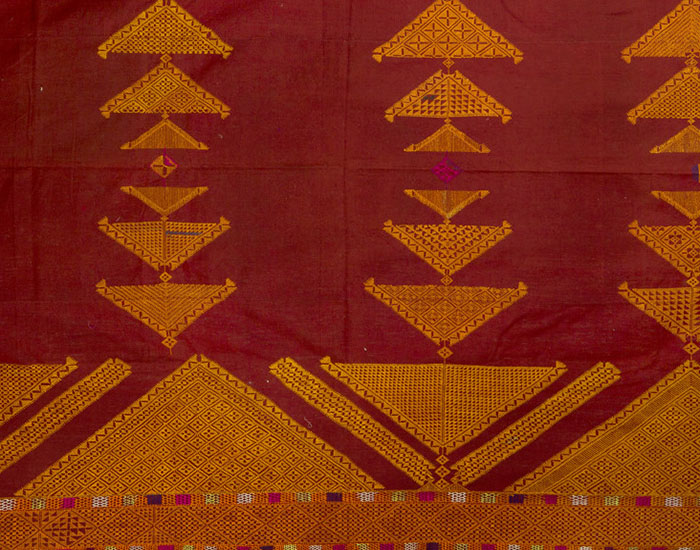
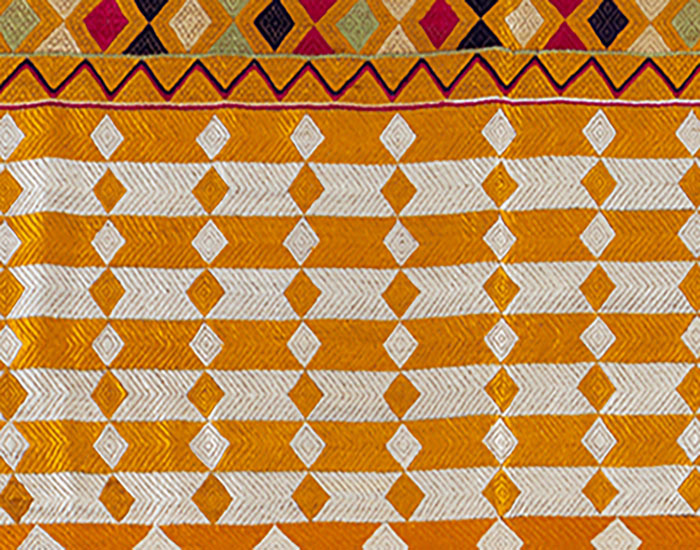
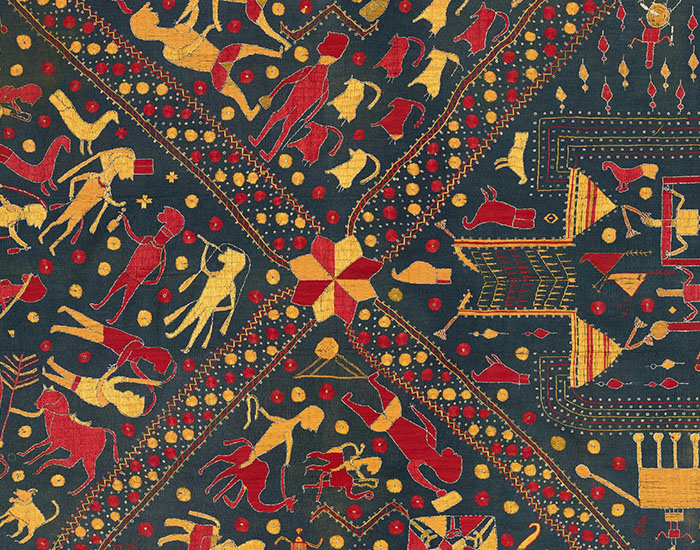
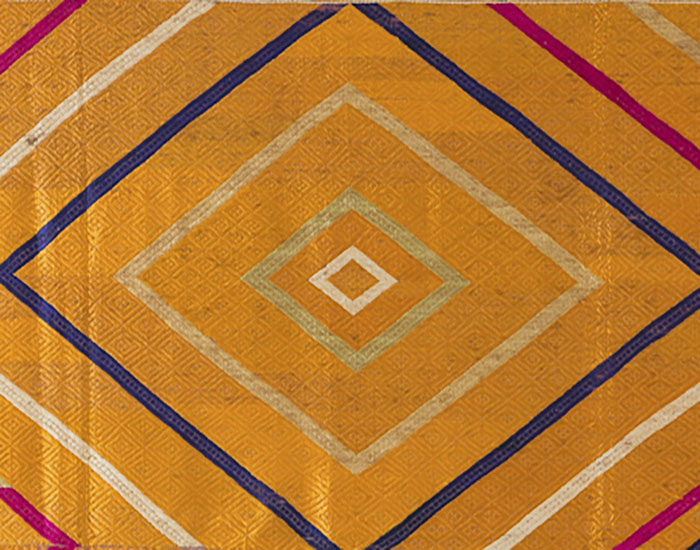
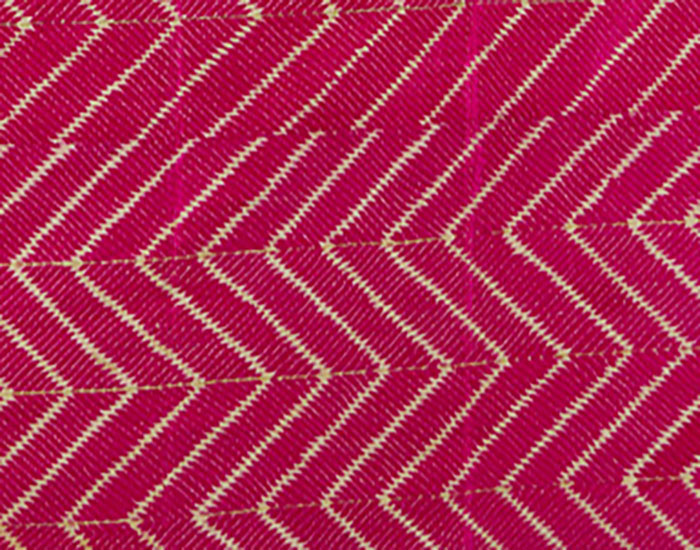
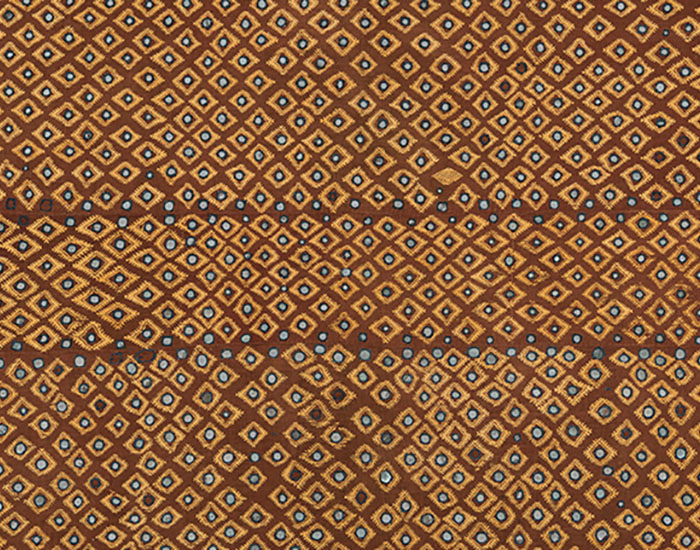
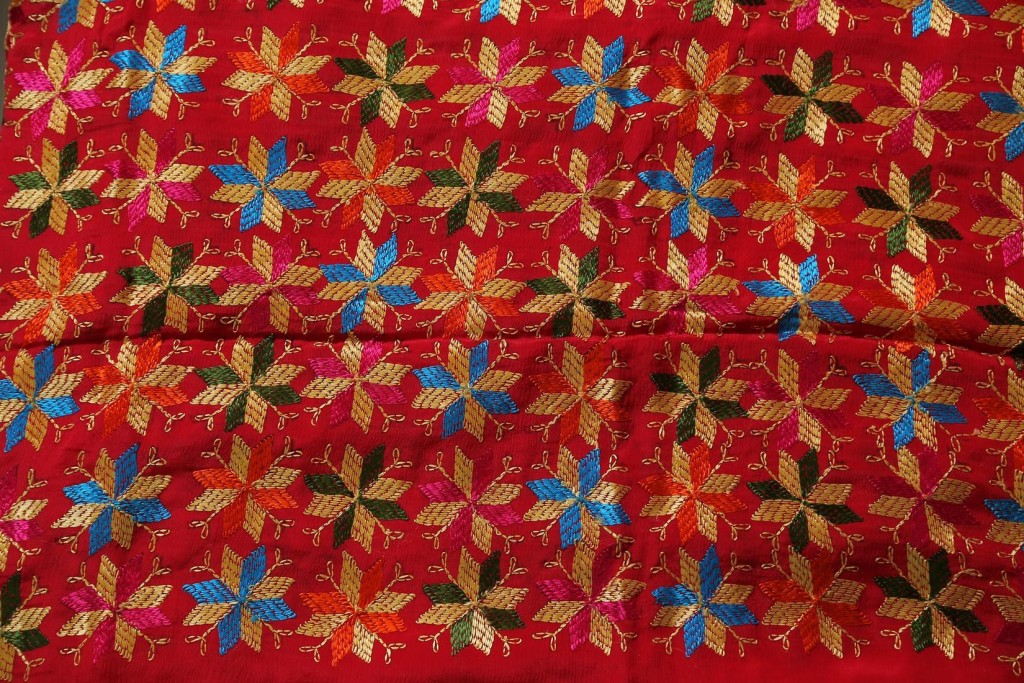
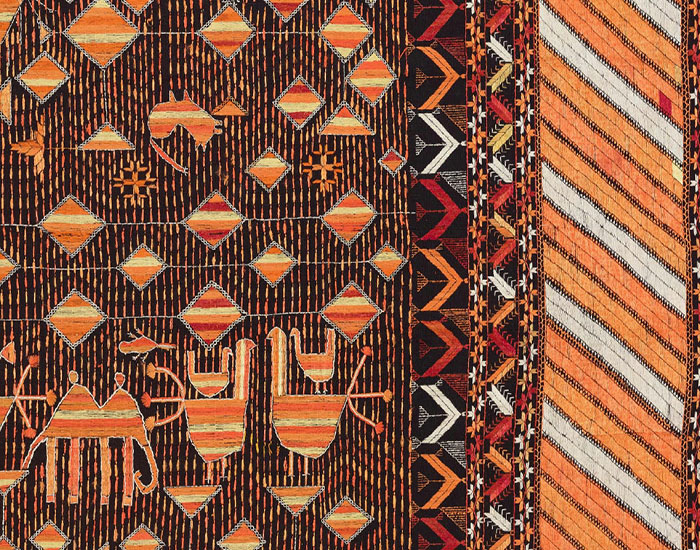
Two closely linked embroidery traditions historically practiced by the women of undivided Punjab since the late medieval period, both phulkari and bagh embroidery involve the arrangement of floral, geometric and sometimes narrative imagery on a red base fabric, also known as khaddar. Literally meaning “flower work,” phulkari is recognised by its neat, regular patterns that leave large portions of the khaddar visible. With the bagh embroidery — bagh means garden — the khaddar is almost completely covered, exposed only as thin lines in the design. Hence the name, which likens the embroidered garment to a field of flowers. Due to the intricate work involved, baghs are almost never made today.
The origins of the crafts are debated, with some scholars suggesting that it was introduced to India through Central Asia by the Jat community in the late medieval period, while others state that the craft is a variation of Persian embroidery designs.
Traditionally, odhinis and chaddars were embroidered and these were often given as gifts at major events in women’s lives, particularly marriage. The nineteenth and early twentieth centuries saw the beginning of the commercial application of the craft on other garments, such as coats, for women living in the cities. Following the Partition, phulkari and bagh embroidery went into a decline in India and Pakistan through the 1950s, but has since been partially revived and commercialised through efforts by government and corporate entities.