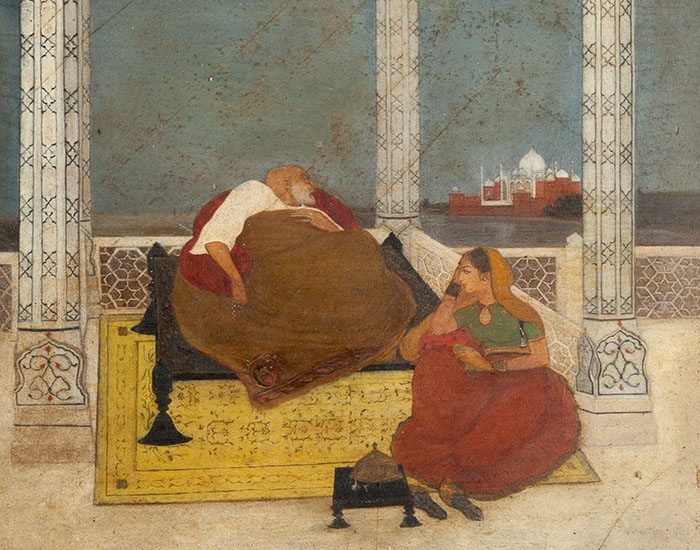
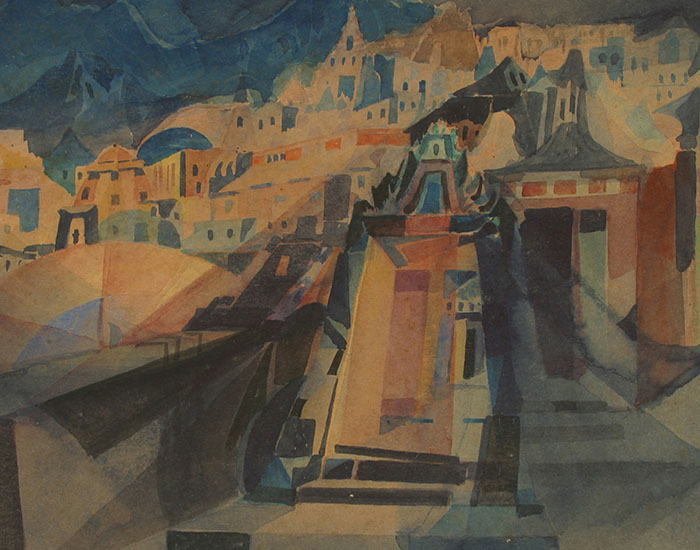
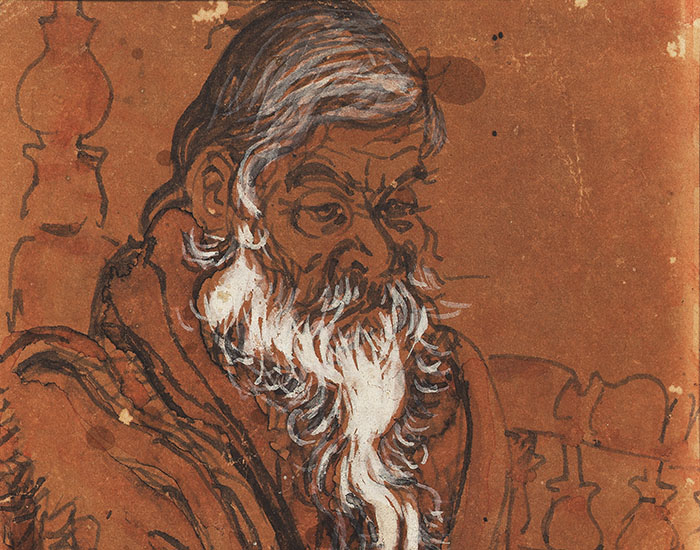
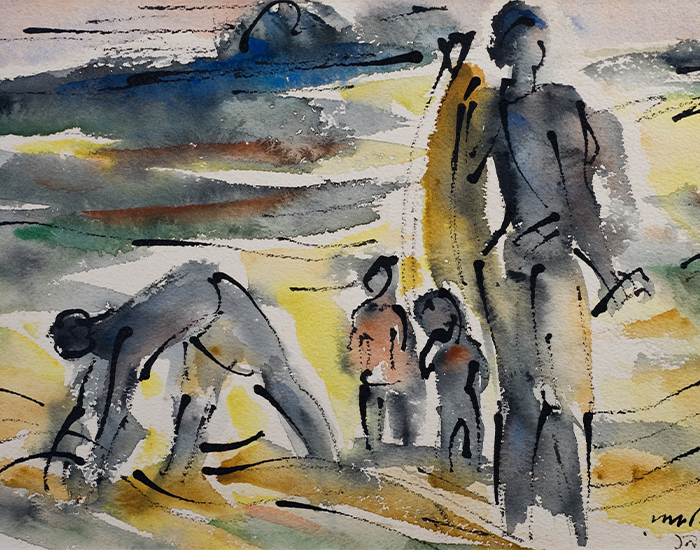
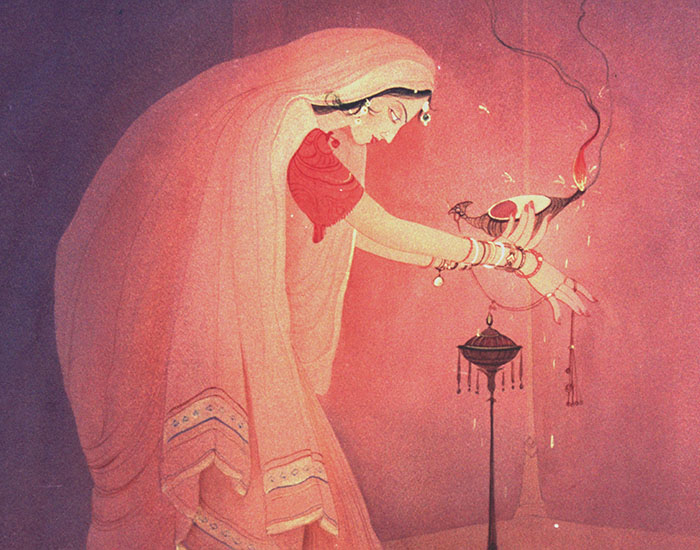
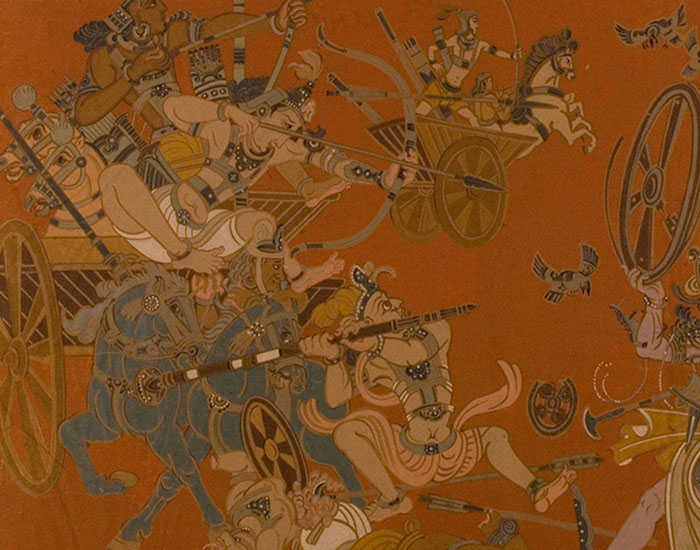
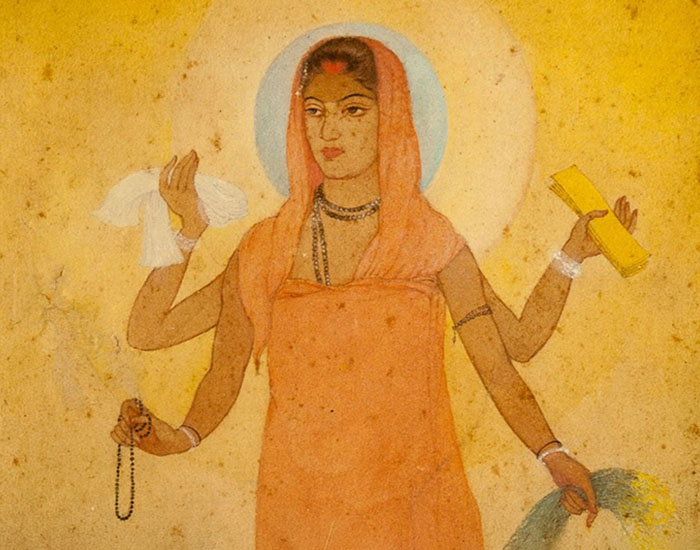
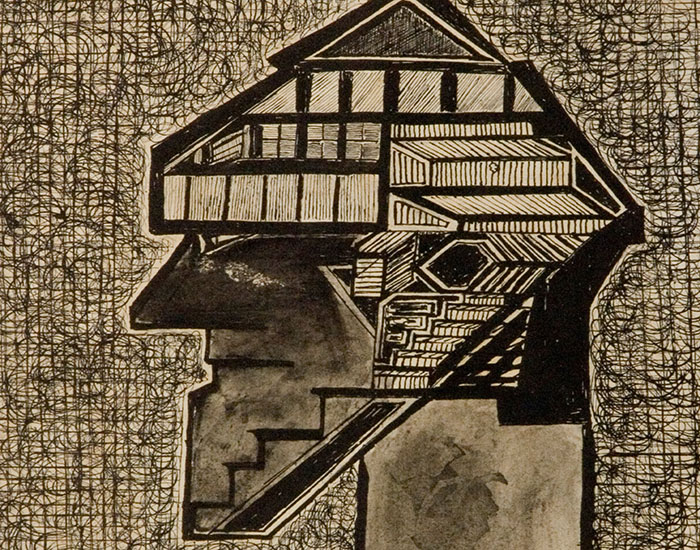
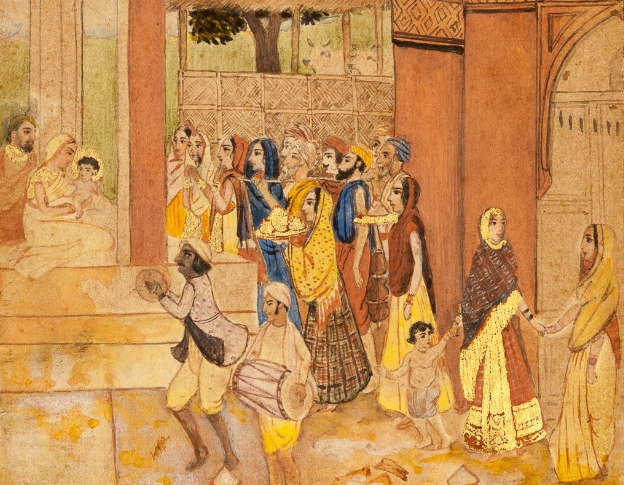
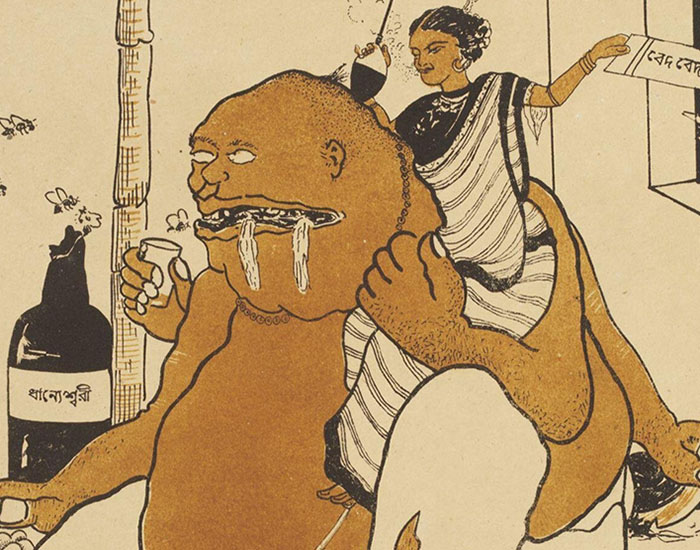
The Bengal School, as it came to be known, was India’s earliest modern art movement. Revivalist and anti-colonial in its goals, the movement gained prominence after the Partition of Bengal in 1905 and grew out of an increasing disdain among the Indian art intelligentsia for Western aesthetic sensibilities and the exoticising gaze with which India’s natural, cultural and mythological heritage was often depicted. This included a rejection of Company paintings commissioned by British collectors and researchers, as well as the work of artists like Raja Ravi Varma who painted in a Western naturalist style.
The movement turned to Indian styles like miniature painting, Mysore painting, folk and indigenous art traditions, used local materials like tempura, and derived its subject matter from Indian history and mythology. Abanindranath Tagore and others also collaborated with Japanese artists in an attempt to formulate a pan-Asian aesthetic that stood in contrast to European Realism.
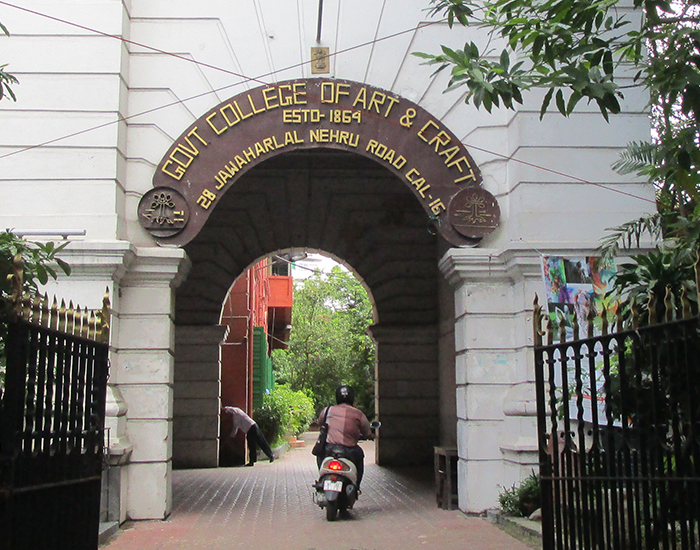
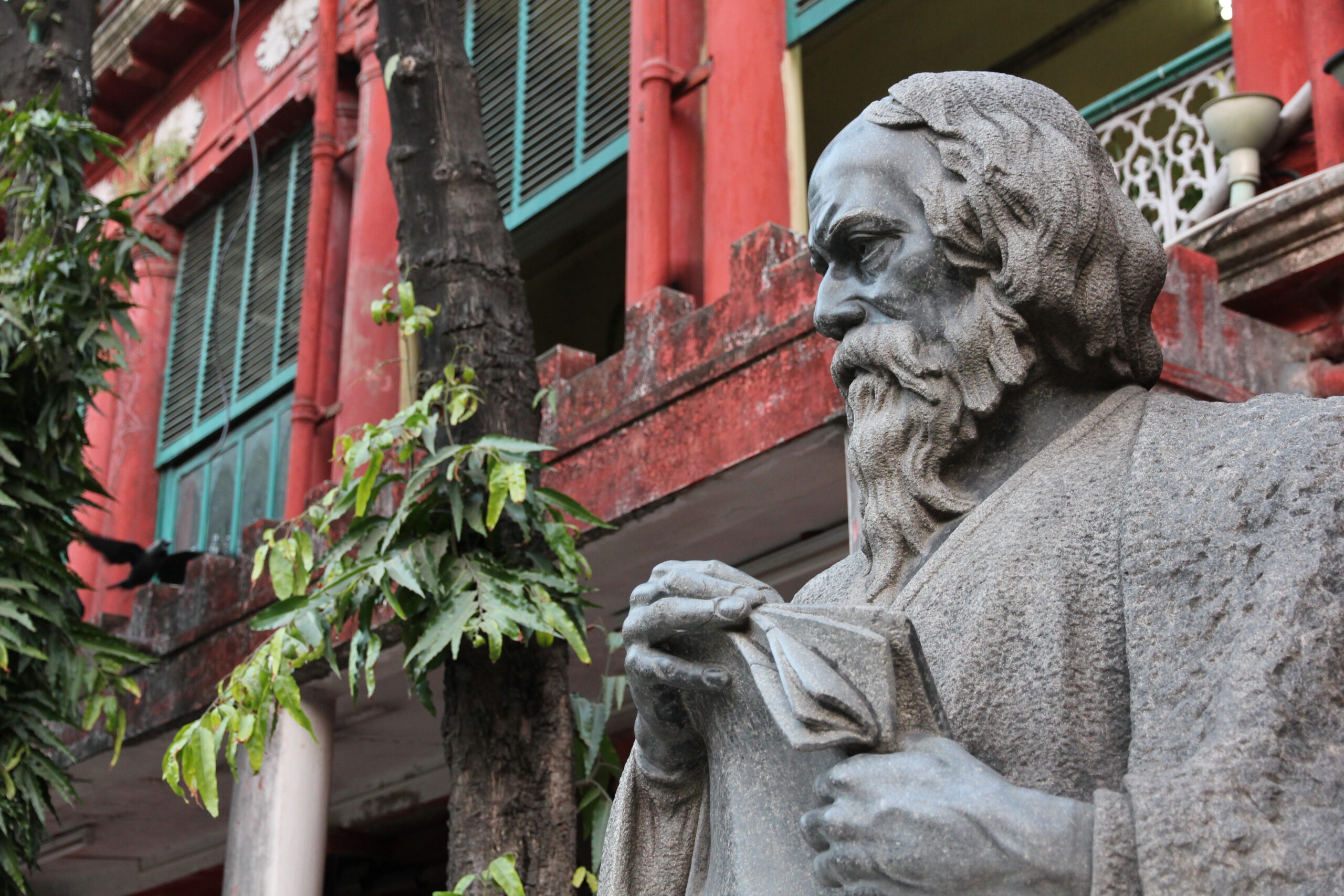
EB Havell and Abinandranath Tagore are considered the founders of the Bengal School. Other prominent artists in the movement include Abinandranath’s brothers Gaganendranath and Rabindranath Tagore, and from the following generation, Nandalal Bose, Kshitindranath Mukherjee, AR Chughtai, Asit Kumar Haldar and K Venkatappa. Significant institutions established by the movement include the Government College of Art, the Indian Society of Oriental Art and Visva-Bharati University in Shantiniketan.