-
ChicagoImpart Encyclopedia of Art. "Tarpai." May 15, 2026. https://imp-art.org/articles/tarpai/.
-
MLA"Tarpai." Impart Encyclopedia of Art, May. 15, 2026, https://imp-art.org/articles/tarpai/.
-
HarvardImpart Encyclopedia of Art (2026) Tarpai. Available at: https://imp-art.org/articles/tarpai/ (Accessed: 16 October 2026).
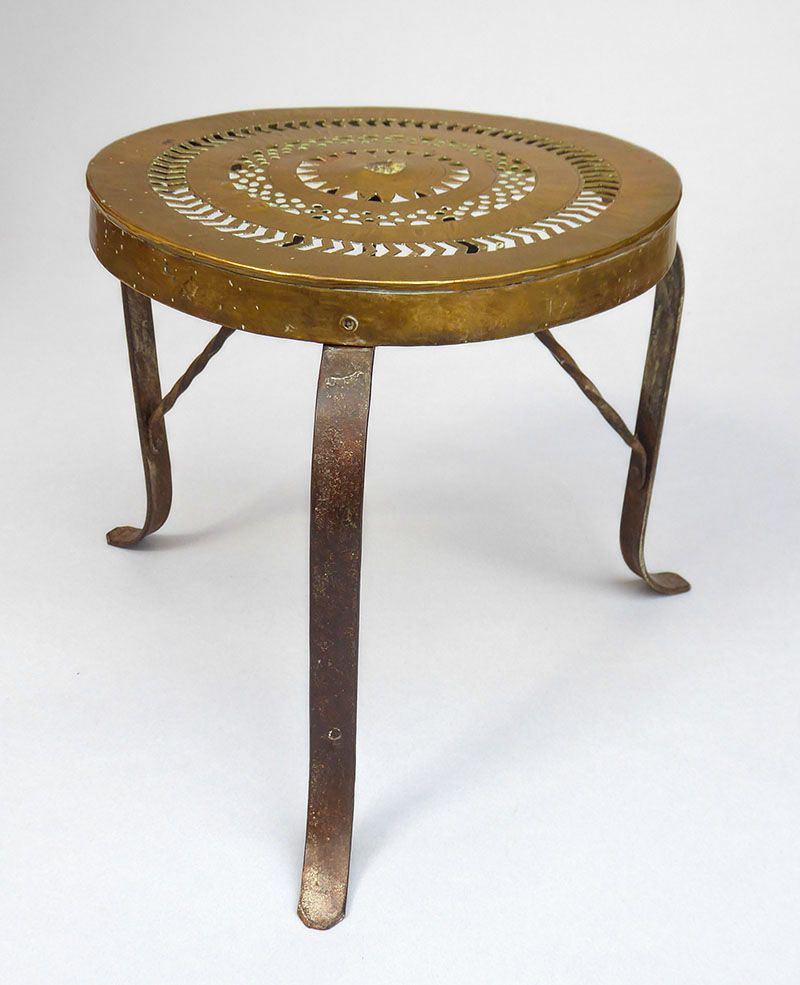
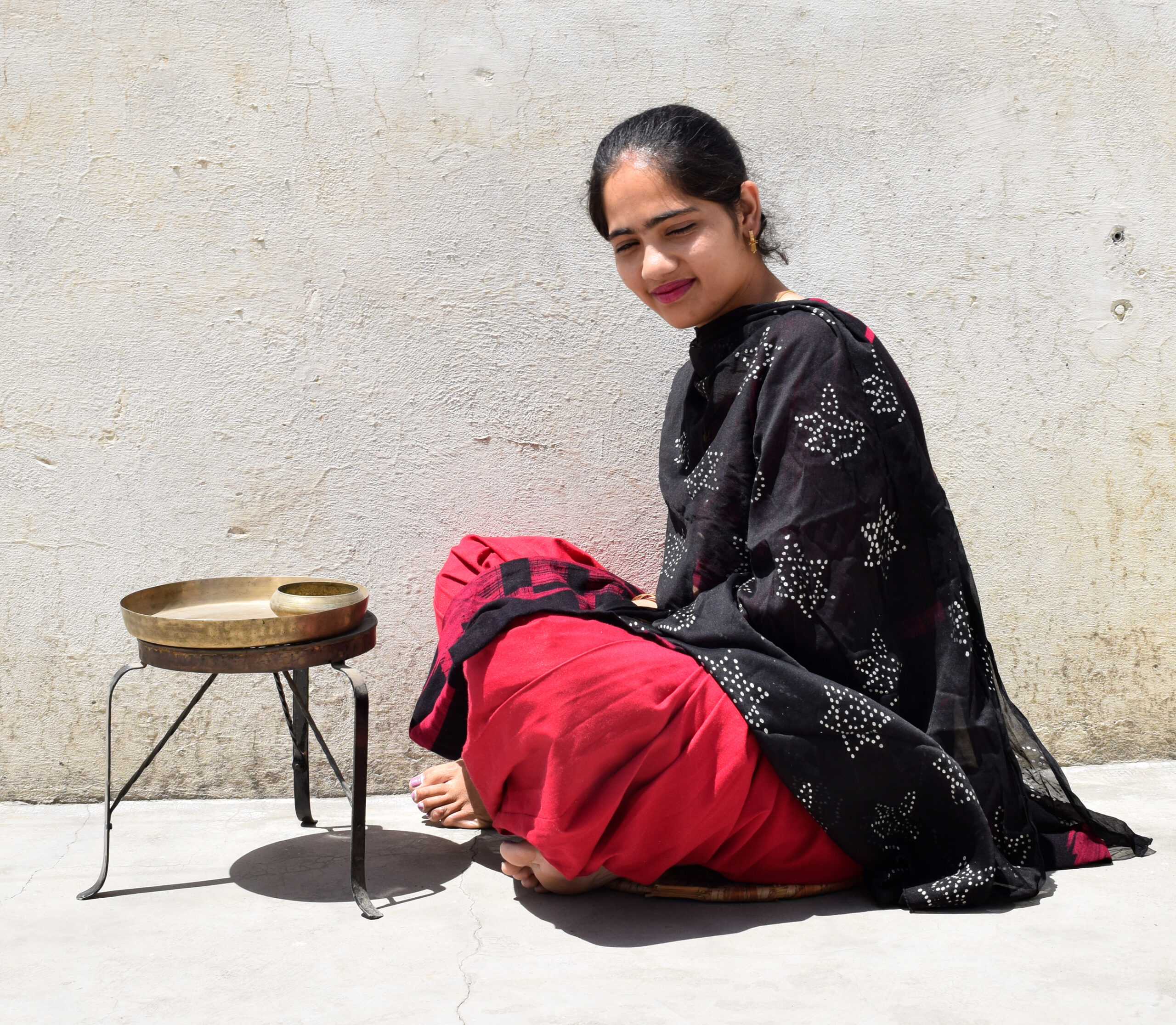
A small, portable three-legged metal table, the tarpai (from teen pai, ‘three legs’) is an item of vernacular furniture from northwestern India unique to the Doaba and Malwa regions of Punjab. It is usually used to hold eating utensils during meals.
Design
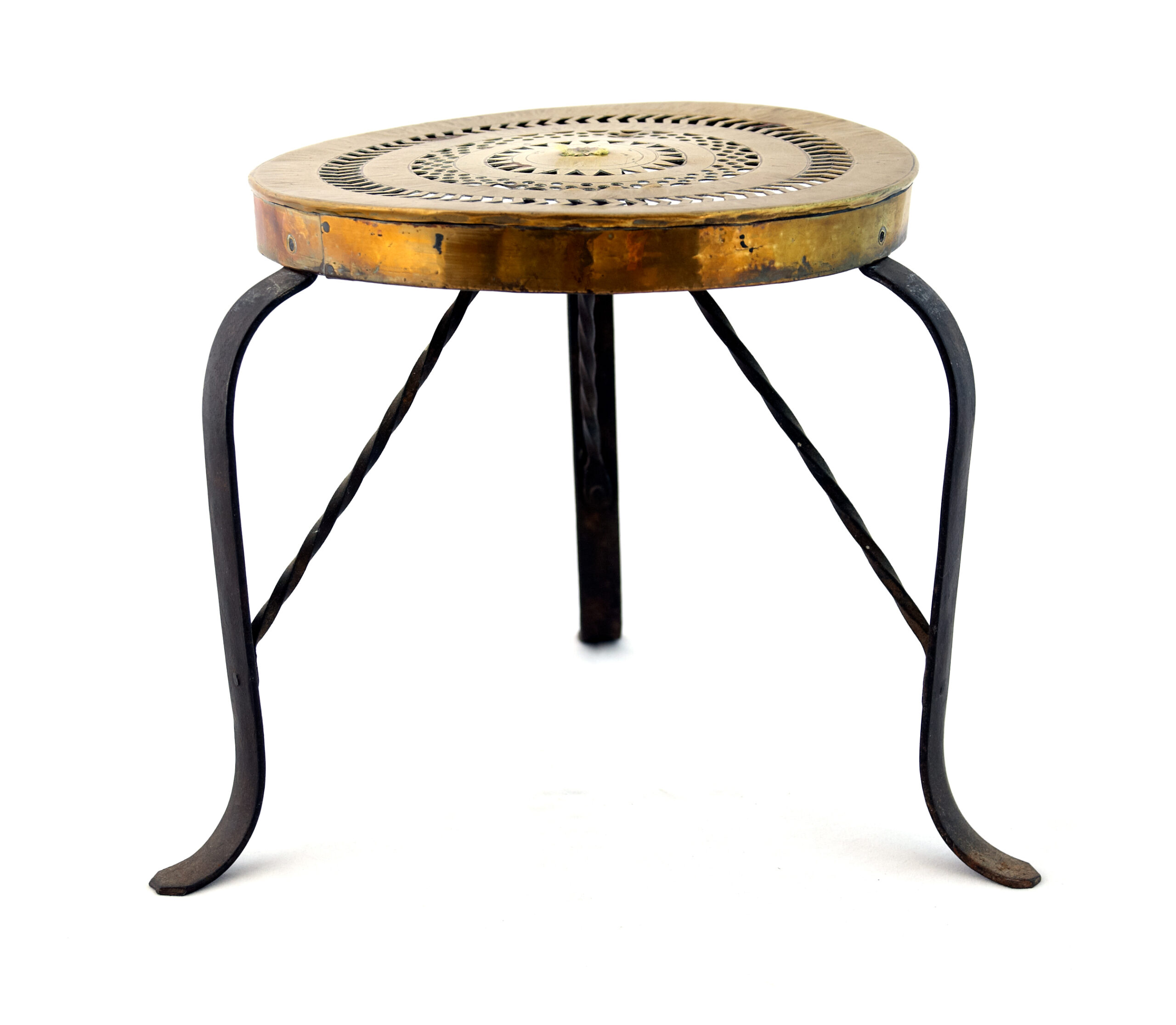
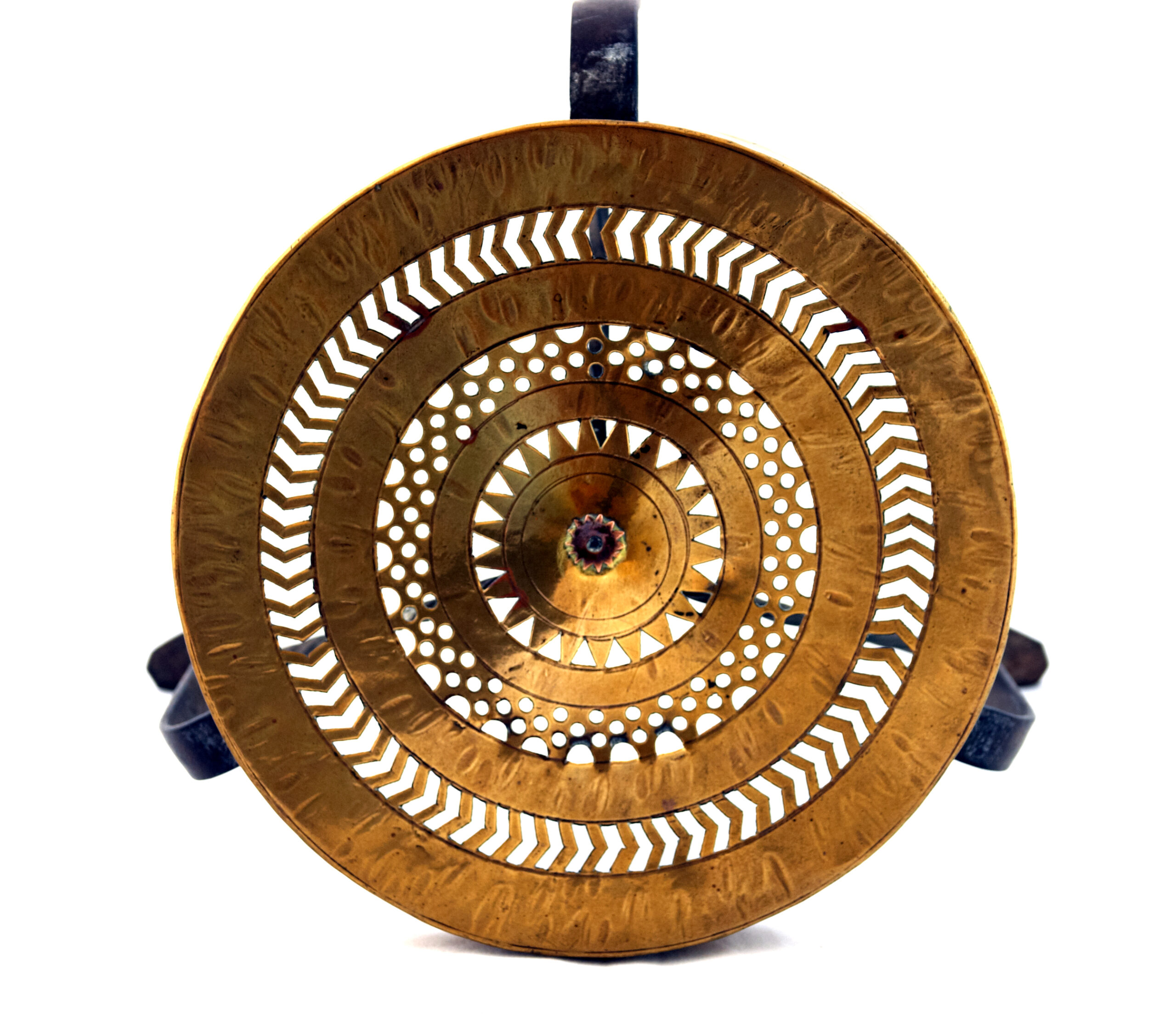
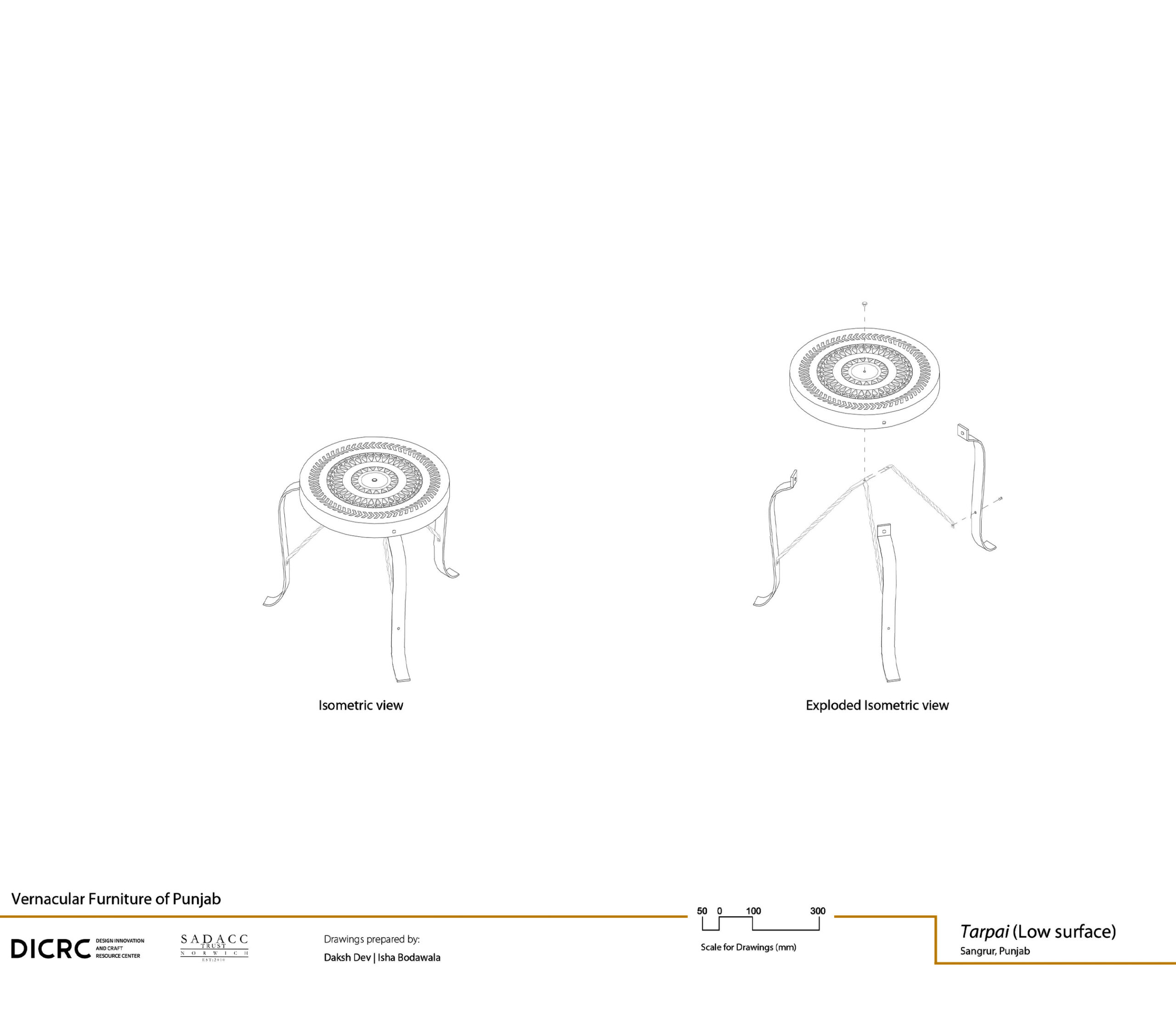
The tarpai is commonly made of brass (pital) — which, alongside bronze (kansa), is also used in the region for making plates and bowls. It has a circular top about the size of a large plate, typically perforated with concentric patterns; many extant specimens prominently feature a repeating chevron motif. Three legs, made of flat metal and curved into S-shapes, are affixed to the edge of the top. A twisted metal bar runs from each leg to the centre of the top, acting as a bracket.
Use
The tarpai is most commonly used as a dining surface — it is only large enough to hold a single plate, and high enough to eat while seated on the floor. It occasionally serves as a bedside table to hold everyday items.
This article is adapted from the outcomes of Vernacular Furniture of North-West India — a collaborative research and documentation project by the Design Innovation and Craft Resource Centre (DICRC), CEPT University, India, and The South Asian Decorative Art and Crafts Collection Trust (SADACC), UK — shared with the Encyclopedia of Art through an Impart partnership. Explore more from this series in our Collection Objects Alive: Vernacular Furniture of North-West India.
First published: 15 May 2026
Image Gallery
Bibliography
Rao, Mansi S, Ben Cartwright, Jay Thakkar, Abhishek Ruikar. Smarya: Vernacular Furniture of Punjab and Haryana. Ahmedabad: CEPT University Press, 2026.
Vernacular Furniture of India. Accessed February 12, 2026. https://vernacularfurnitureofindia.com/.
Feedback