-
ChicagoImpart Encyclopedia of Art. "Pitha." May 15, 2026. https://imp-art.org/articles/pitha/.
-
MLA"Pitha." Impart Encyclopedia of Art, May. 15, 2026, https://imp-art.org/articles/pitha/.
-
HarvardImpart Encyclopedia of Art (2026) Pitha. Available at: https://imp-art.org/articles/pitha/ (Accessed: 16 October 2026).
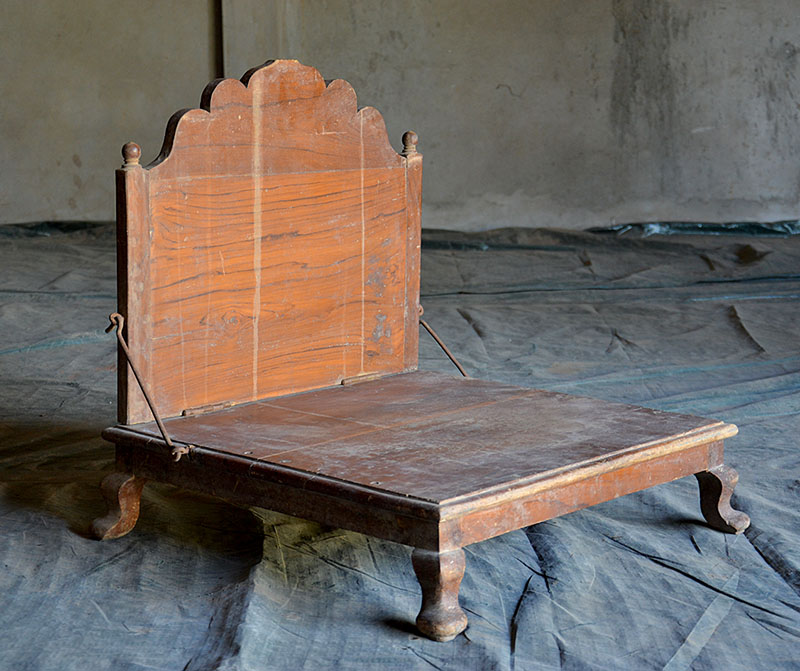
A low wooden seat with a backrest used in Gujarat, the pitha (Gujarati, ‘back’) is a historical form of vernacular furniture from northwestern India. It accommodates a single person and is known to have been used by shop merchants, noblemen, and religious teachers.
Design
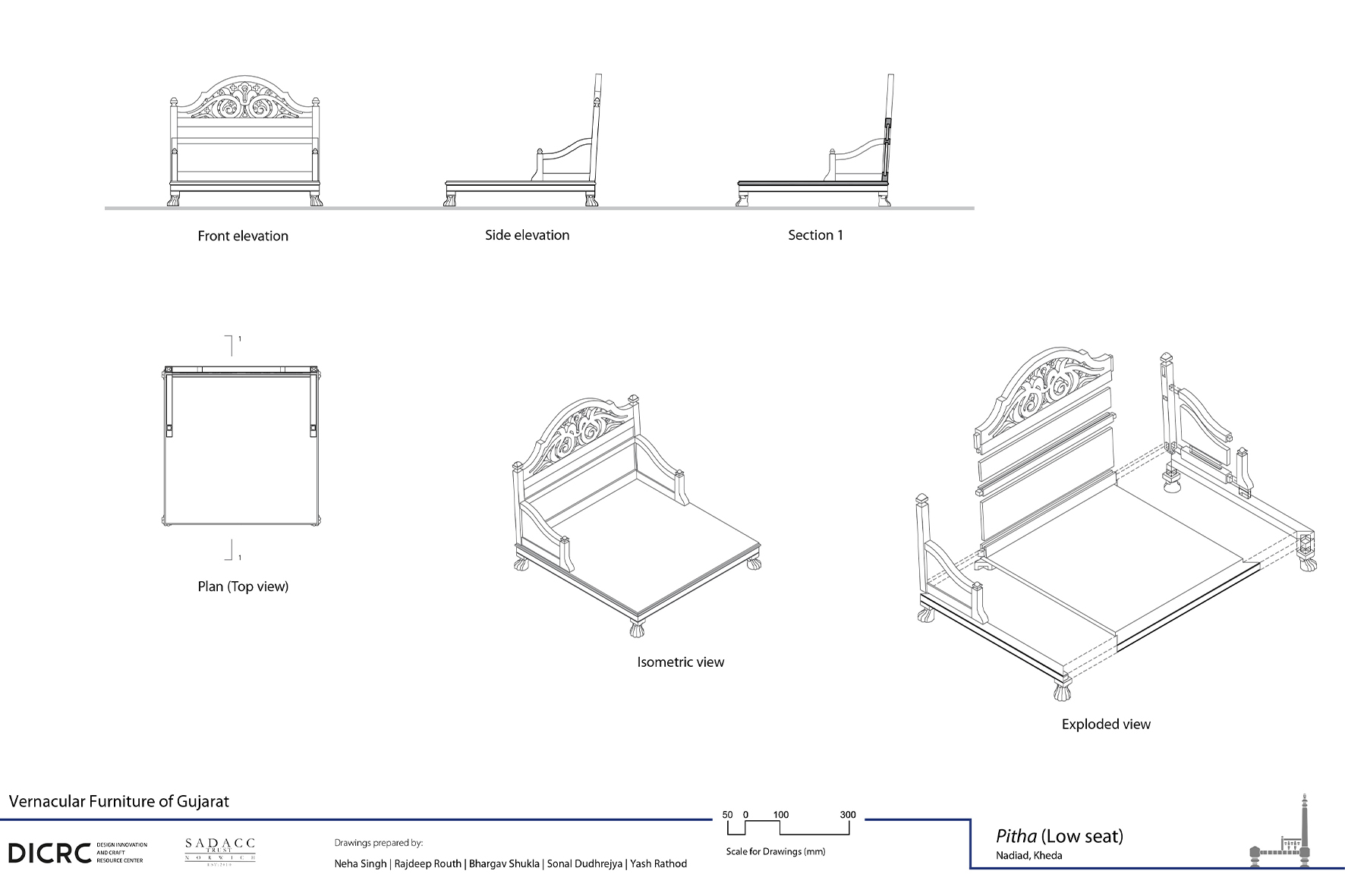
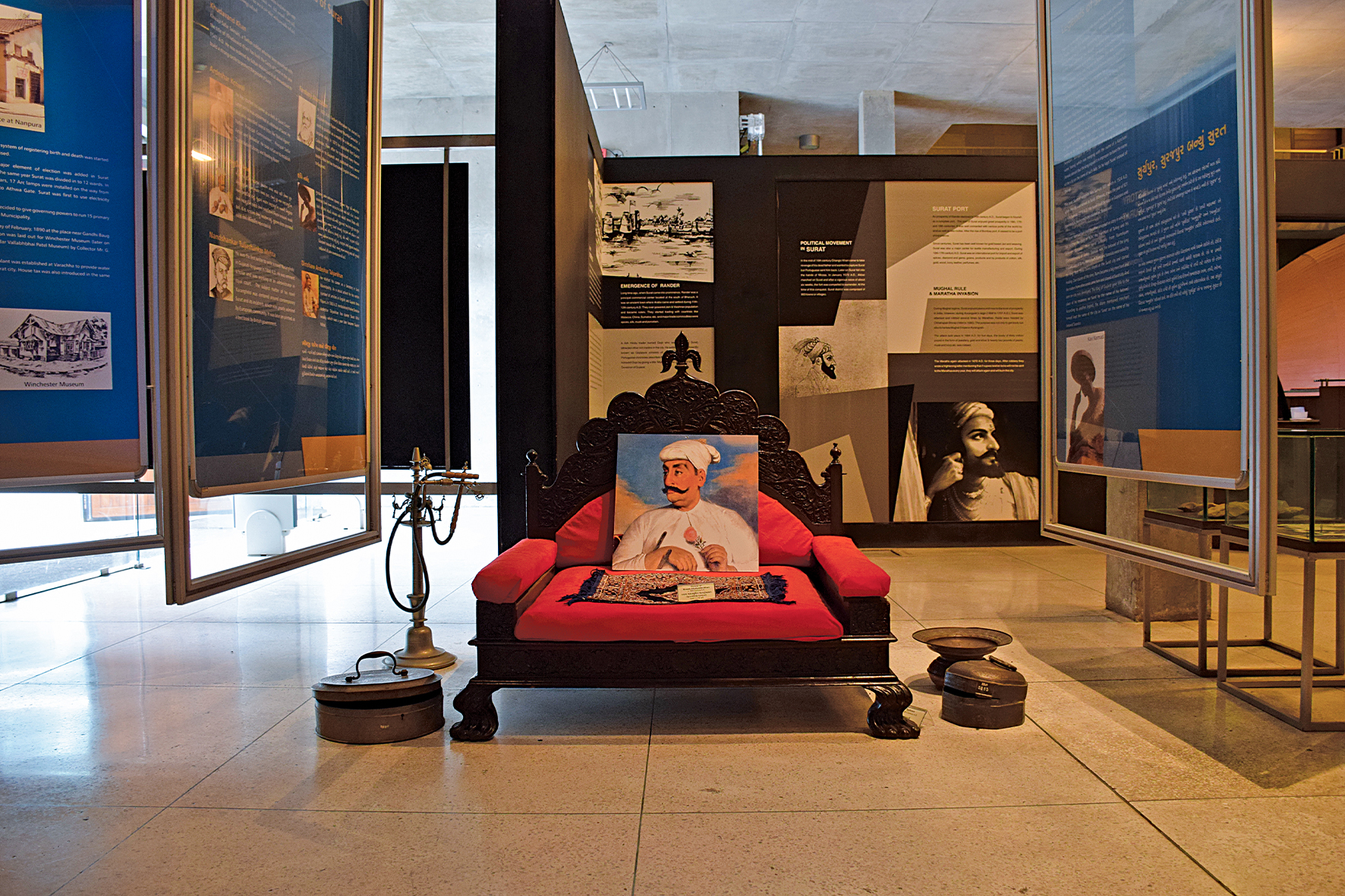
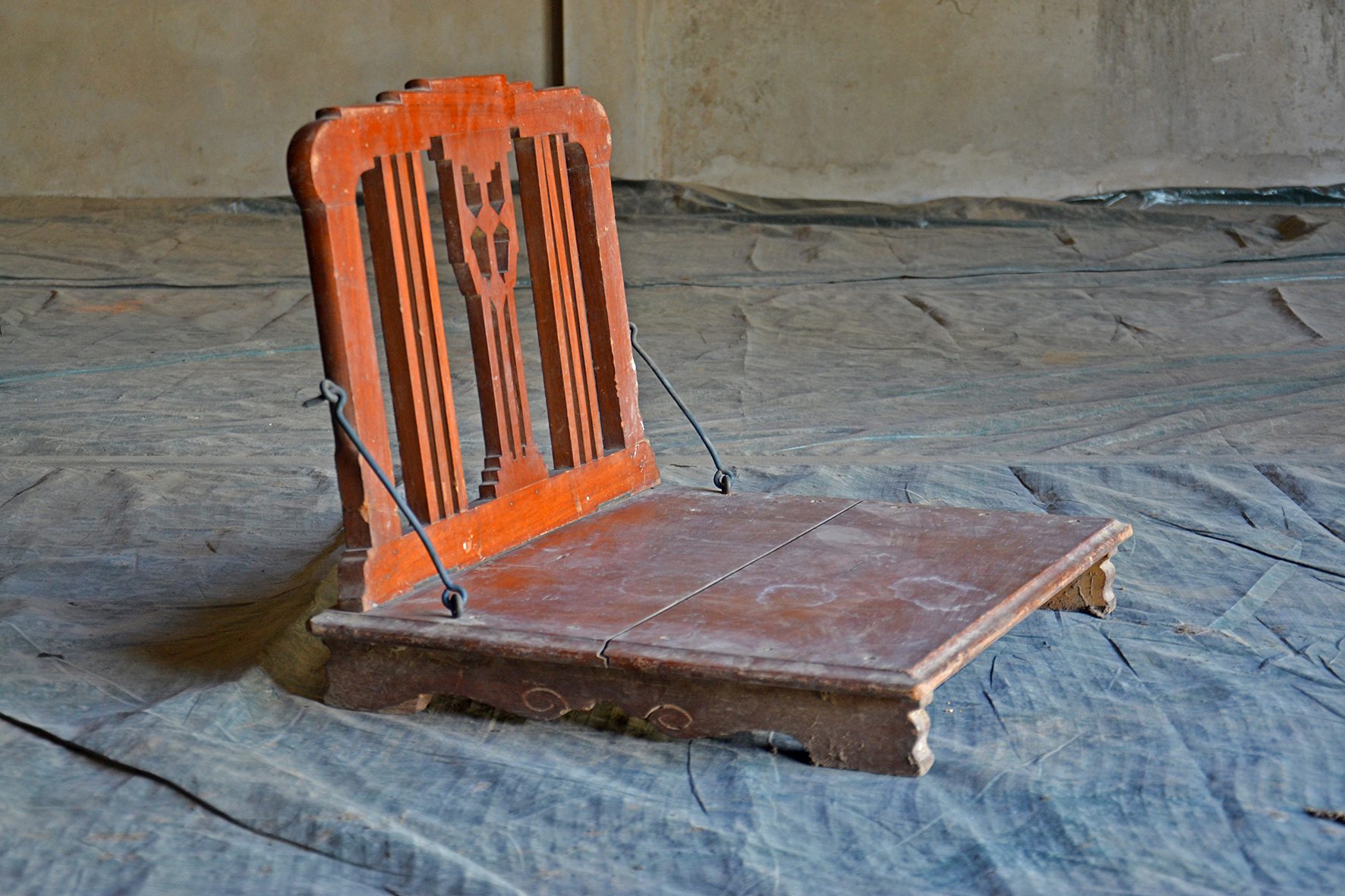
The pitha is a variation of the paatlo — a simple low wooden seat — and is also known as pithavalo paatlo (paatlo with a back). Though broader than the paatlo, it is similarly between 5 and 8 centimetres tall. It stands on two parallel bars, or four small feet with wide bottoms as in a bajot — a small, low table used for dining or ritual purposes. In some pitha the backrest can be folded down; here it is held open by means of a pair of metal cabin hooks that latch onto the seat on the sides. The backrest often takes decorative shapes, is embellished with intricate carving, or both. Some pitha also have armrests. An upholstered pitha with four feet and armrests used by the nawab Afzaluddin Khan (r. 1821–42) of the princely state of Surat is now part of the collection of the Sardar Patel Museum in Surat.
Use
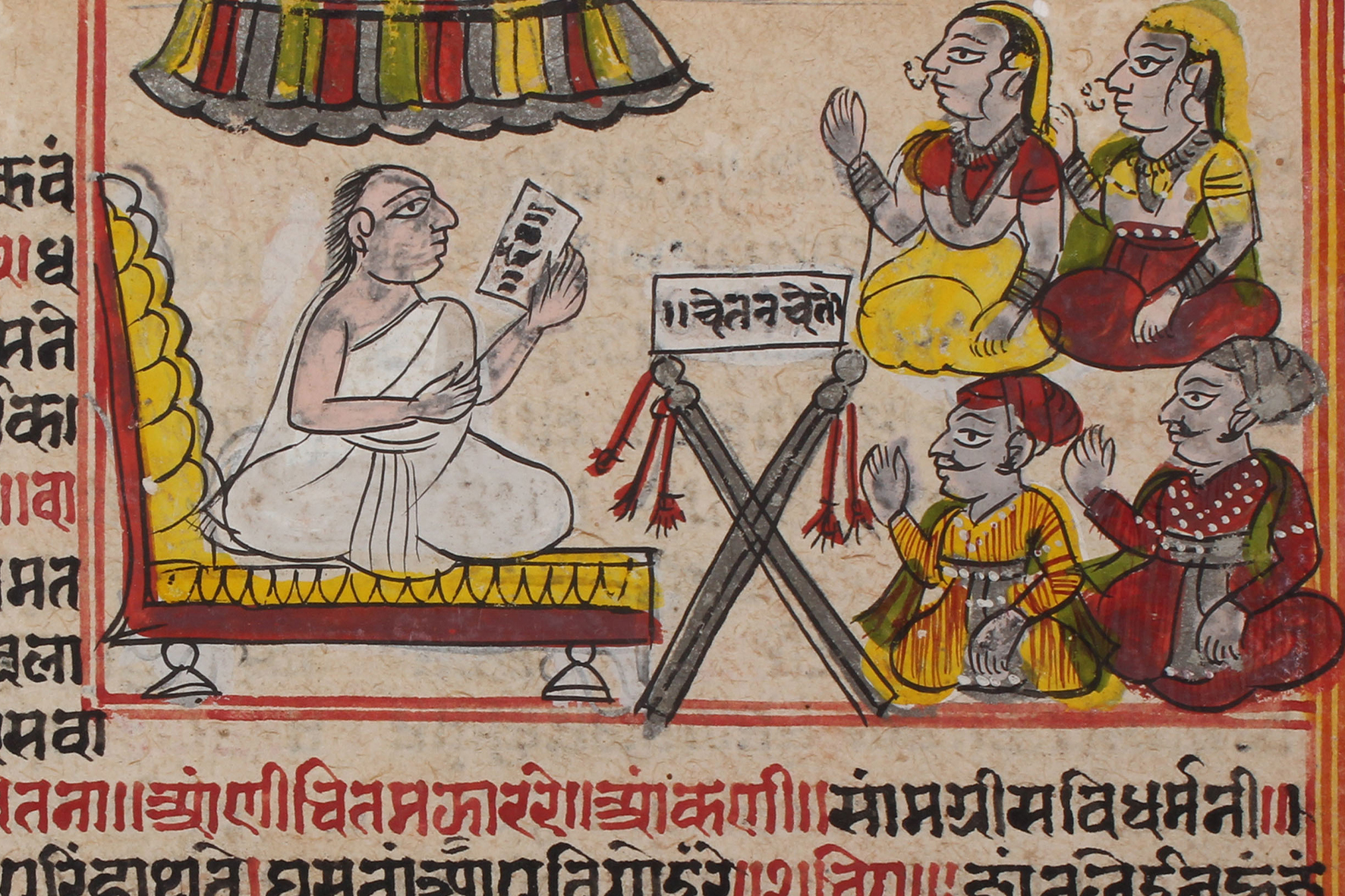
Pitha are known to have been used by religious teachers in the region. In Jain manuscript illustrations teachers and monks are often depicted seated on pitha. They have also historically been used by merchants in their shops, along with a desk known as dhaliyu; cushions on the seat and back served to make them comfortable for prolonged use. They are occasionally used in these contexts even today.
This article is adapted from the outcomes of Vernacular Furniture of North-West India — a collaborative research and documentation project by the Design Innovation and Craft Resource Centre (DICRC), CEPT University, India, and The South Asian Decorative Art and Crafts Collection Trust (SADACC), UK — shared with the Encyclopedia of Art through an Impart partnership. Explore more from this series in our Collection Objects Alive: Vernacular Furniture of North-West India.
First published: 15 May 2026
Image Gallery
Bibliography
Bais, Mitraja, Jay Thakkar, Samrudha Dixit, and Ben Cartwright. Sahaj: Vernacular Furniture of Gujarat. Ahmedabad: CEPT University Press, 2018.
Rao, Mansi S., Ben Cartwright, and Samrudha DIxit. Anaikya: Vernacular Furniture of Rajasthan. Ahmedabad: CEPT University Press, 2021.
Rao, Mansi S., Ben Cartwright, Jay Thakkar, and Abhishek Ruikar. Smarya: Vernacular Furniture of Punjab and Haryana. Ahmedabad: CEPT University Press, 2026.
Vernacular Furniture of India. Accessed February 10, 2026. https://vernacularfurnitureofindia.com/.
Feedback