-
ChicagoImpart Encyclopedia of Art. "Palang, Diwan." August 28, 2026. https://imp-art.org/articles/palang-diwan/.
-
MLA"Palang, Diwan." Impart Encyclopedia of Art, Aug. 28, 2026, https://imp-art.org/articles/palang-diwan/.
-
HarvardImpart Encyclopedia of Art (2026) Palang, Diwan. Available at: https://imp-art.org/articles/palang-diwan/ (Accessed: 16 October 2026).
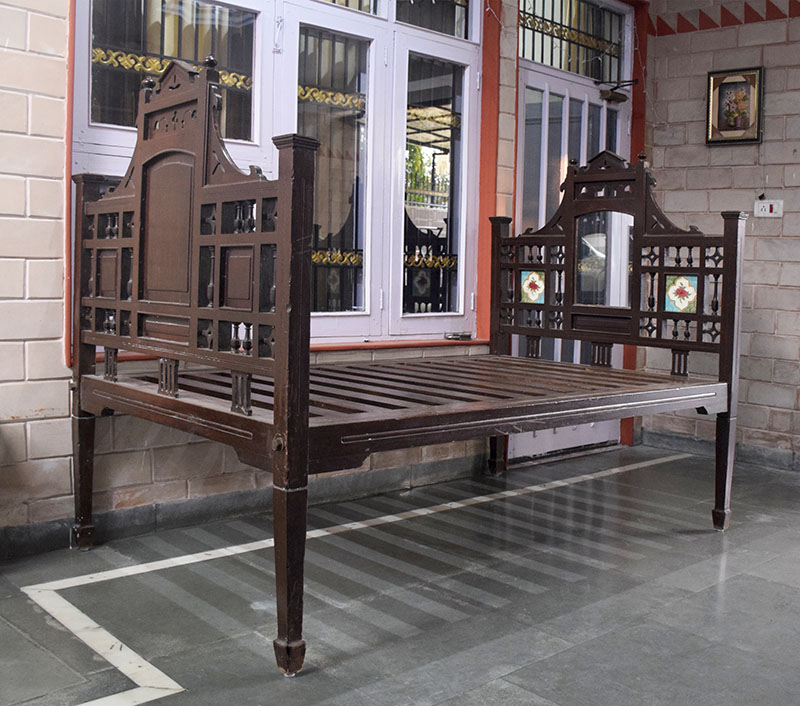
A wooden bedstead with heavy legs, a solid or webbed surface, and often a headboard, a palang is a common item of vernacular furniture in northwestern India; in Rajasthan, it is also known as a diwan. Used both in homes and public spaces, palang are made in various sizes, with smaller ones also used for seating. In Punjab and Haryana, palang were once an important item in bridal trousseaus; a number of specimens extant today were inherited by women over generations.
Terminology
The word ‘palang’ is commonly used across Gujarat, Rajasthan, Punjab and Haryana — as well as other parts of northern India — to refer to a sturdy bed, often with a headboard, used with a mattress laid on the surface; these features distinguish it from a charpoy, which is otherwise similar in design. In parts of Haryana, however, the term can also refer to the region’s charpoy itself. In the Vagad region and Bhilwara district of Rajasthan, ‘palang’ sometimes exclusively refers to a bed with a webbed surface, while ‘diwan’ denotes the bed with wooden planks and a headboard; the latter often also serves as seating.
Design and construction
A palang consists of a bedframe supported on four heavy legs, usually with an ornamented headboard, known as doh in Punjab and Haryana, and occasionally a footboard. It is typically made of wood, though more recent specimens are also made either wholly or partly of metal. The wood used varies by region but is generally hardwood such as Indian rosewood (Dalbergia sissoo). The frame members are fitted into the legs using mortise and tenon or other kinds of joinery. The vertical members of the headboard may be similarly joined onto the frame or simply extend up from the legs; in some cases, particularly when the headboard is metal, it is slotted into brackets attached to the frame. The legs of the palang may be lathe-turned or carved, and are sturdier than a charpoy’s, to help support the additional weight of mattresses and other bedding. They are commonly square or cylindrical at the top, tapering towards the bottom with various rounded and curving forms along the way. The palang’s surface is either webbed like that of charpoys, or made of wooden planks or slats.
Though the webbed palang is similar to a charpoy, it is generally much heavier and therefore less portable, and unlikely to be propped up against walls or moved around like the charpoy. The webbing — which may be plain or patterned — is usually made of cotton straps (newar), often brightly coloured, wrapped and woven around the bedframe. It can also be woven using cotton ropes. In Rajasthan, nylon straps are also used. A webbed palang is sometimes used without a mattress.
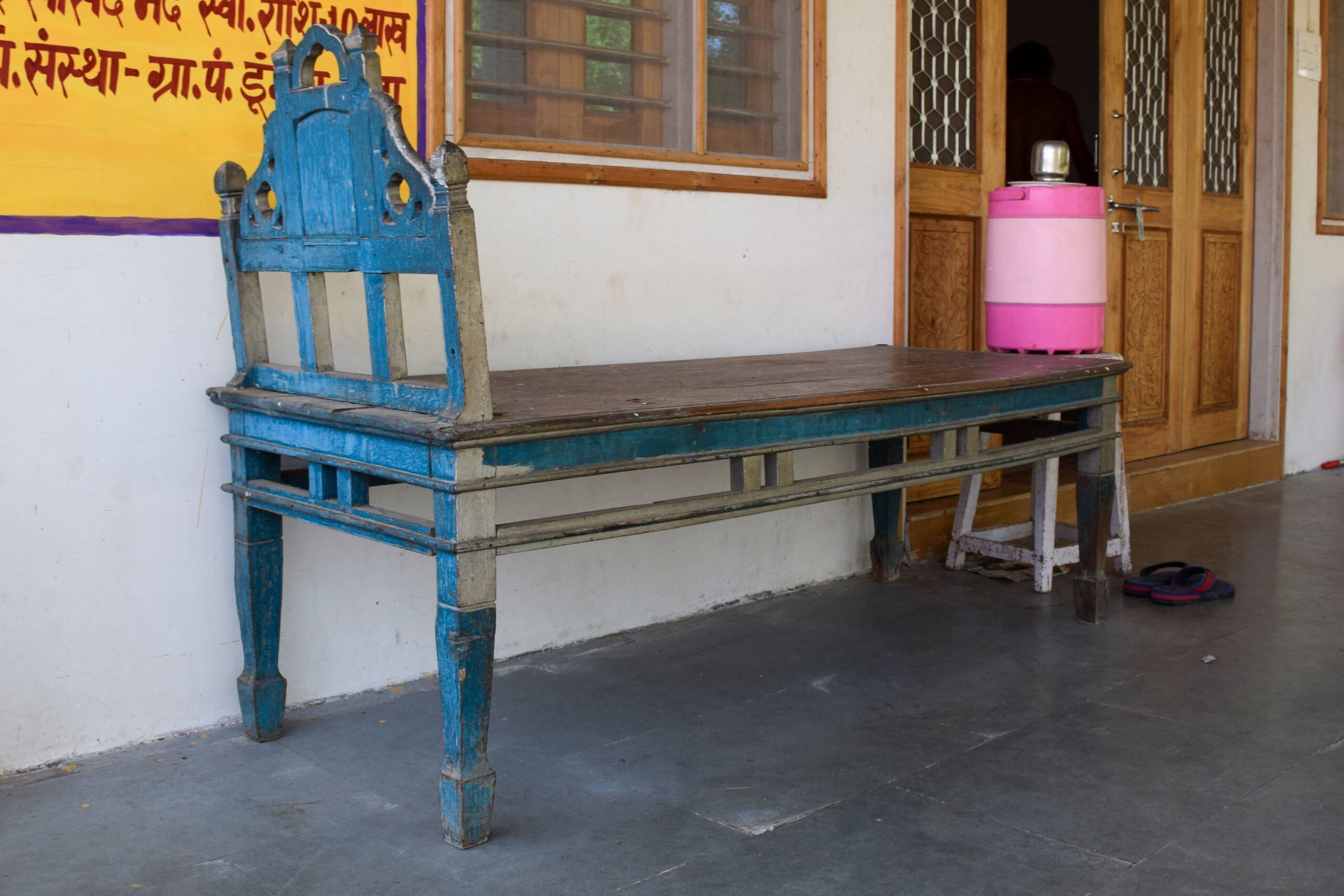
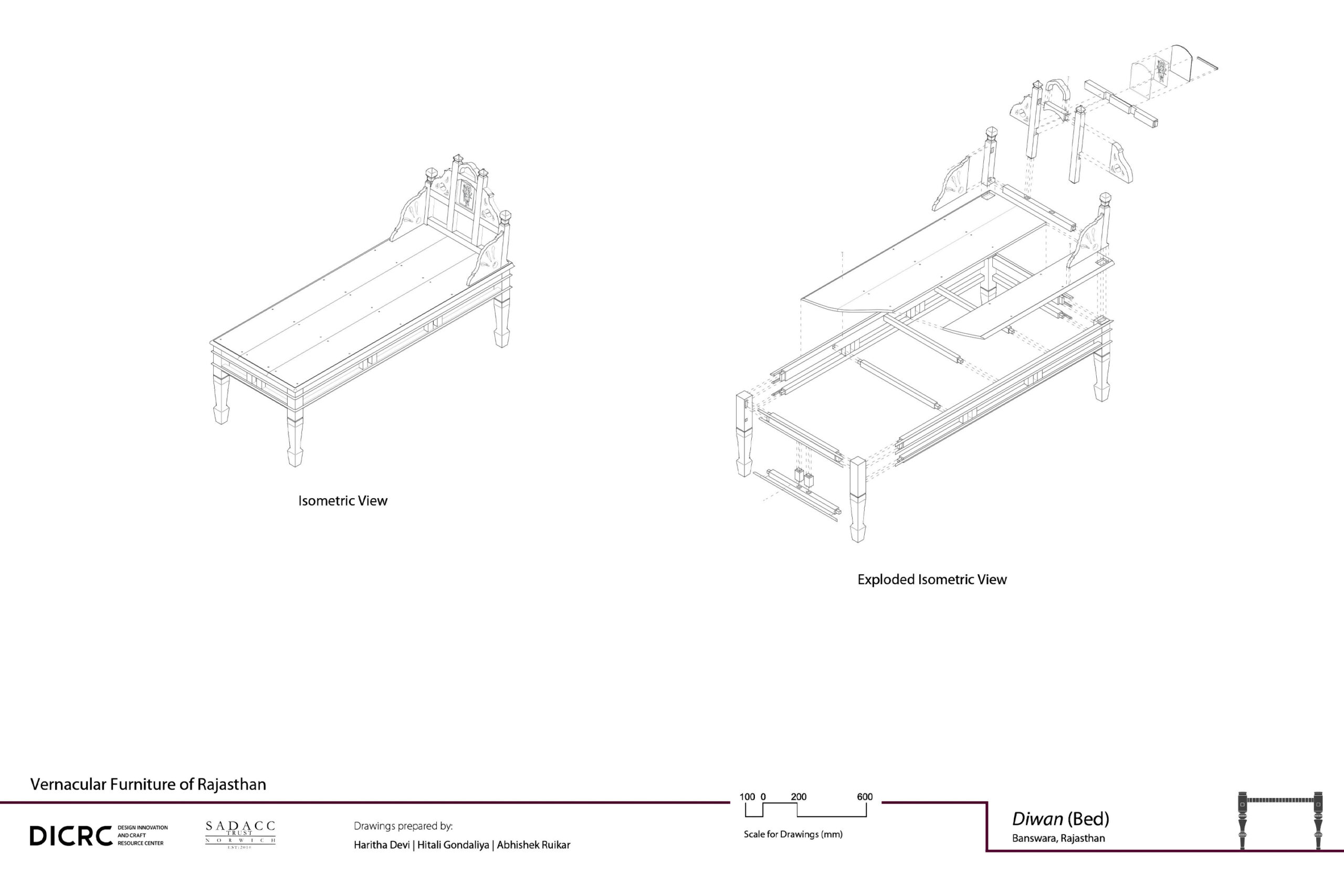
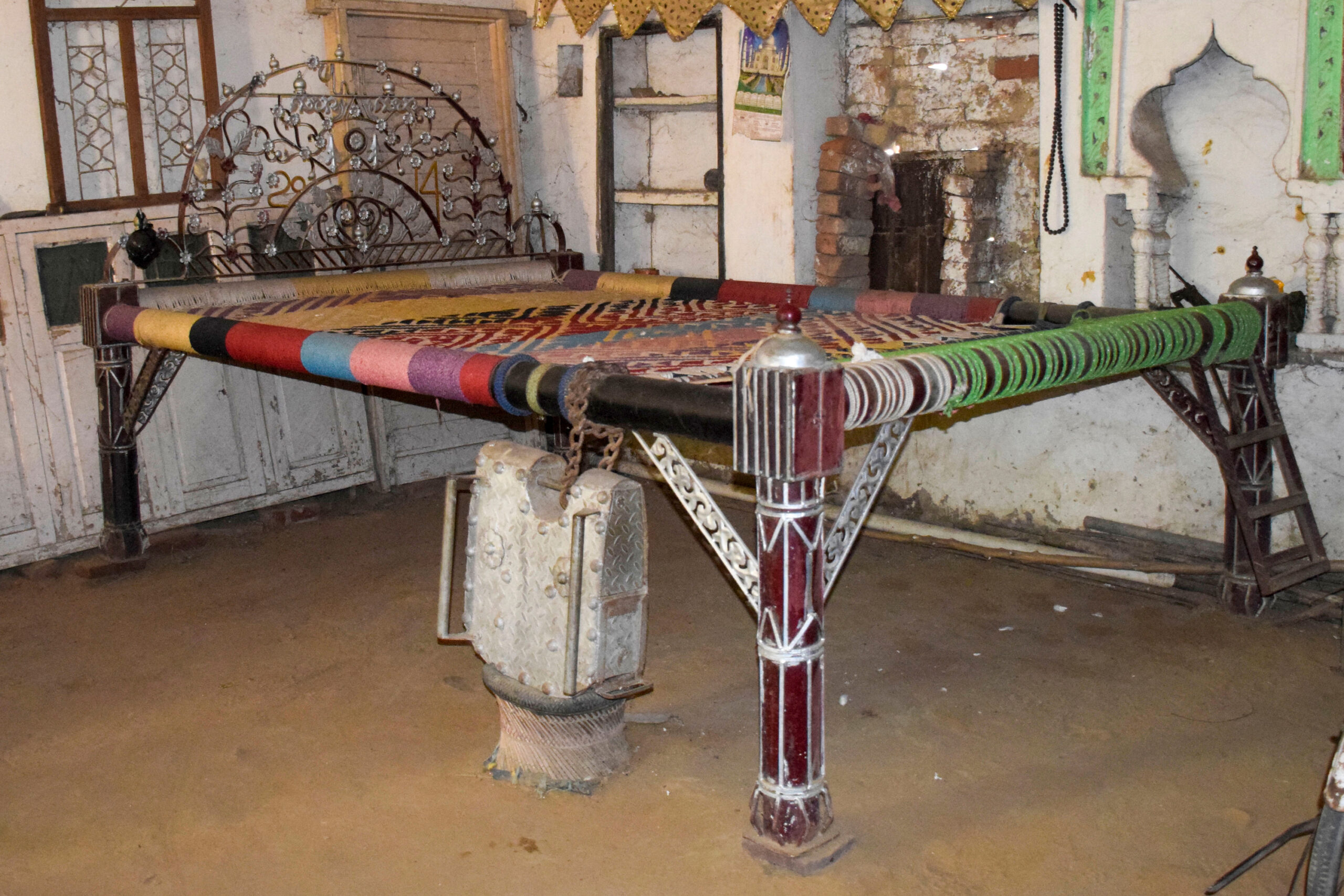
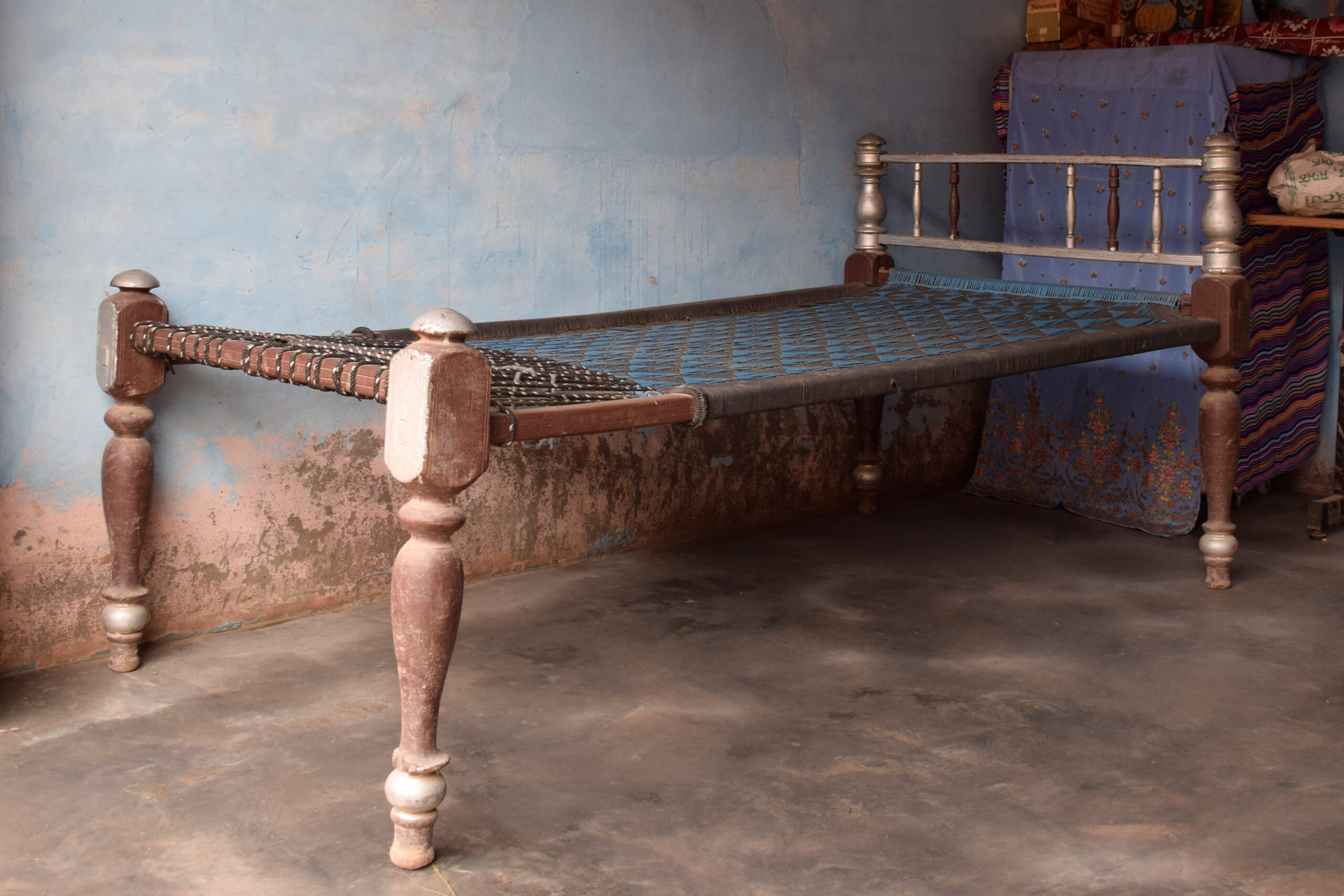
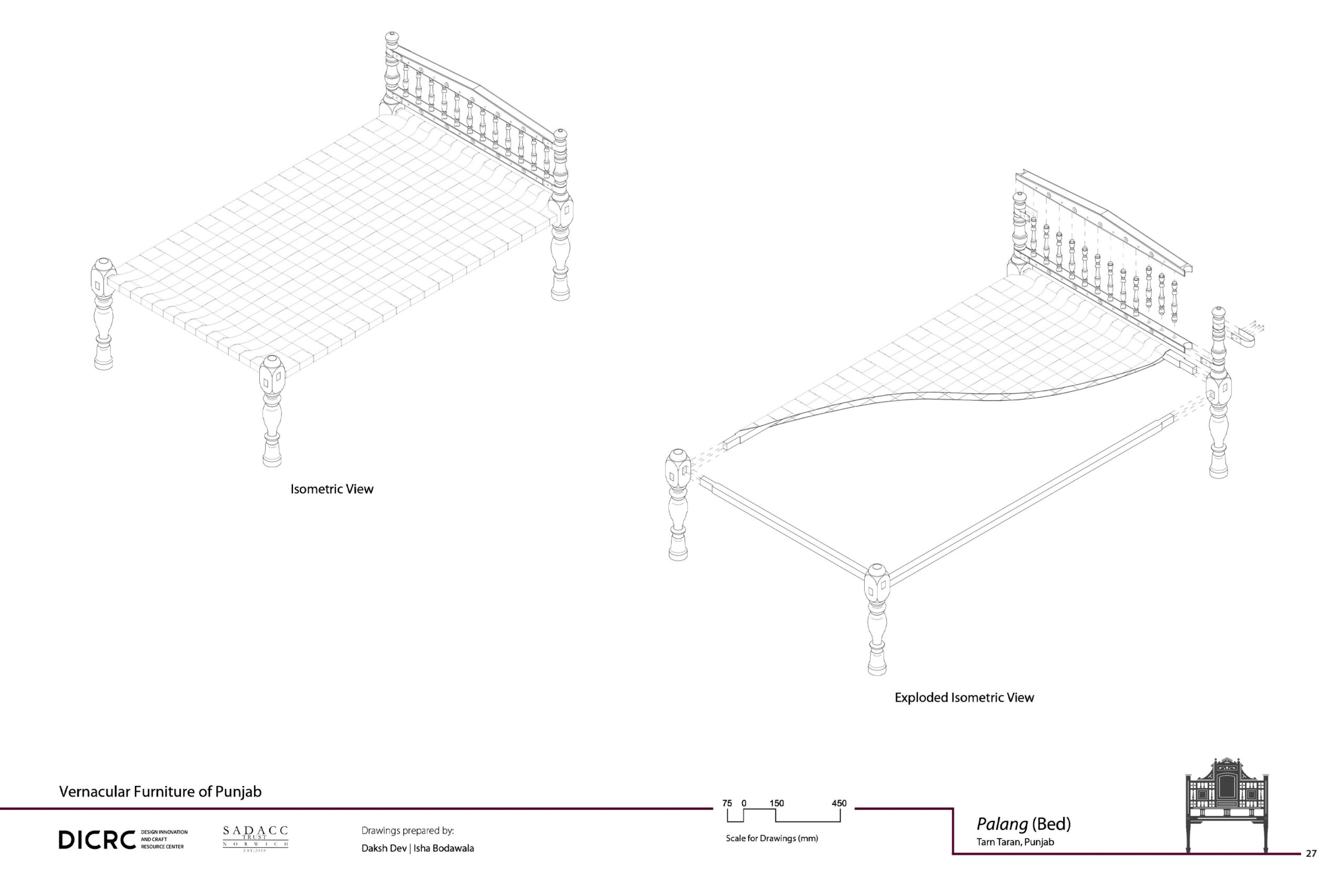
The legs and headboards of diwan recorded in Bhilwara, Rajasthan, are shorter than elsewhere, and the surface planks are fixed breadthwise rather than lengthwise. An especially large and high metal palang with an ornate semi-circular headboard documented in Nuh, Punjab, commissioned for the patron’s son’s wedding, can seat up to fifteen people and is fixed with a small ladder at one corner to help them climb on. Unique in the village, it is used for a variety of communal activities such as playing cards and smoking hookah in addition to eating and sleeping; as it is placed in a semi-open area of the house, it is locked down for security.
Ornamentation
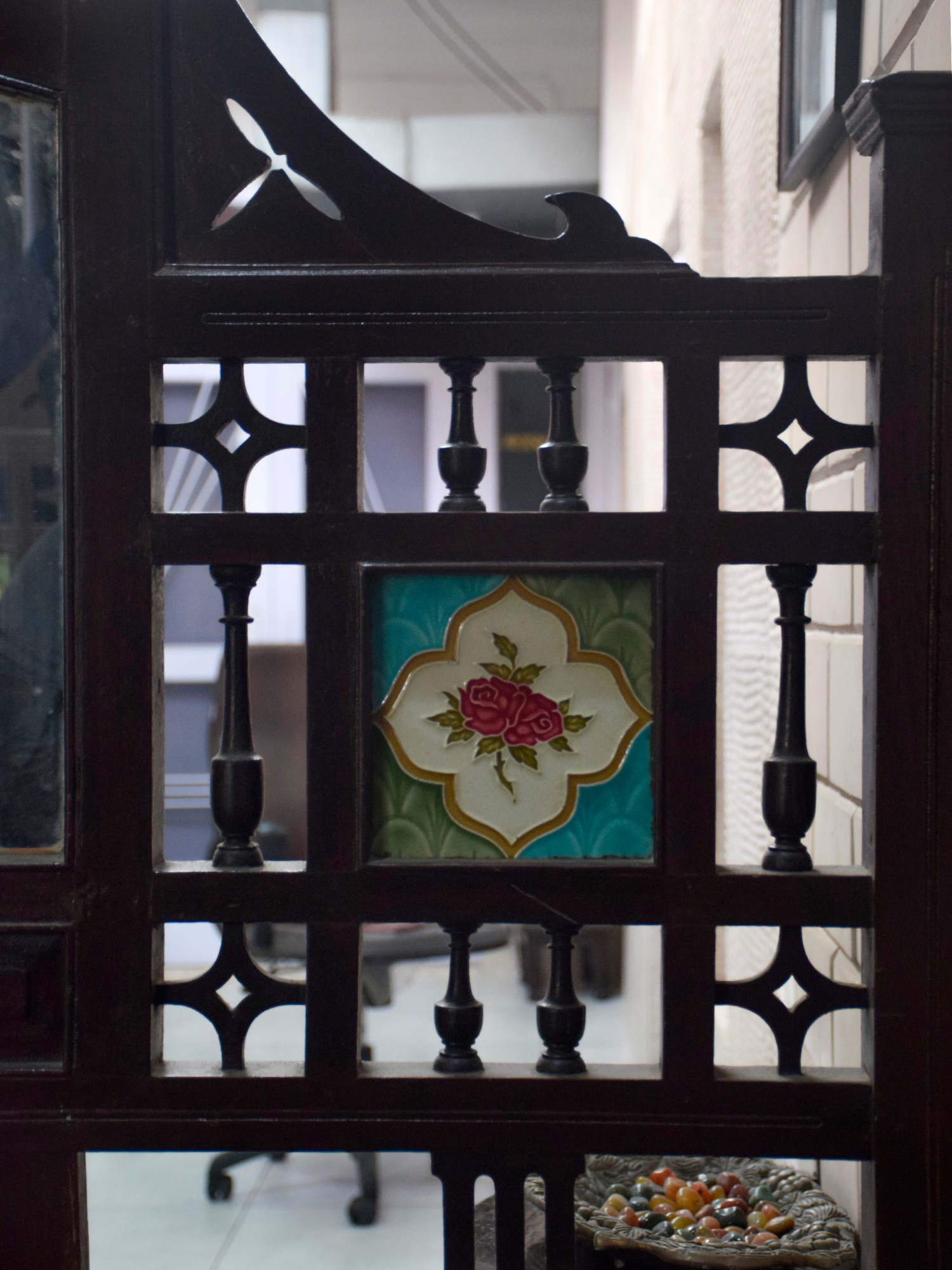
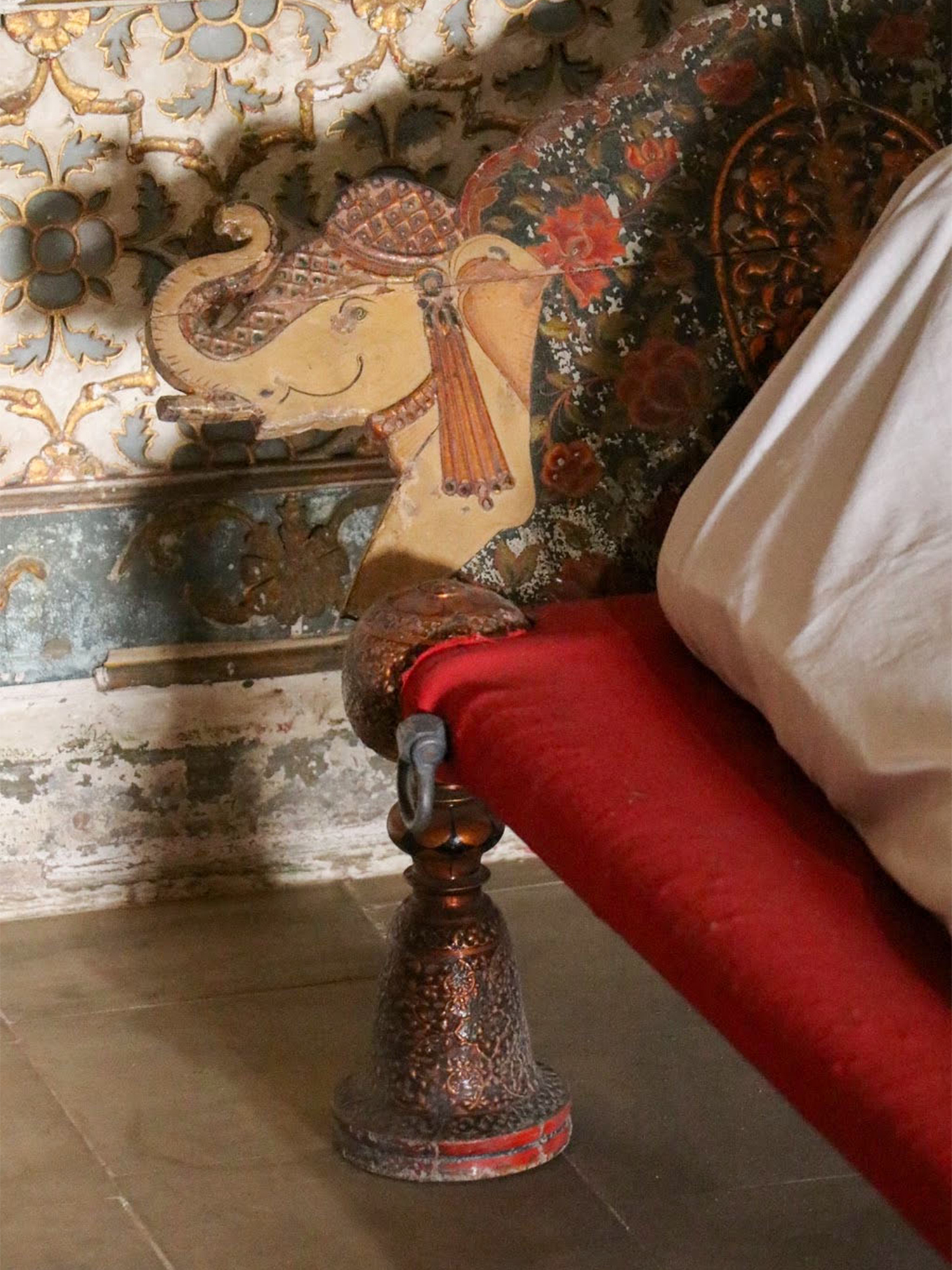
A palang’s various components may be richly ornamented or relatively plain, depending on the patron’s means and requirements. Usually the headboard features the most decoration, often in the form of vertical wooden spindle-shaped members, or other intricate carved elements. In addition to these, headboards may feature panels fitted with decorative tiles, mirrors, stamped brass ornaments, images of deities, spiritual figures, or other photographs. Two diwan documented in a Rajasthani temple and used by sadhus (holy men) feature a slightly inclined headboard; while both have the image of a deity inset in the central panel of the headboard, one is additionally inset with mirrors and decorative tiles. The latter diwan also features a drawer with a ceramic knob and carved brackets at either corner of the headboard; following the death of the sadhu this diwan belonged to, it is no longer used by anyone else. A palang on display in the Junagarh Fort of Bikaner, Rajasthan, features two carved elephants, with trunks raised, projecting in profile from each side of the headboard.
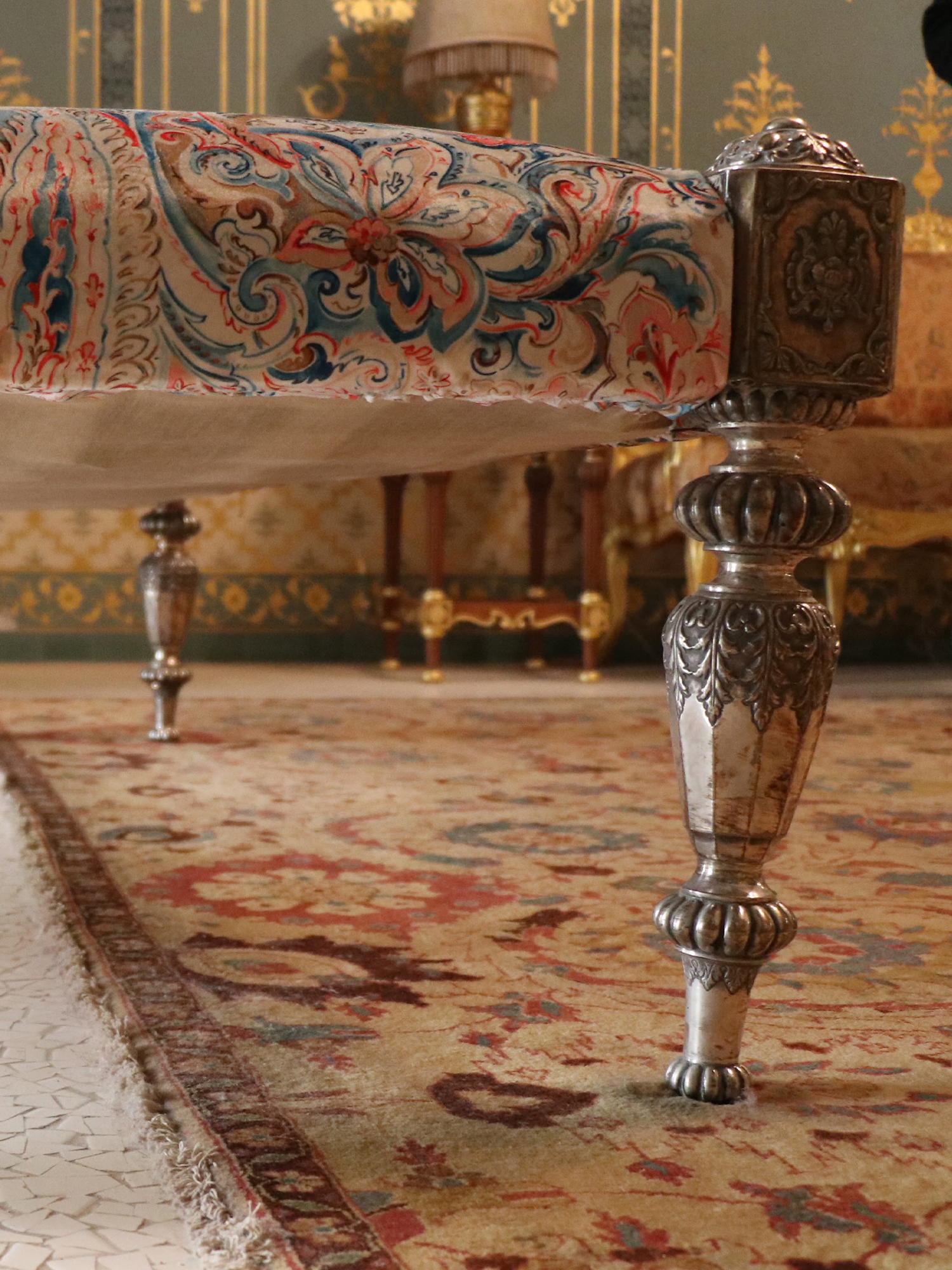
The legs and frame of the palang may also be variously ornamented with carving, lacquering or painting, usually of geometric shapes or foliate patterns. One specimen recorded at the home of a village headman in Rajasthan, which is reserved for guests, features intricately turned and carved wooden legs clad with embossed silver sheets shaped in the form of acanthus leaves, and solid metal feet. In the Brij Vilas section of Udaipur’s City Palace is a highly ornate silver-plated metal palang, with turned legs and a detachable headboard made of thin metal pipes bent into scrolling patterns. Another at the Junagarh Fort also has silver-clad legs and an upholstered seat.
This article is adapted from the outcomes of Vernacular Furniture of North-West India — a collaborative research and documentation project by the Design Innovation and Craft Resource Centre (DICRC), CEPT University, India, and The South Asian Decorative Art and Crafts Collection Trust (SADACC), UK — shared with the Encyclopedia of Art through an Impart partnership. Explore more from this series in our Collection Objects Alive: Vernacular Furniture of North-West India.
First published: 28 August 2026
Image Gallery
Bibliography
Bais, Mitraja, Jay Thakkar, Samrudha Dixit, and Ben Cartwright. Sahaj: Vernacular Furniture of Gujarat. Ahmedabad: CEPT University Press, 2018.
Rao, Mansi S., Ben Cartwright, and Samrudha DIxit. Anaikya: Vernacular Furniture of Rajasthan. Ahmedabad: CEPT University Press, 2021.
Rao, Mansi S., Ben Cartwright, Jay Thakkar, and Abhishek Ruikar. Smarya: Vernacular Furniture of Punjab and Haryana. Ahmedabad: CEPT University Press, 2026.
Vernacular Furniture of India. Accessed July 22, 2026. https://vernacularfurnitureofindia.com/.
Feedback