-
ChicagoImpart Encyclopedia of Art. "Kashkul." June 19, 2026. https://imp-art.org/articles/kashkul/.
-
MLA"Kashkul." Impart Encyclopedia of Art, Jun. 19, 2026, https://imp-art.org/articles/kashkul/.
-
HarvardImpart Encyclopedia of Art (2026) Kashkul. Available at: https://imp-art.org/articles/kashkul/ (Accessed: 16 October 2026).
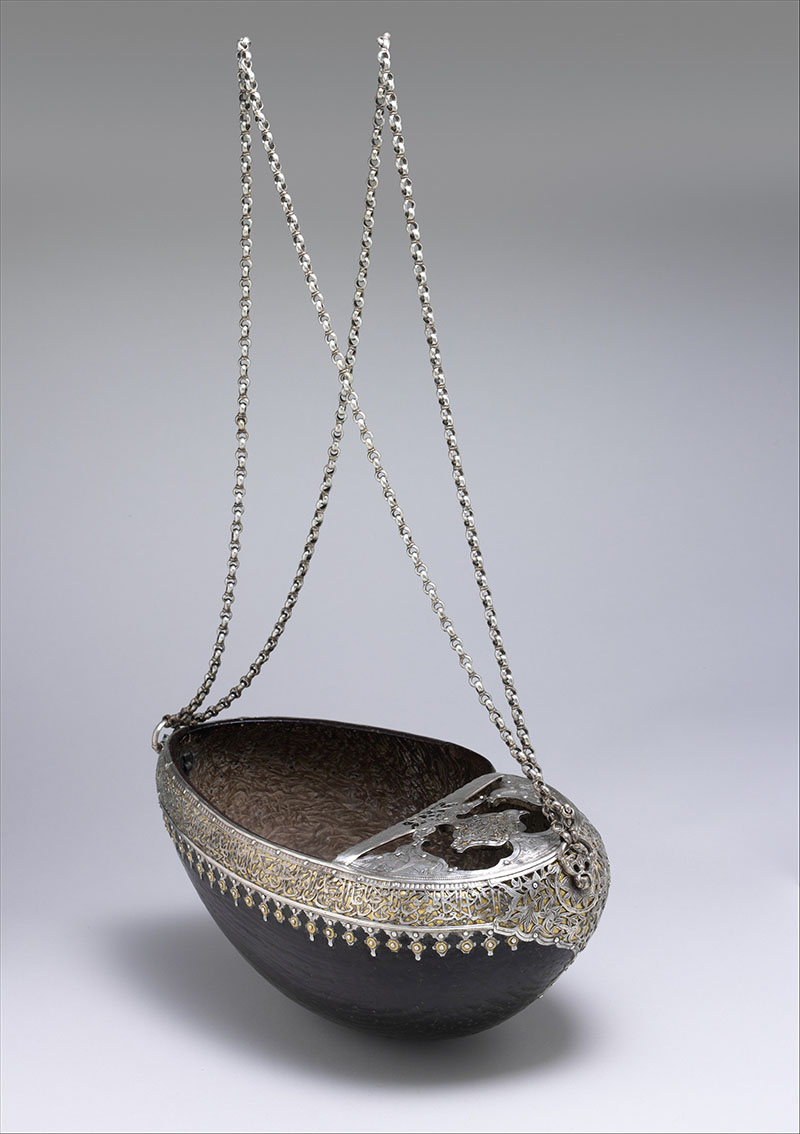
A boat-shaped alms bowl typically inscribed with prayers or dedications, the kashkul was used by itinerant Sufi medicants in Iran and the Indian subcontinent between roughly the eleventh and the twentieth centuries. It developed from similarly shaped ritual wine-vessels used in ancient and pre-Islamic Iran. Medieval kashkuls were also commissioned as ornamental, symbolic objects. Kashkuls were made from a variety of materials, and ranged from being austere to intricately crafted and richly decorated.
Terminology
Before the seventeenth century, the term ‘kashkul’ in Persian — literally meaning ‘that which pulls the shoulder’ — simply referred to a beggar or a mendicant. The mendicant’s boat-shaped alms bowl was initially known as kashti-i-kashkul — ‘kashti (“boat”) of the beggar’, connoting the shape of the bowl. In the late seventeenth century, when the bowl had become popularly associated with Sufi mendicants, the term was abbreviated simply to kashkul. Earlier lexicographical and literary evidence indicates that crescent-shaped bowls were used as wine boats by royalty or nobility in Iran. From the eleventh century on, Persian Sufi poetry is replete with references to these vessels that indicate both their ritual use and their evolving spiritual significance. The earliest mention of them in a dictionary appears in the Farhang-i-Jahangiri, compiled at the Mughal court between the late sixteenth and early seventeenth century. The text refers to a boat-shaped vessel made of gold, known as kashti-y-zar (meaning ‘gold boat’). A dictionary compiled in Golconda in 1651–52 defines ‘kashti’ as a boat-shaped bowl used to drink wine. These were also known as safina or zauraq (Arabic words for boats which became loanwords in Persian to denote the bowls). The nineteenth-century Farhang-i-Anandaraj, also compiled in the Deccan, uses the term kashkul-i-dariya (‘ocean kashkul’) to denote variants made of the shells of the coco de mer nut (Lodoicea maldivica, also known as the sea coconut). Though by this time there were some rare variants in the design of the kashkul that deviated from the crescent or boat-shaped form, the dictionary clarifies that the boat shape was the most common and well-known.
Antecedents and symbolism
The oldest known specimen of a boat-shaped bowl is an earthenware specimen excavated in Warka (ancient Sumer, in present-day Iraq) dated to 4000–3500 BCE. This specimen and later metal vessels, also from Sumer, bear significant resemblance to later pre-Islamic boat-shaped wine vessels and Islamic kashkuls as they developed in neighbouring Iran. The earliest Iranian antecedents to the kashkul date to the ninth or eighth centuries BCE; these are footed boat-shaped vessels made of glazed ceramic. There are few of these, and little can be said about their exact context of their use. Specimens dated to between the third and seventh centuries CE — the period of Sasanian rule in ancient Iran — are elongated vessels, generally made of metal, and often carved with royal motifs that suggest courtly use.
These predecessors to the Islamic kashkul developed from pre-Islamic ritual practice. In Zoroastrian practice the cultic bull-sacrifice ritual of prehistoric Iranian peoples was replaced by the ritual drinking of red wine, symbolic of blood. Notably, at least one specimen of the Sasanian period is found to be engraved with a Christian cross, which suggests that by the early centuries CE, the object had likely acquired a broader cultural significance in the region and was no longer explicitly associated with cultic sacrifice or Zoroastrianism. However, the association persisted in certain Sufi sects that reinterpreted earlier themes into their idiom and practice — ceramic vessels shaped like bulls have been found from twelfth century Iran, and contemporary textual evidence suggests that wine was poured from these into boat-shaped vessels as a re-enactment of the originary blood sacrifice. Persian Sufi poetry from the eleventh century on suggests that drinking from the wine-boat was common during Nauruz celebrations and other ceremonial occasions, particularly among royalty or nobility. The poetry metaphorically associates wine with the illumination of sunlight, knowledge, initiation, and so on, while the crescent-shaped wine vessel is likened to the moon and often represents the soul of the initiate or the Sufi seeker. The vessel also symbolised the boat that carried the seeker across the cosmic ocean.
Historical development
The few surviving Iranian wine-boats from the seventh to the sixteenth century — a period that spans the advent of Islam and the development of Sufism — show a steady development in form. A Pahlavi inscription on at least one specimen from this period explicitly describes the vessel as a boat. Decorative motifs on these vessels also indicate the enduring association of wine with the sun and divinity.
Until roughly the eleventh century CE, the Iranian wine-boat was still largely associated with the elite and seems to have functioned as a ceremonial object. The earliest references to its use by Sufi mendicants in Persian literature appear in the fourteenth century; some specimens dated to this period are also believed to have belonged to dervishes, referred to in Persian texts as darvish or qalandar. The first begging bowls to be carried by Sufi dervishes were likely the simplest form of the kashkul: a bowl made of the shell of the coco de mer nut. All extant specimens of these date to the nineteenth century. However, even these late objects are sometimes inscribed with verses describing the object as a wine vessel, which has been interpreted to mean that the memory of the original function of the kashkul was preserved even as the context of their use changed.
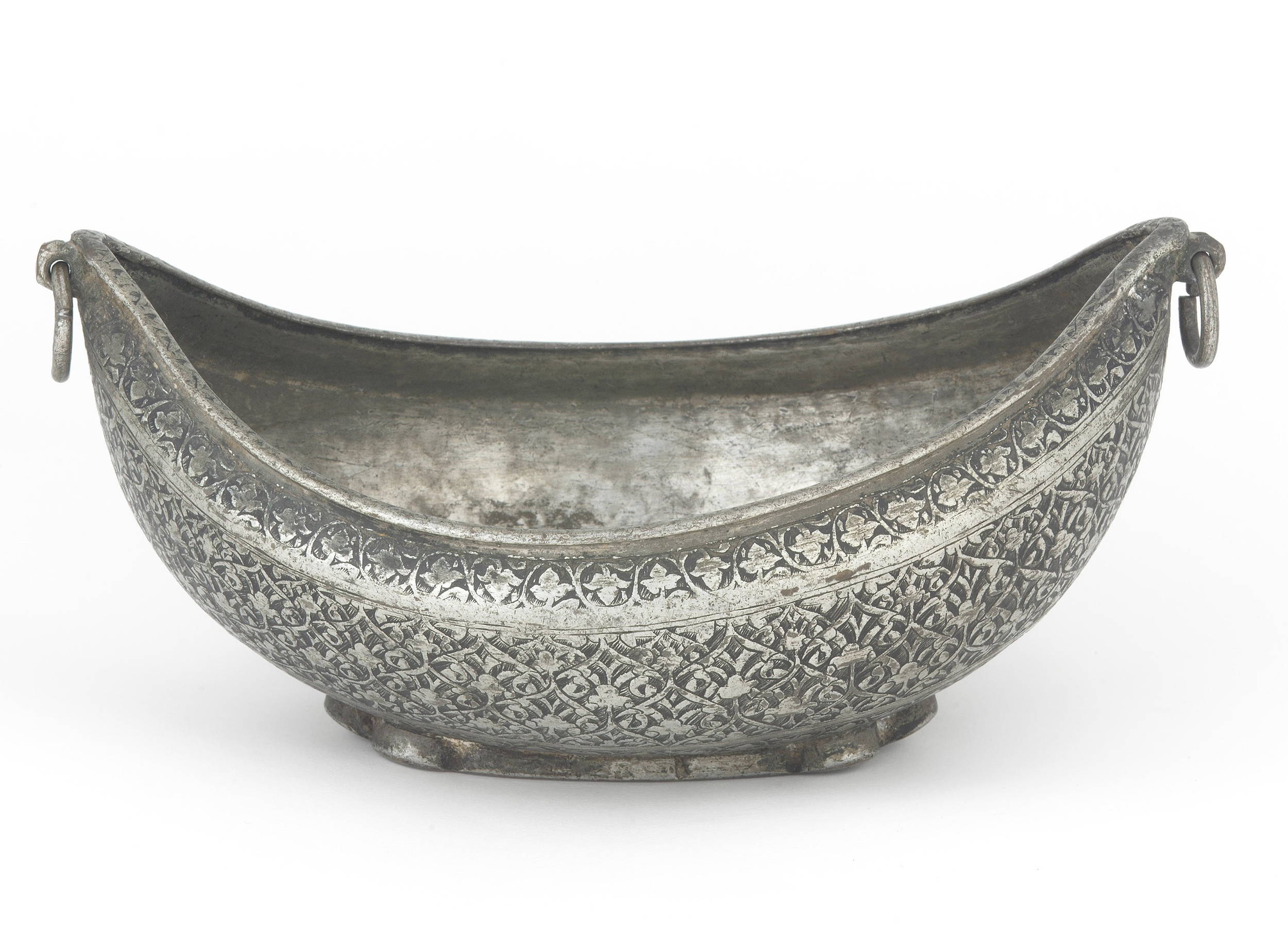
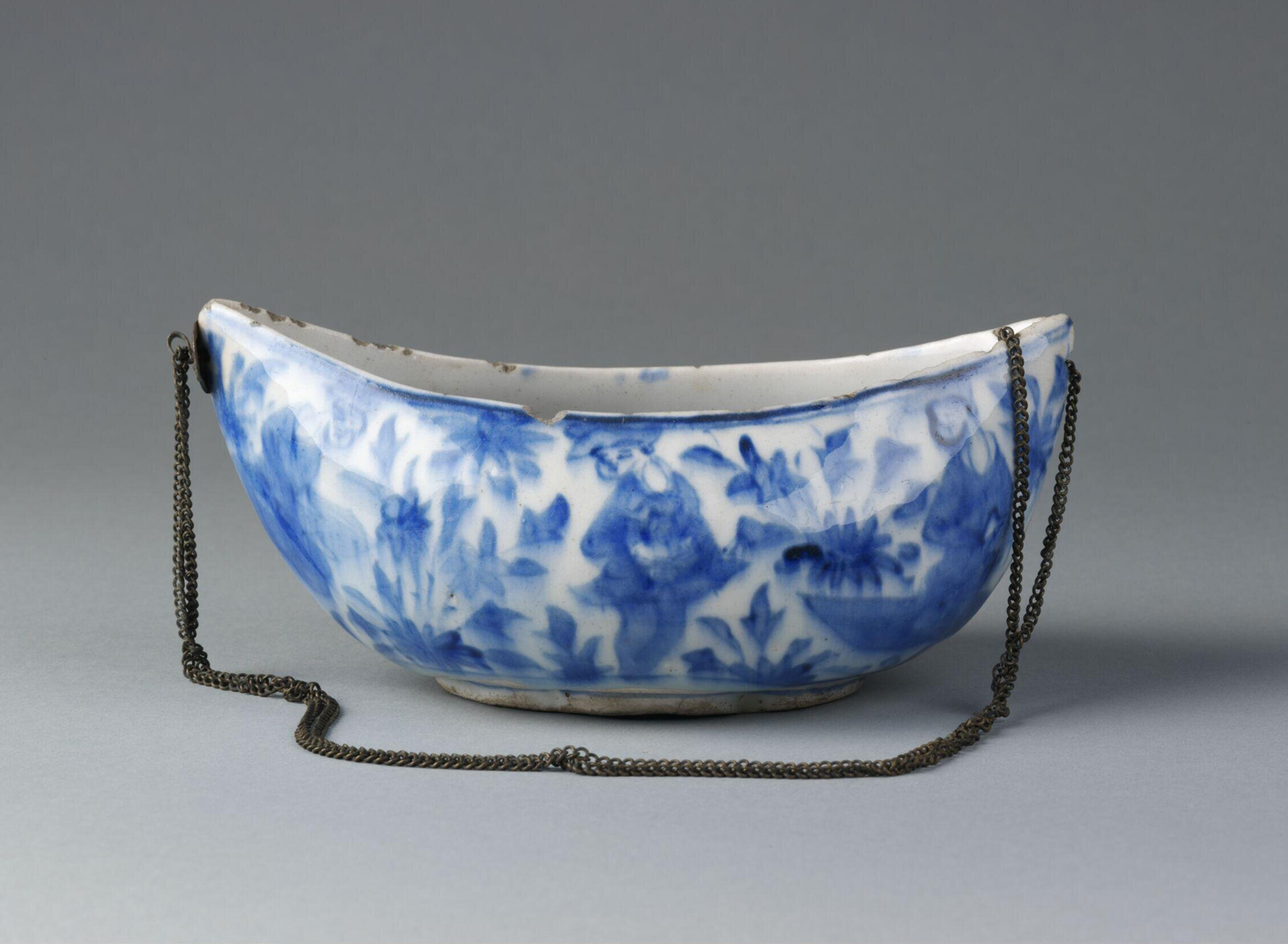
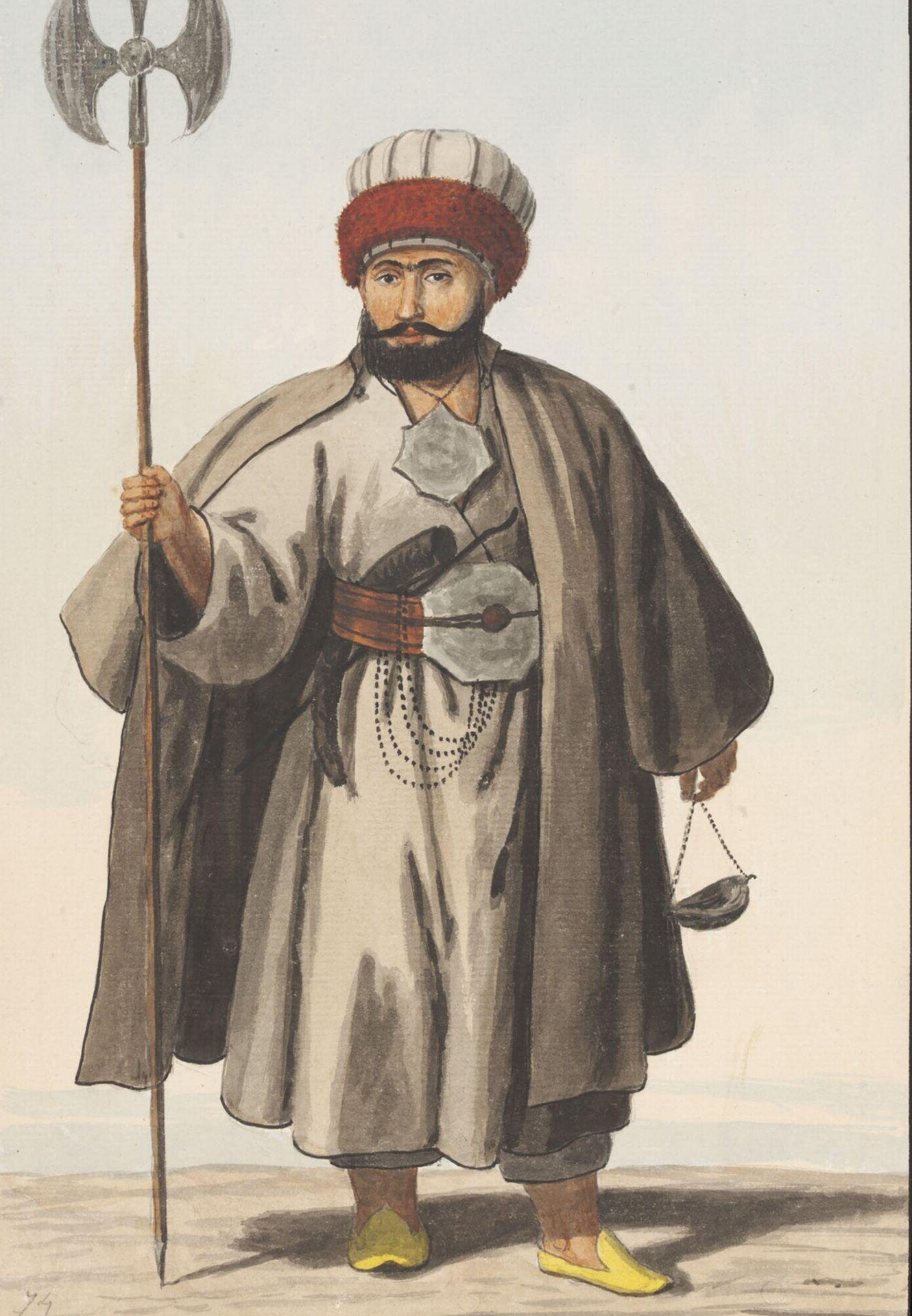
Though the form of the kashkul basically derives from an Iranian cultic object, the use of the kashkul spread across Islamic Central, West and South Asia in the medieval period; evidence points to their use in the Ottoman Empire and present-day Iraq, Afghanistan, Pakistan and India. The kashkul appears in a poem by the thirteenth-century Hindustani poet Amir Khusrau, suggesting that the object was known and used in South Asian Sufism by that time. By the seventeenth century, the kashkul had become commonly known as one of several other implements carried by dervishes in Iran and elsewhere to signal both their status as religious renunciants and their particular order of faith. In Iran, the Khaksar order, for example, is said to have carried the kashkul on the left arm, while the Ni’matullah order wore it on the right. It has also been suggested that the widespread establishment of Shi’ism in Iran around the early sixteenth century imbued the kashkul with greater significance and the vessel also came to be associated with the myth of Noah’s Ark.
South Asian influence
The object was introduced in South Asia with Persianate culture, but it has been suggested that the widespread use of the kashkul by Sufi mendicants in Iran can be attributed to South Asian influence, specifically from the Shi’ite Deccan sultanates and the Sufi orders that developed under their rule. Between 1510 and 1737, members of the Jalali branch of the Iranian Khaksar Sufi order travelled frequently between the Deccan and Iran, and established relationships with Indian Sufi orders. In general, there was a steady influx of Iranian migrants to the Deccan throughout this period, which included persecuted Sufi leaders who continued developing their orders here and whose descendants subsequently brought them back to Iran. The Bijapur and Golconda sultanates had declared their allegiance to Iran’s ruling Safavid dynasty (r. 1501–1736), adopting Shi’ism as the state religion and establishing a strong diplomatic and cultural link with Iran. It is possible that Indian Sufism contributed a magical or talismanic association to the object, and may have popularised the use of the kashkul among Iranian Sufis.
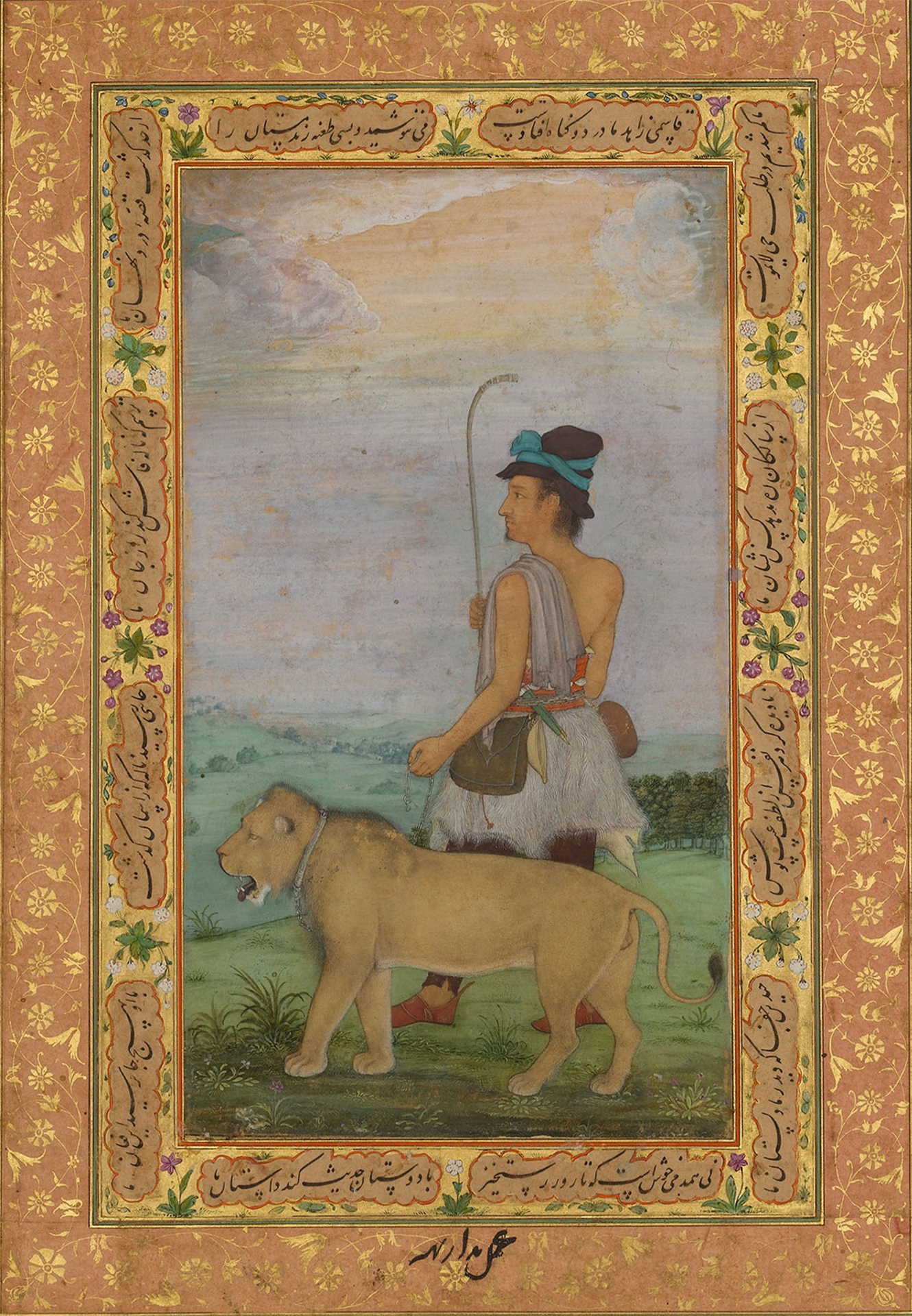
Between the sixteenth and nineteenth centuries an abundance of Islamic kashkuls made in various forms and materials, and explicitly associated with Sufi mendicants, appears on the material record, with several extant specimens of metal kashkuls produced in the Deccan. The earliest of these dates to about 1600; most are from later in the century, and there are fewer from the eighteenth and nineteenth centuries. Kashkuls also continued in use further north; a seventeenth-century painting commissioned at the Mughal court under Shah Jahan depicts a dervish with a kashkul hanging from his belt. In the nineteenth century, kashkuls were widely produced in Kashmir, largely for the colonial market.
Function
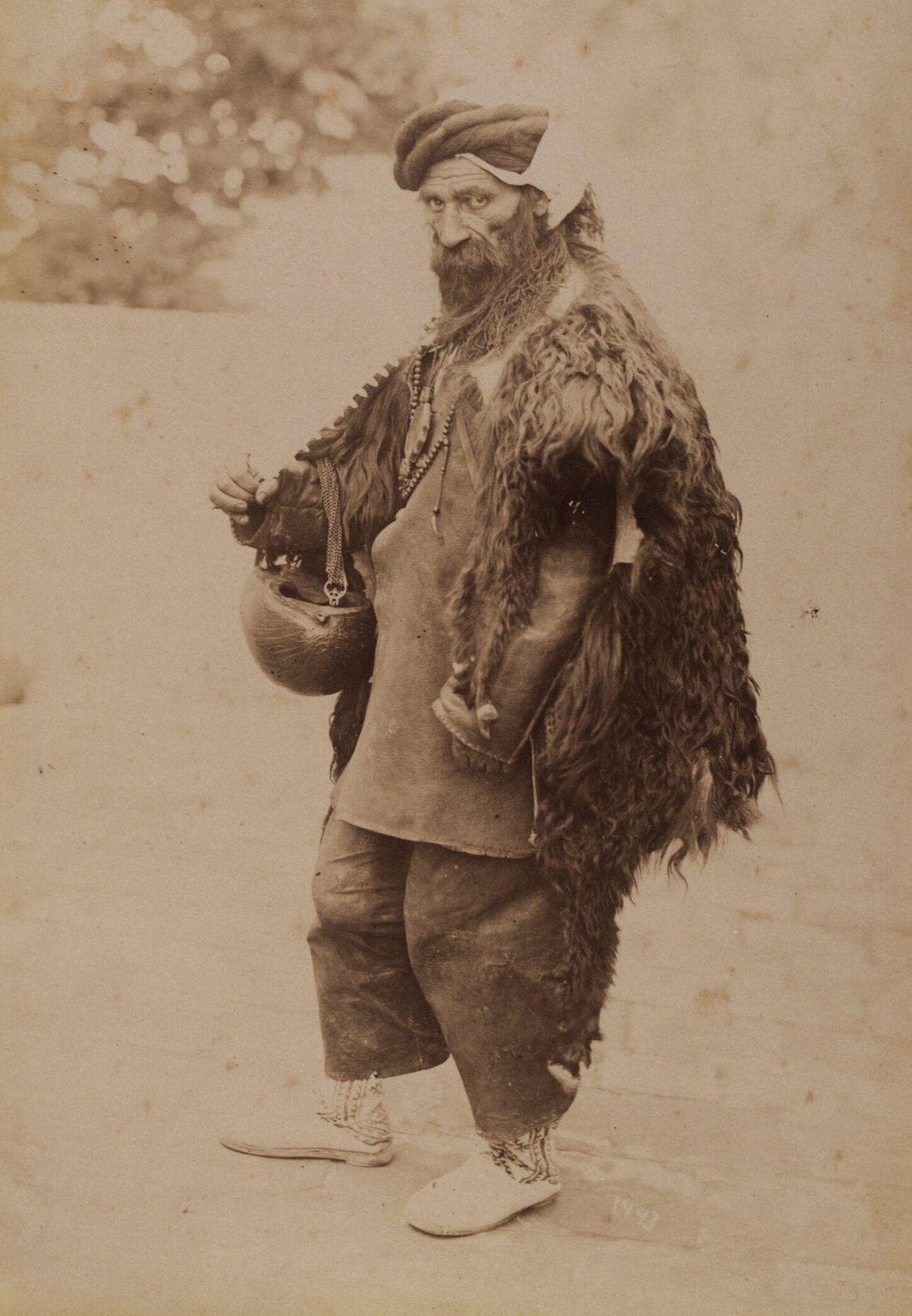
The most common use of the kashkul was as an alms bowl for the Sufi mendicant that could hold food, water or coins. Some Sufi orders prohibited dervishes from actively begging, while others encouraged it as a necessary form of spiritual self-abnegation; still, by the seventeenth century, the kashkul had become generally emblematic of the Sufi’s renunciation of material benefit. The Qalandarnamas, a fourteenth-century Sufi manuscript states that begging (darvizeh) might be outward or inward, and the inward beggar holds the ‘kashkul of his heart’ as he seeks spiritual illumination. It has been suggested that the kashkul was such an integral part of the Sufi accoutrement that a dervish’s kashkul could be confiscated by the master of the order as punishment for various misbehaviours. Large metal kashkuls were also sometimes displayed at Sufi lodges (khanqah) or royal courts as symbolic objects.
The kashkul was also once widely used in Shi’ite mourning rituals during the month of Muharram; today, its use in this context only survives in some parts of Iran. Specifically, the kashkul played a key function in the water-carrying ritual (saqqaʾi) on Ashura, the tenth day of Muharram, which honours the standard-bearer and water-carrier Abbas ibn Ali, who died while trying to fetch water for Husayn ibn Ali’s beleaguered troops during the Battle of Karbala. During these rituals, an initiated fellowship of water-carriers would distribute water using the kashkul. A kashkul would also sometimes be attached to the banner at the rear of the mourning procession, and it was believed that water from these kashkuls had healing properties.
Design
What is known about the kashkul’s design in its classic forms comes largely from specimens dated between the sixteenth and nineteenth centuries. Other than a few rare exceptions, the object appears in two basic shapes, both intentionally resembling boats: the crescent; and the rounded, lobed, almond-like shape of the coco de mer shell. Metal specimens were also often cast to imitate the latter.
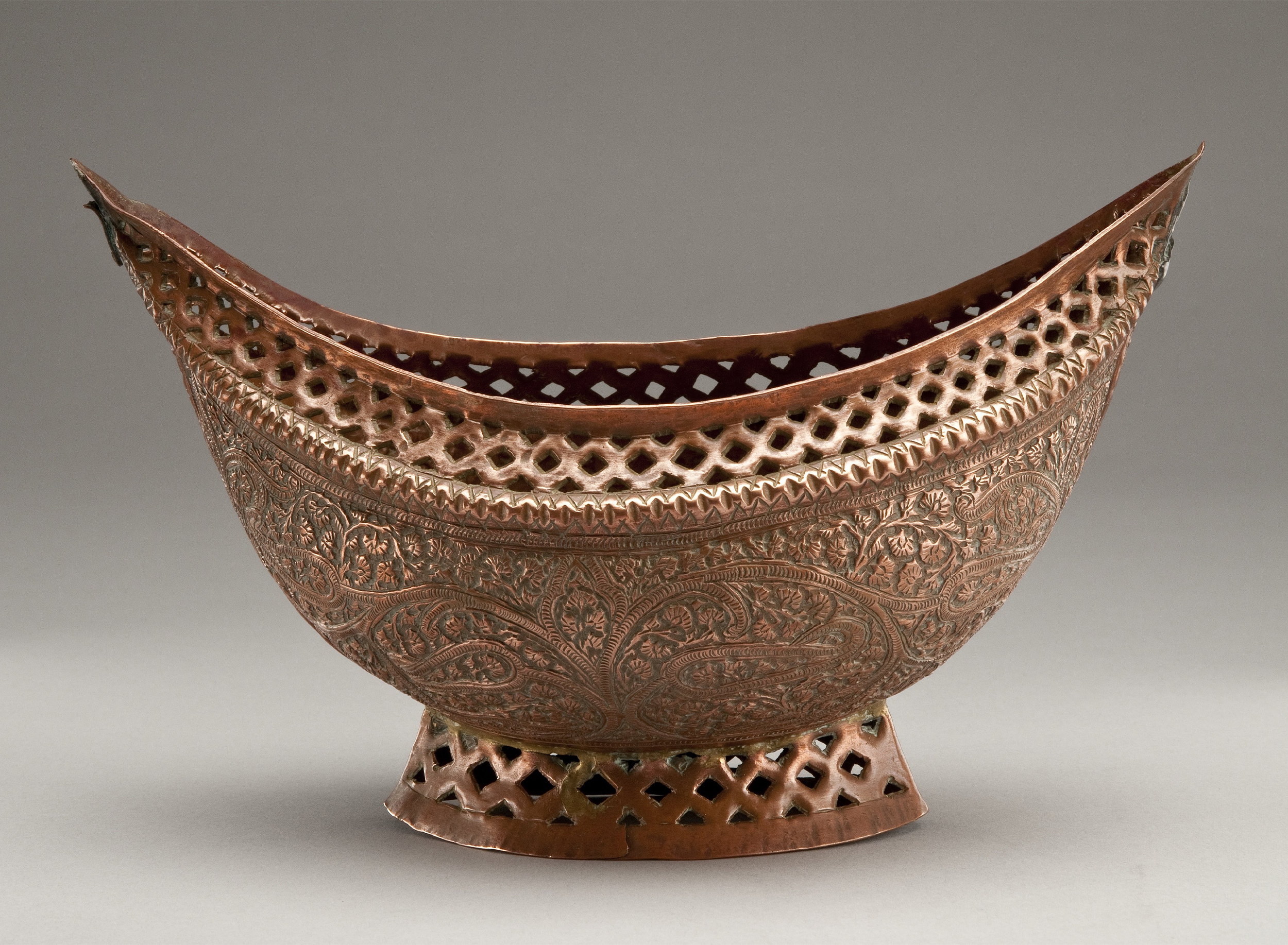
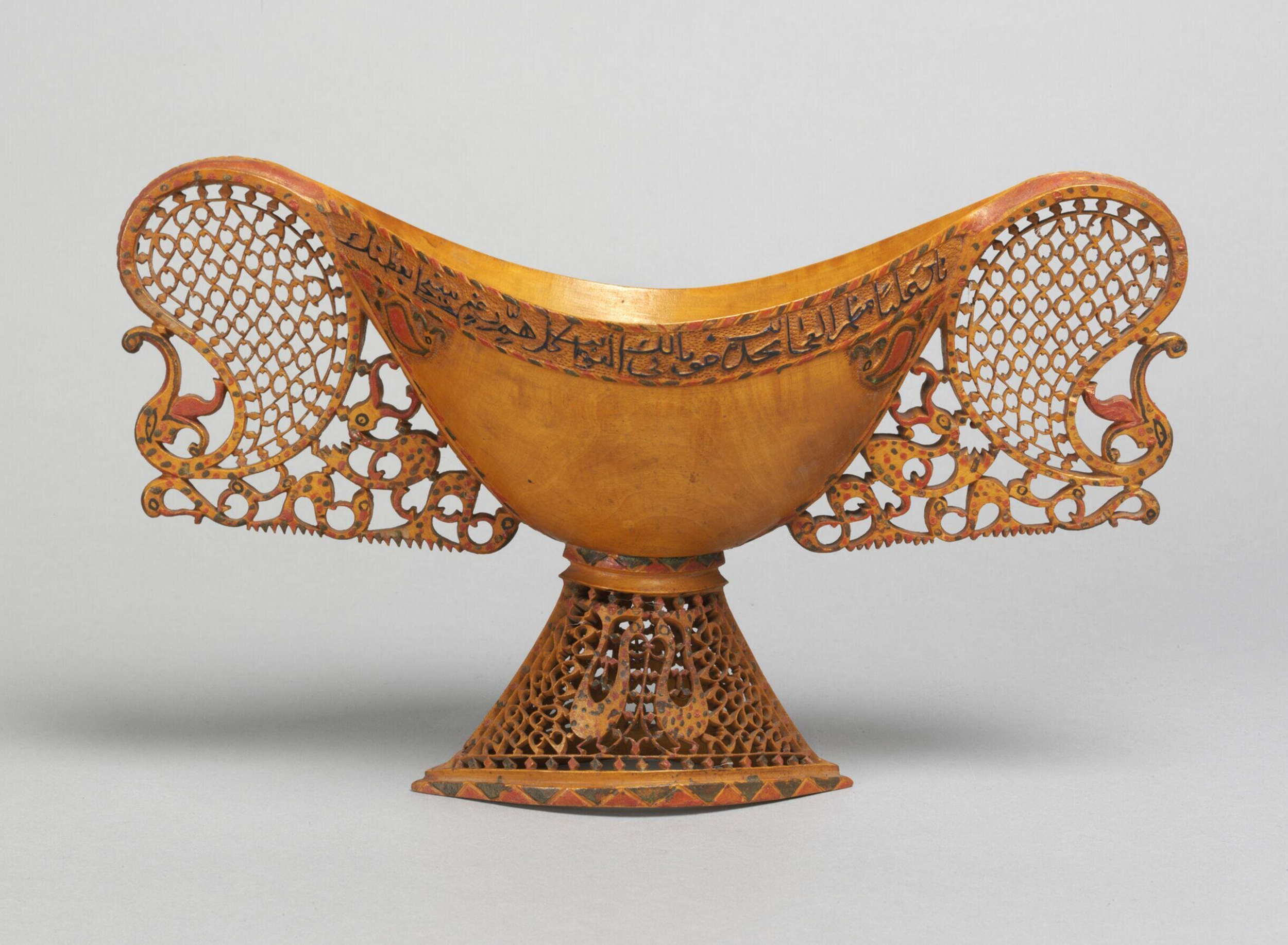
A typical crescent-shaped kashkul could either rest on the wide middle portion or be fixed to a supportive base; in rare cases, it might be attached to an elaborately decorated stand that elevates the bowl. The curve of the ‘hull’ varies, with some being deeper than others. The ends taper upwards, often recurving outward and culminating in finials. The tips may also be fitted with rings to which a chain or strap could be attached, or by which the kashkul could be carried on a belt. A practical metal kashkul may range between 19 and 29 centimetres long; larger heavier ones meant for display are about 36 to 38 centimetres long. A particularly monumental Safavid kashkul measures 60 centimetres in length.
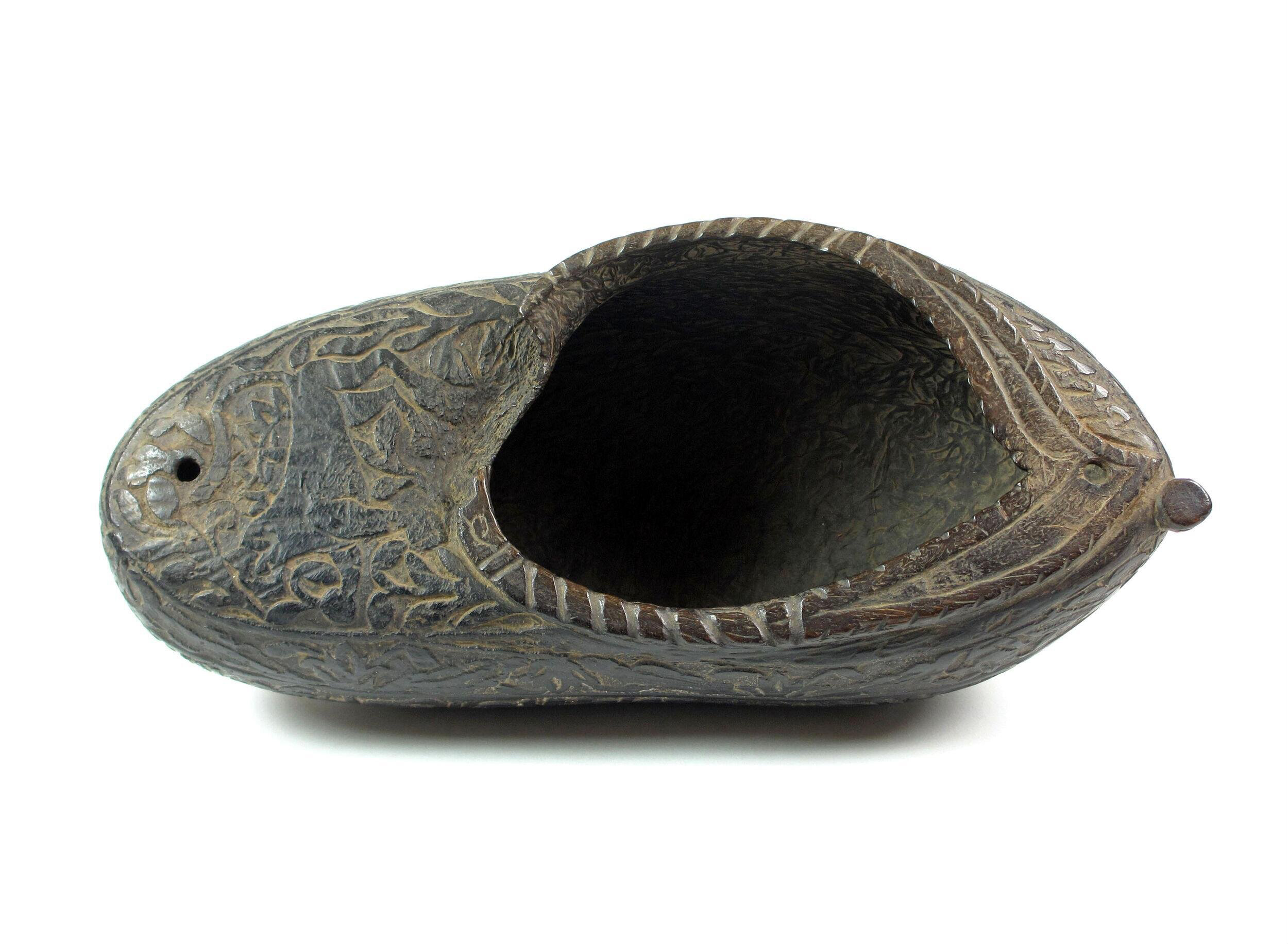
Coco de mer kashkuls are more rounded and blunt, following the natural form of the seed pod, and of more uniform size, measuring about 25 to 36 centimetres in length, 15 to 17 centimetres in width and roughly 14 centimetres in height. One end is typically slightly wider than the other, which is sometimes shaped into a point at the top. The opening generally occupies a little less than half the top of the shell, often taking a heart-shape; the narrow end of the shell — and sometimes both ends — features a small round hole functioning as a spout. This type of kashkul is never attached to a stand or support.
The materials used to make kashkuls of either shape vary widely and include cast bronze, silver, gilded silver, copper, steel, wood, gourds, ceramic, jade, ivory, and mother-of-pearl. Most extant kashkuls are made of coco de mer and lighter metals. Large ceremonial vessels commissioned by the Timurid, Safavid and Deccan courts were cast in bronze or brass. Kashkuls made with lighter metals may have been made from a single thin sheet of metal which was hammered while cold to create the boat shape.
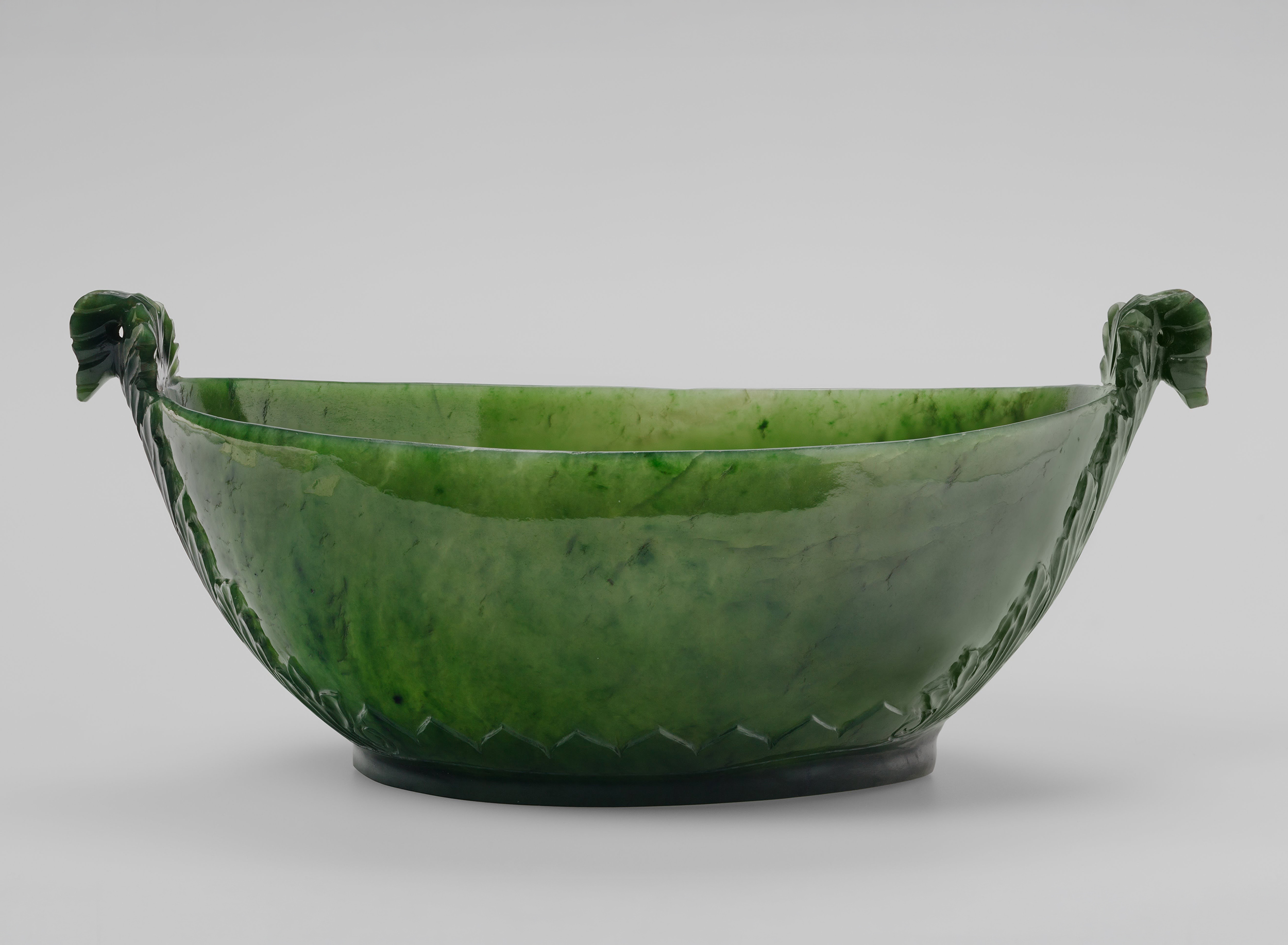
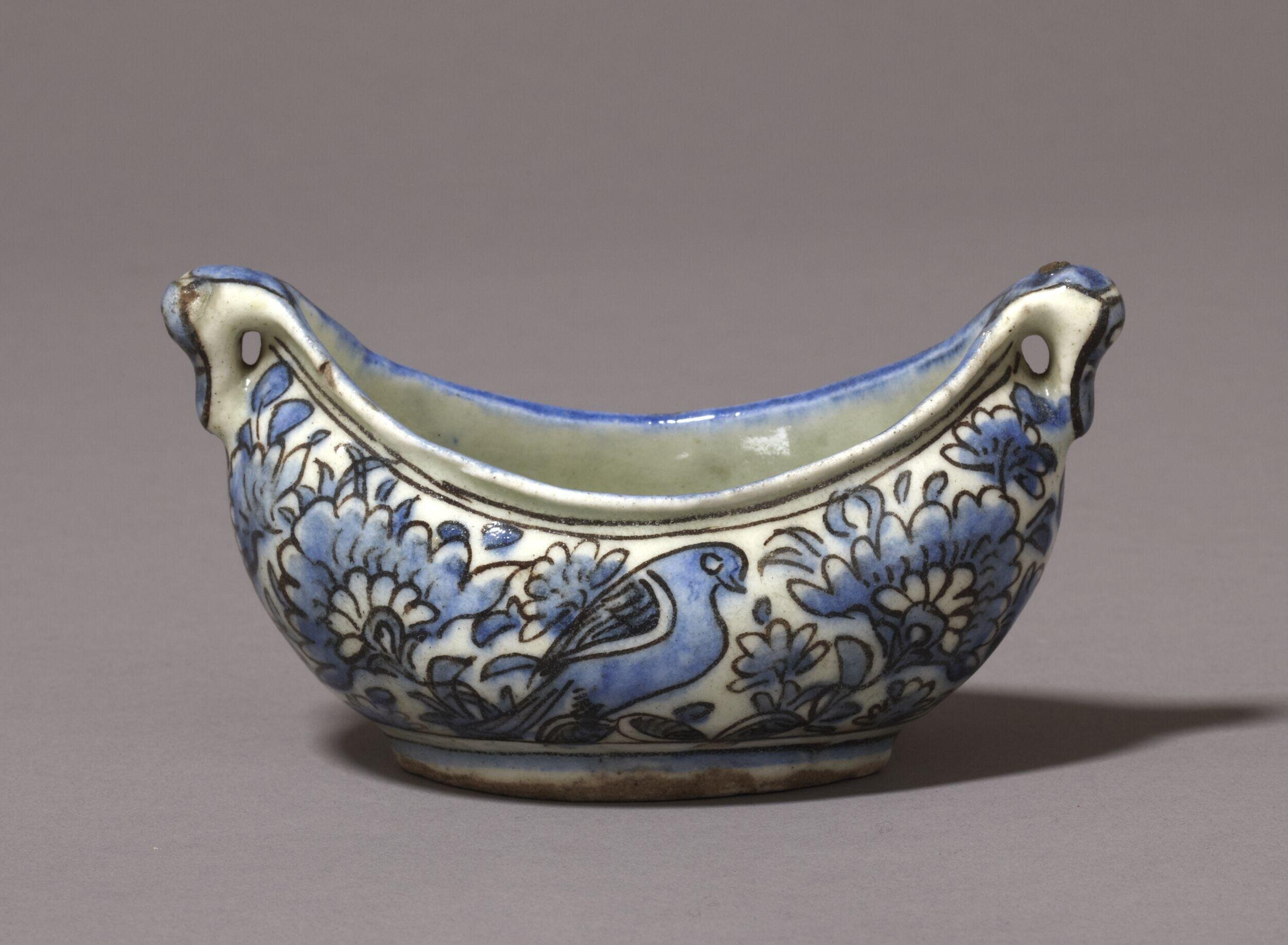
Kashkuls made in the Deccan often feature finials shaped as crested, bearded dragons in a distinctly Indic style. Nineteenth-century kashkuls made in Kashmir often have cobra-shaped finials. Others may be shaped as bird heads or chimeric monsters. Some Ottoman kashkuls — distinct from the core Iranian design — have simple, rounded handles instead of decorative finials.
Inscriptions
Most kashkuls, including the simplest coco de mer kashkuls, feature some form of decorative work on the surface, achieved through techniques including engraving or etching, chasing, embossing, openwork, gilding, inlaying with metal or stone, and encrusting with gemstones. Some copper and bronze kashkuls are coated with tin to create a silvery sheen and prevent oxidation.
Inscriptions on the surface, written in Nastaliq, Naskh, or Thuluth calligraphy, served to convey the object’s significance. They are typically excerpts of Quranic chapters, verses from other Islamic scripture, or Sufi poetry often highlighting the metaphorical spiritual function of the kashkul. Occasionally, the date of creation or name of patron or maker may be inscribed. Many kashkuls — especially those made with Deccani, Safavid and Qajar patronage — often feature Shi’ite invocations, such as the prayer to the Fourteen Infallibles (the Prophet, Fatima and the Twelve Imams). These calligraphic inscriptions are often rendered in bands that wrap around the kashkul, or otherwise densely filling the space. One exceptional Deccani kashkul made from heavy brass, believed to have been placed in the tomb of a cleric or noble and currently housed at the David Collection in Copenhagen, features — in addition to calligraphic friezes on the exterior — concentric bands of calligraphy on its interior surface, surrounding an almond-shaped medallion at the bottom.
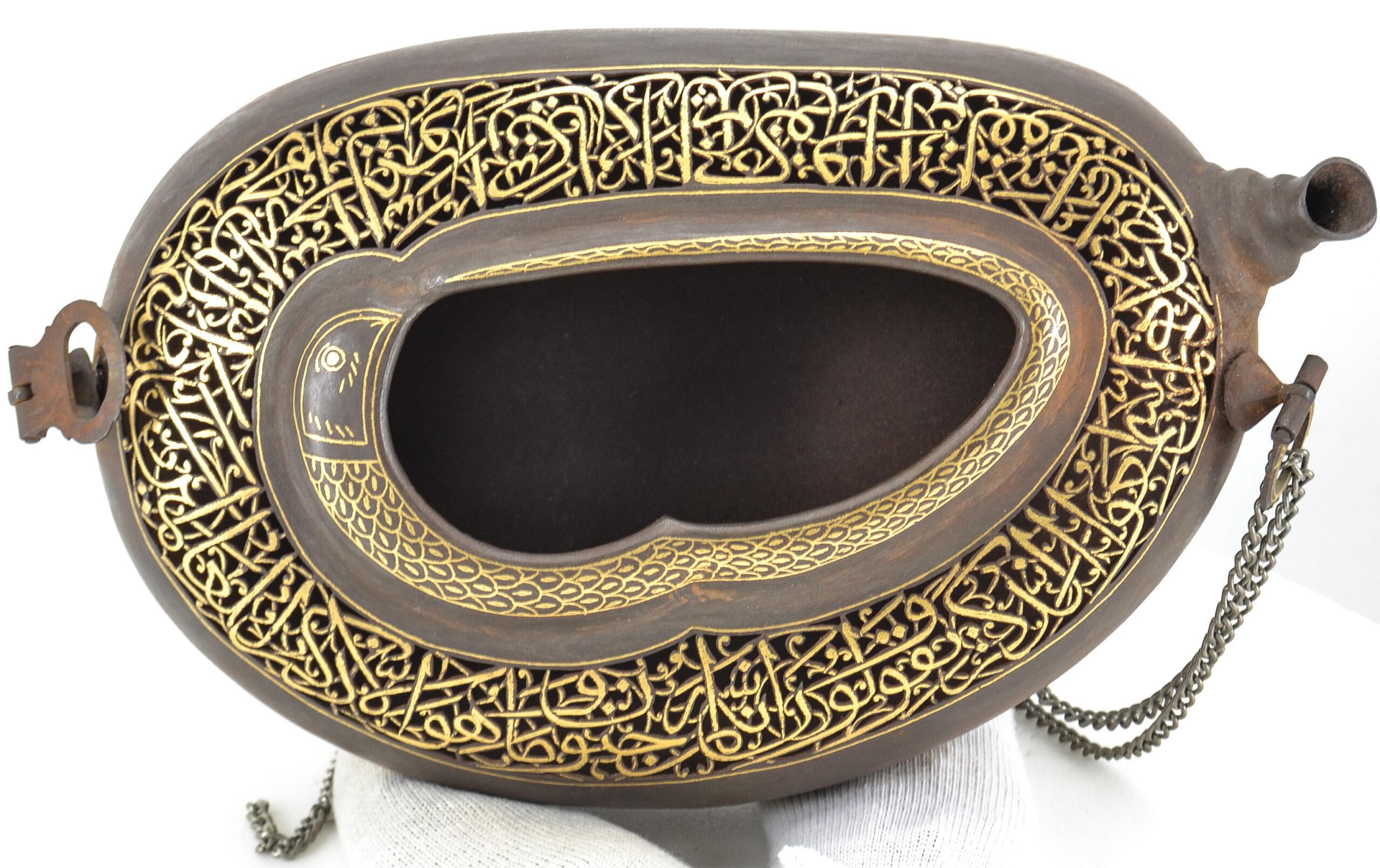
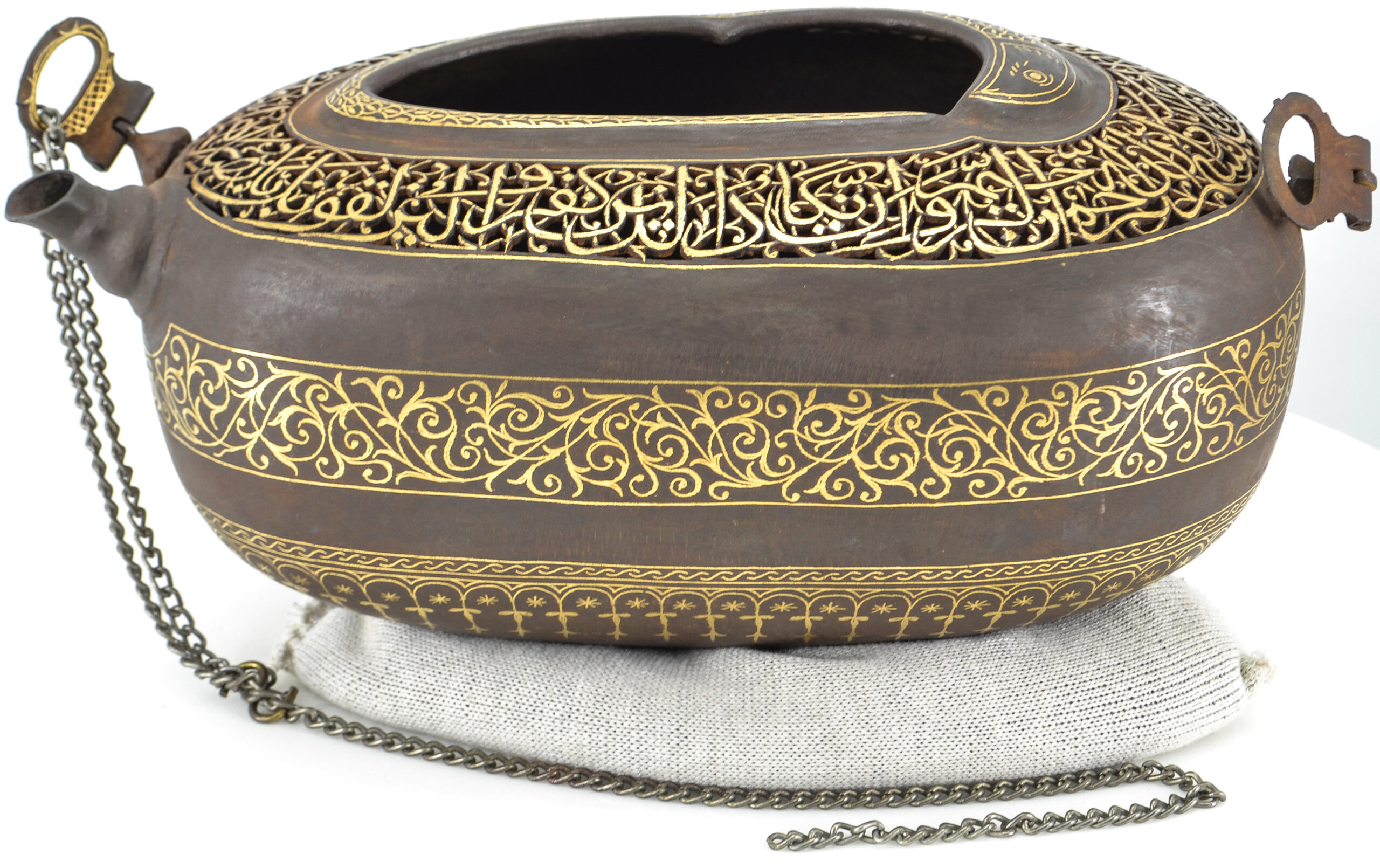
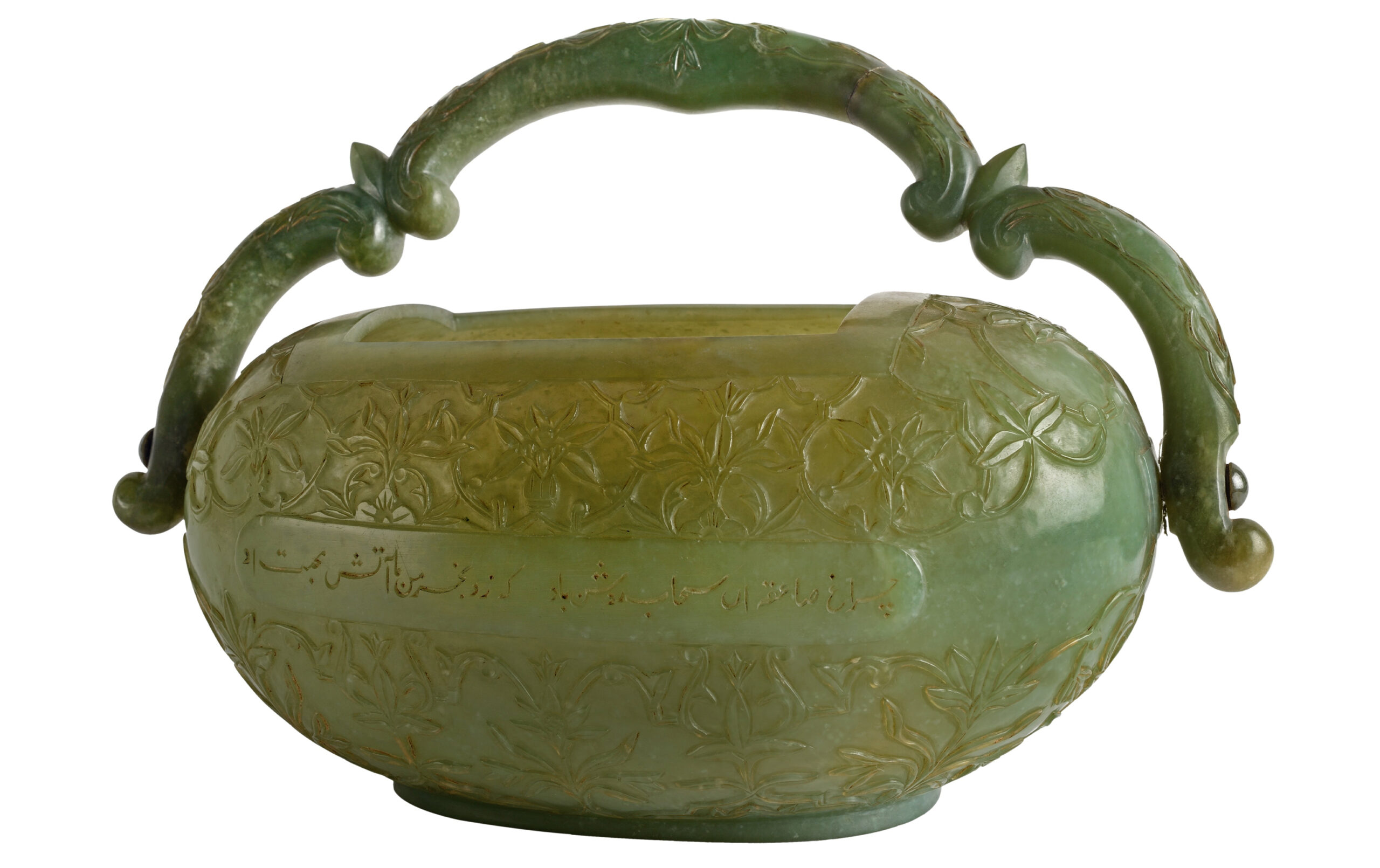
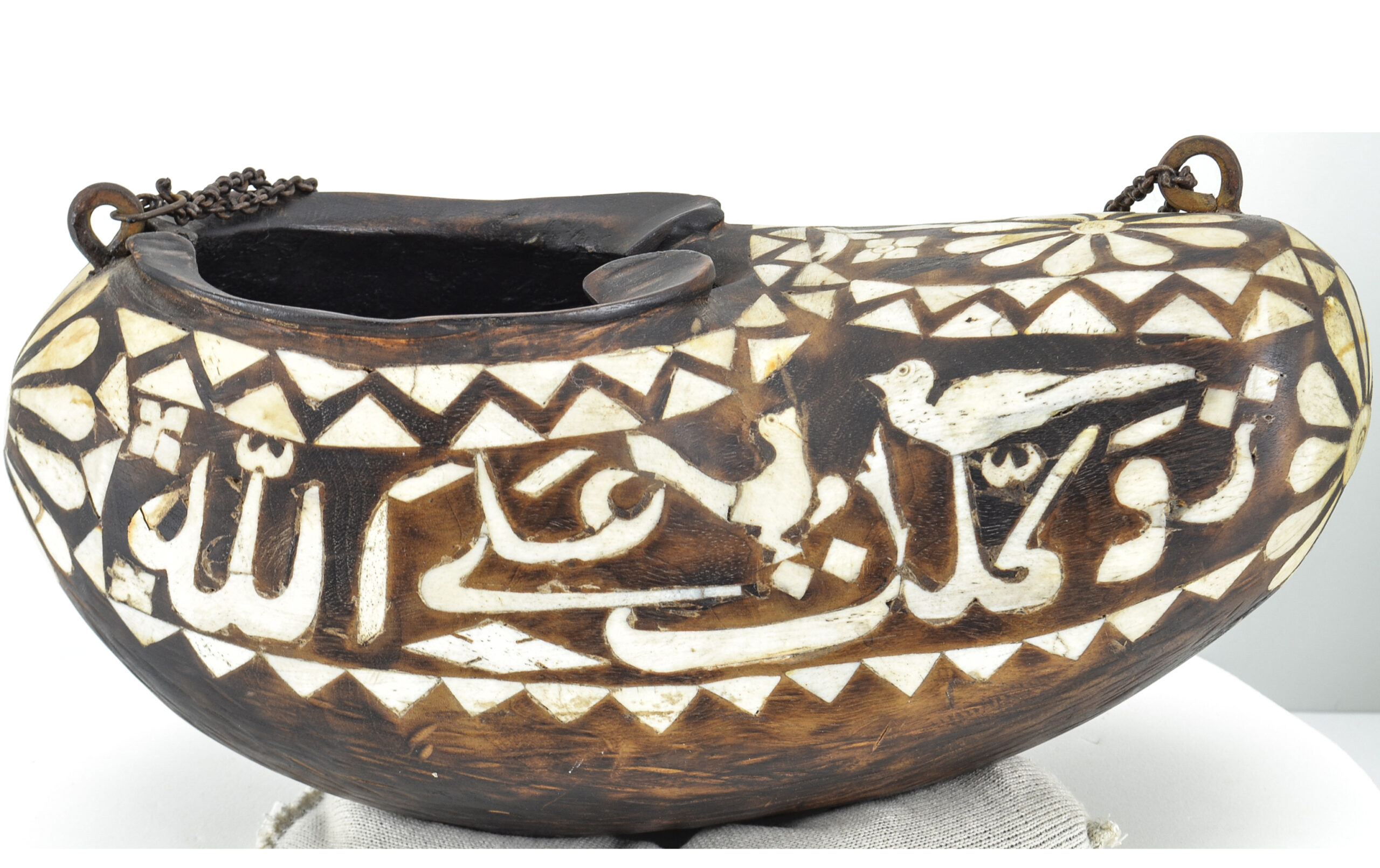
Other surface decoration seen on kashkuls includes human figures, typically dervishes; foliate motifs and others such as medallions or sunbursts, often very dense; and animals, often dragons, snakes and fish. South Asian kashkuls were also sometimes made with notches for the fingers; these may have been used in rituals where the object was passed from one person to another.
Antique kashkuls are widely traded by collectors; historical specimens are part of notable collections at the Aga Khan Museum in Toronto, and the private collection of Sadruddin Aga Khan; the David Collection in Copenhagen; the Metropolitan Museum of Art in New York; the Victoria and Albert (V&A) Museum in London; and the State Hermitage Museum in St. Petersburg, among others.
First published: 19 June 2026
Image Gallery
Bibliography
Ferzly, Michelle, et al. “Kashkul (Begging Bowl) Accession Number: AKM612.” Aga Khan Museum. Accessed December 14, 2023. https://www.agakhanmuseum.org/collection/artifact/beggars-bowl-kashkul-akm612.
Graves, Margaret S., and Benoît Junod, eds. Treasures of the Aga Khan Museum: Arts of the Book & Calligraphy. Istanbul: Sakıp Sabancı University & Museum, 2010.
Melikian-Chirvani, Assadulla Souren. From the Royal Boat to the Beggar’s Bowl. Genova, New York: Bruschettini Foundation for Islamic and Asian Art; Islamic Art Foundation, 1992.
Melikian-Chirvani, Assadullah Souren. Le Chant du Monde: L’art de l’Iran Safavide, 1501–1736. Paris: Paris-Musées, 2007. https://archive.org/details/lechantdumondela0000meli.
Michell, George, and Mark Zebrowski. Architecture and Art of the Deccan Sultanates. Cambridge: Cambridge University Press, 1999. https://doi.org/10.1017/CHOL9780521563215.
Mohtashemi, Amir. Indian, Islamic and Cross-Cultural Works of Art. London: Amir Mohtashemi Ltd.. https://www.mohtashemi.art/media/MohtashemiMedia/publications/publicationsDocuments/636880843963470829.pdf.
Ridgeon, Lloyd V. J., ed. The Cambridge Companion to Sufism. New York: Cambridge University Press, 2015.
Sheikhi, Alireza, and Sho‘leh Tatari. “Interaction of Form and Content in Metal Kashkuls of the Safavid and Qajar Periods.” Faslnāmeh-ye Honarhā-ye Tajasomi (Journal of Visual Arts) 2, no. 17 (Autumn–Winter 2018–2019). https://civilica.com/doc/1145226/.
Shkolna, O. V., O. D. Sosik, O. V. Barbalat, A. B. Buihasheva, and V. I. Zaitseva. “Concerning the Closeness of the Form of Sufi Kashkul and the Slavic Boats.” Linguistics and Culture Review 5, no. S4: 891–903. https://doi.org/10.21744/lingcure.v5nS4.1736.
Zarvani, Mojtaba, and Mohammad Mashhadi. “The Rite of the Water-Carrier: From the Circles of Sufis to the Rituals of Muharram.” Journal of Shi‘a Islamic Studies 4, no.1 (Winter 2011). http://shialibrary.net/ihdl/handle/110/487.
Feedback