-
ChicagoImpart Encyclopedia of Art. "Kalasha." January 8, 2024. https://imp-art.org/articles/kalasha/.
-
MLA"Kalasha." Impart Encyclopedia of Art, Jan. 8, 2024, https://imp-art.org/articles/kalasha/.
-
HarvardImpart Encyclopedia of Art (2024) Kalasha. Available at: https://imp-art.org/articles/kalasha/ (Accessed: 3 March 2026).
A rotund pot or vessel that features extensively in South Asian iconography, architecture and rituals, the kalasha — Sanskrit for ‘pitcher’ or ‘pot’ — is associated with creation, plenitude and good fortune in Hinduism, Buddhism and Jainism. Most often represented with foliage, flowers and sometimes animals emerging from it, it is symbolised as a carrier of life. Speculated to originate in the early fertility cults of South Asia, the form of the kalasha has been continuously used since — as an auspicious motif and as part of sacred iconographies in art, culture and architecture in the Indian subcontinent and beyond. It is known variously in Sanskrit and other Indian languages as purna-kalasha, purna-ghata, purna-kumbha, mangala-kalasha, bhadra-ghata, chandana-kalasha — all terms that denote the vessel’s round form and its auspicious fullness or abundance. The vessel itself, typically made of metals such as brass, copper, gold or silver — and sometimes terracotta — often occupies a central place in ceremonies and rituals.
The kalasha features a small flat base and a globular belly, with a narrow neck that widens slightly into a circular mouth. In iconographic depictions, the kalasha is shown with decorative bands and other ornamentation running horizontally across it, especially around its widest part. The foliage emerging from the mouth of the kalasha is depicted broadly following a lateral symmetry, albeit in greatly varying degrees of elaboration — from only a handful of lotus stems to a tall, highly stylised tree with many branches, leaves and fruits. When used as a ceremonial object, the kalasha is often wound with criss-crossing threads across its shoulder and belly or covered with a cloth fastened around its neck. Its associations with plenitude and fertility are denoted by filling it with water and food and plant material.
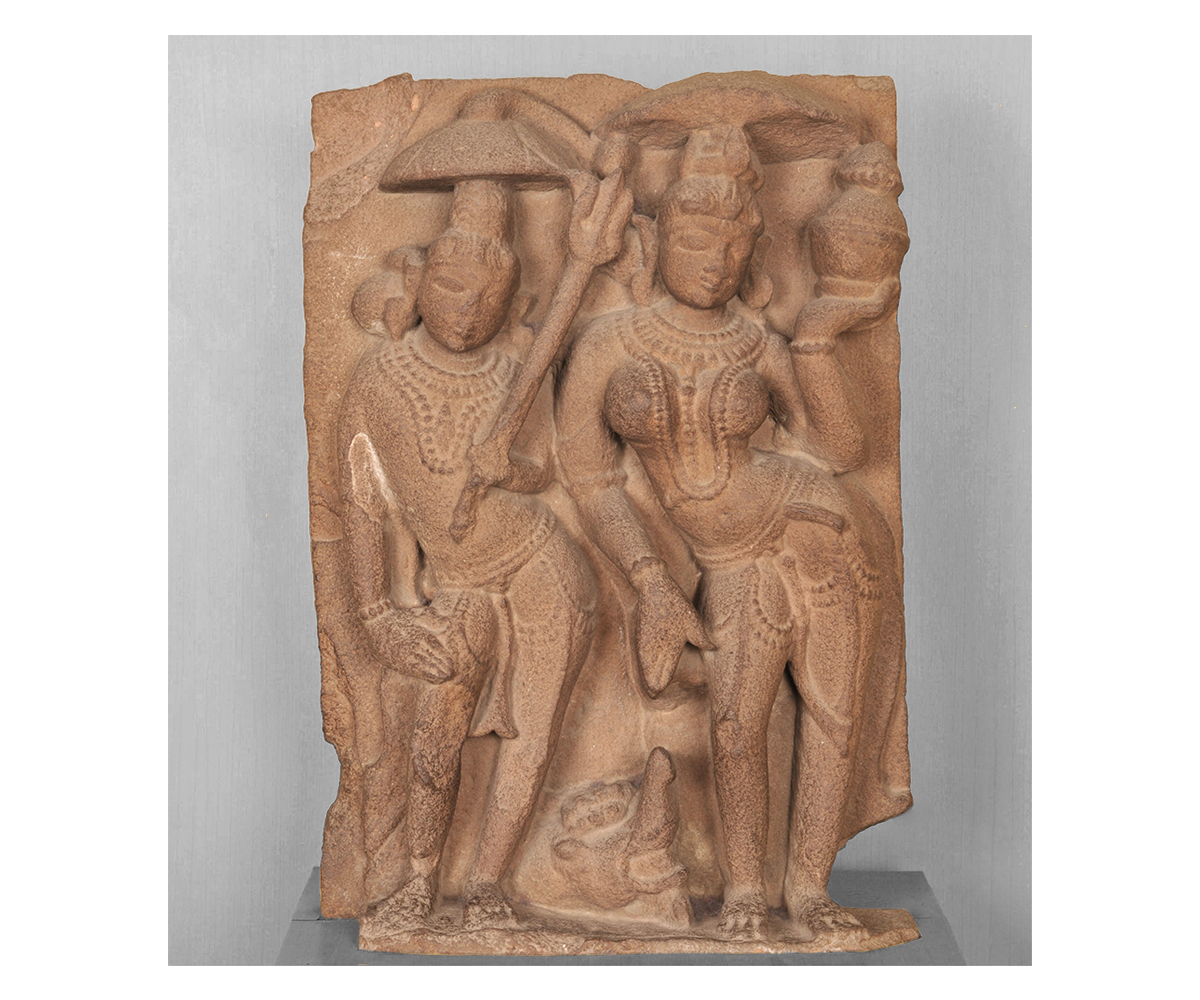
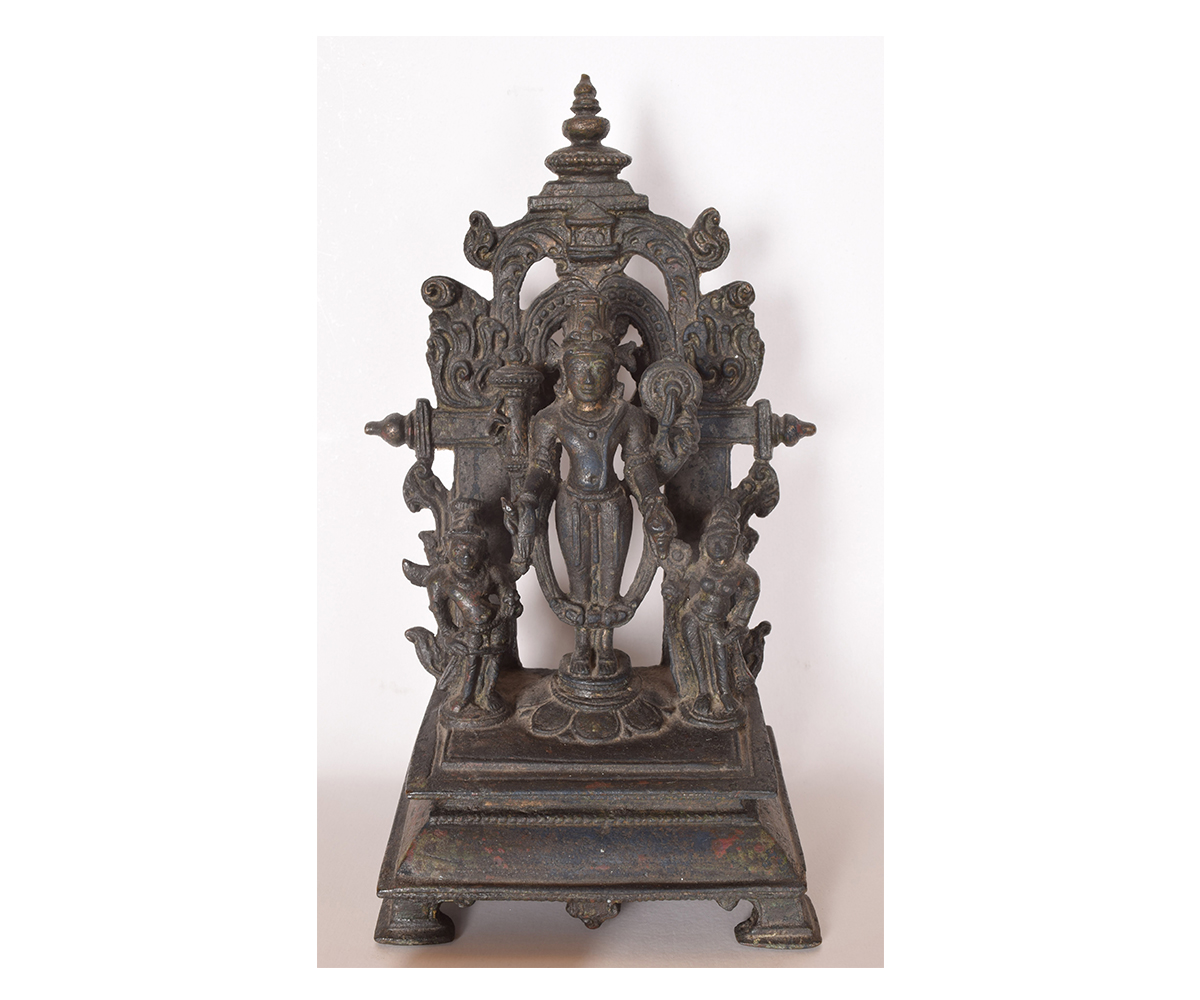
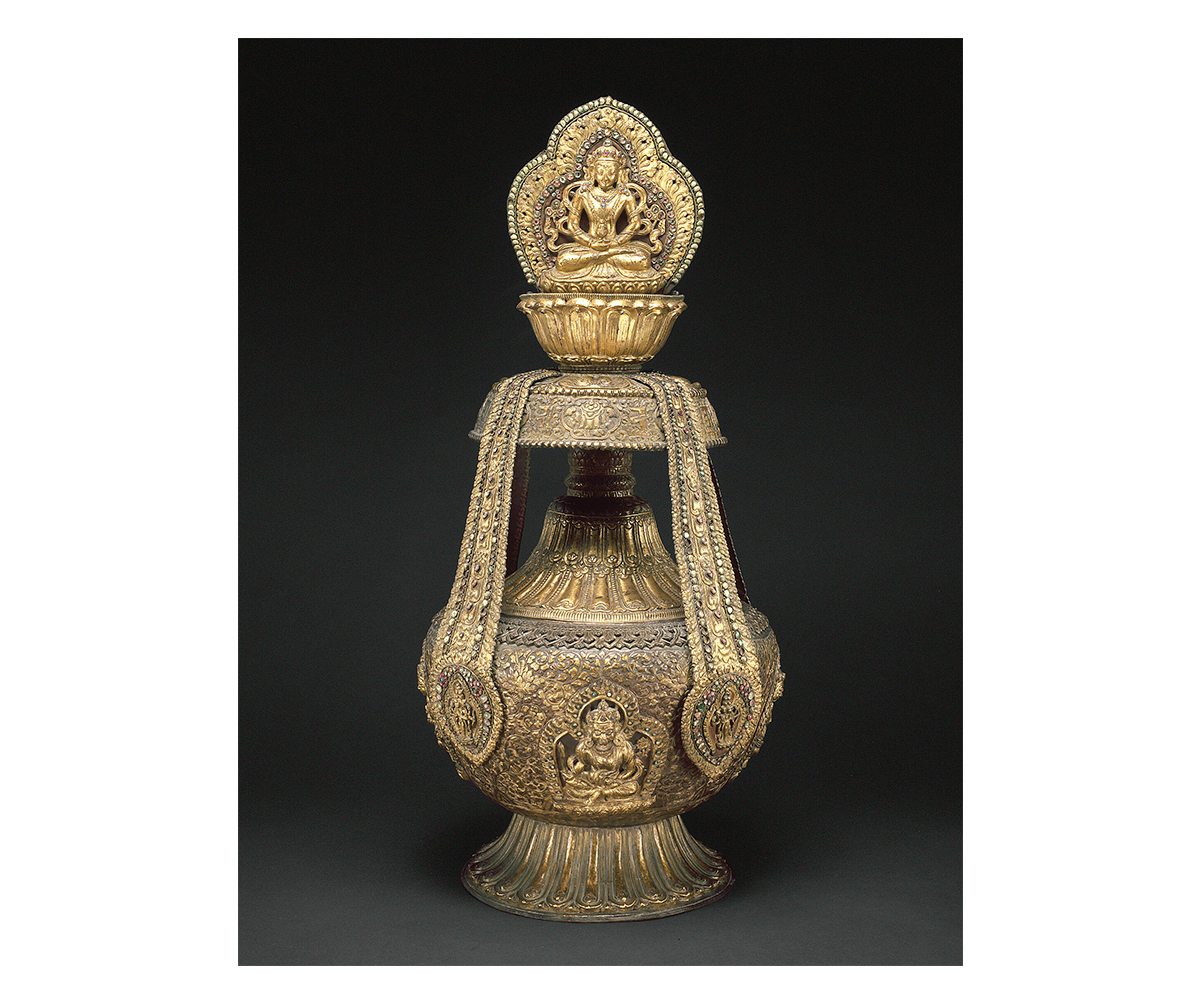
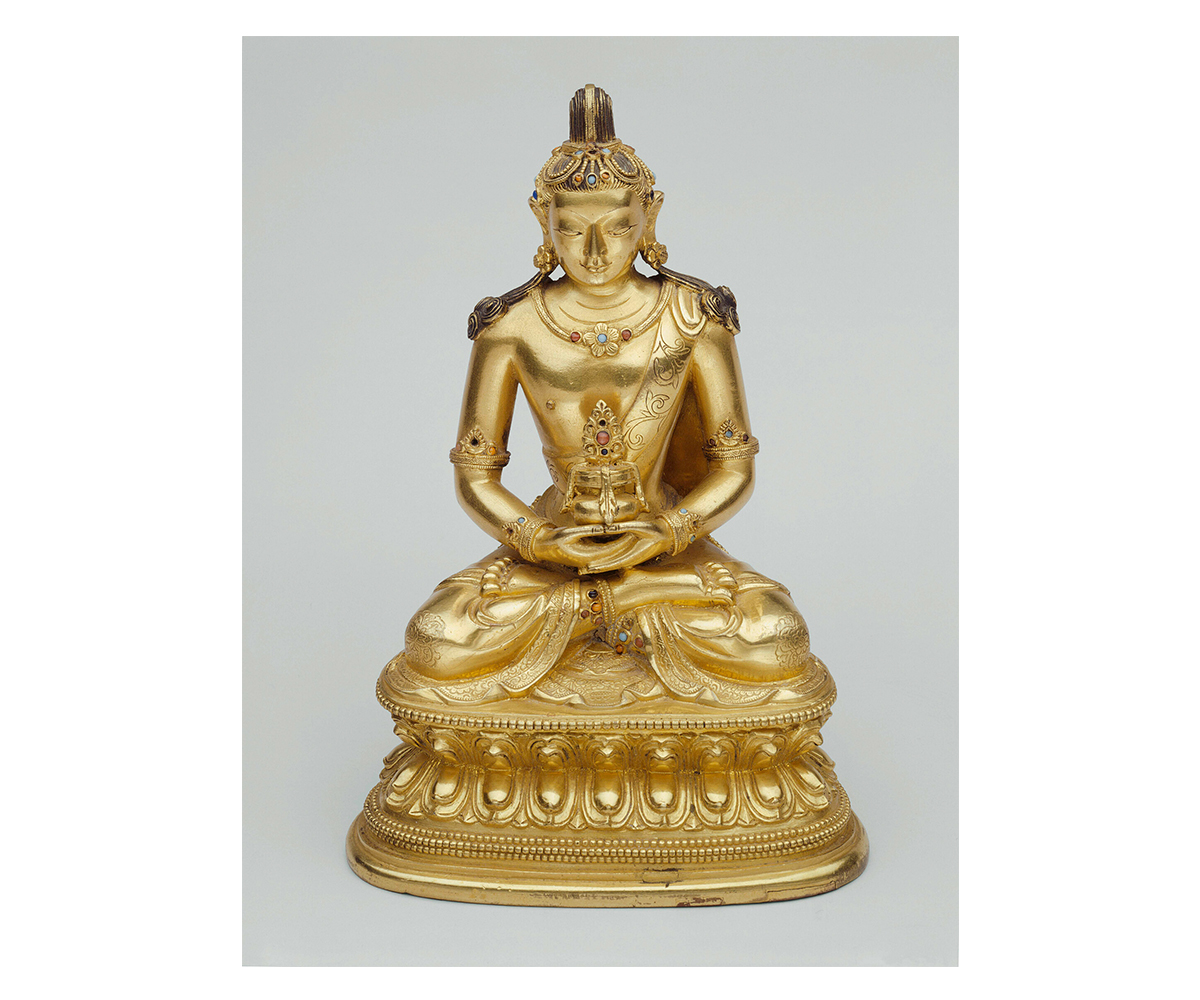
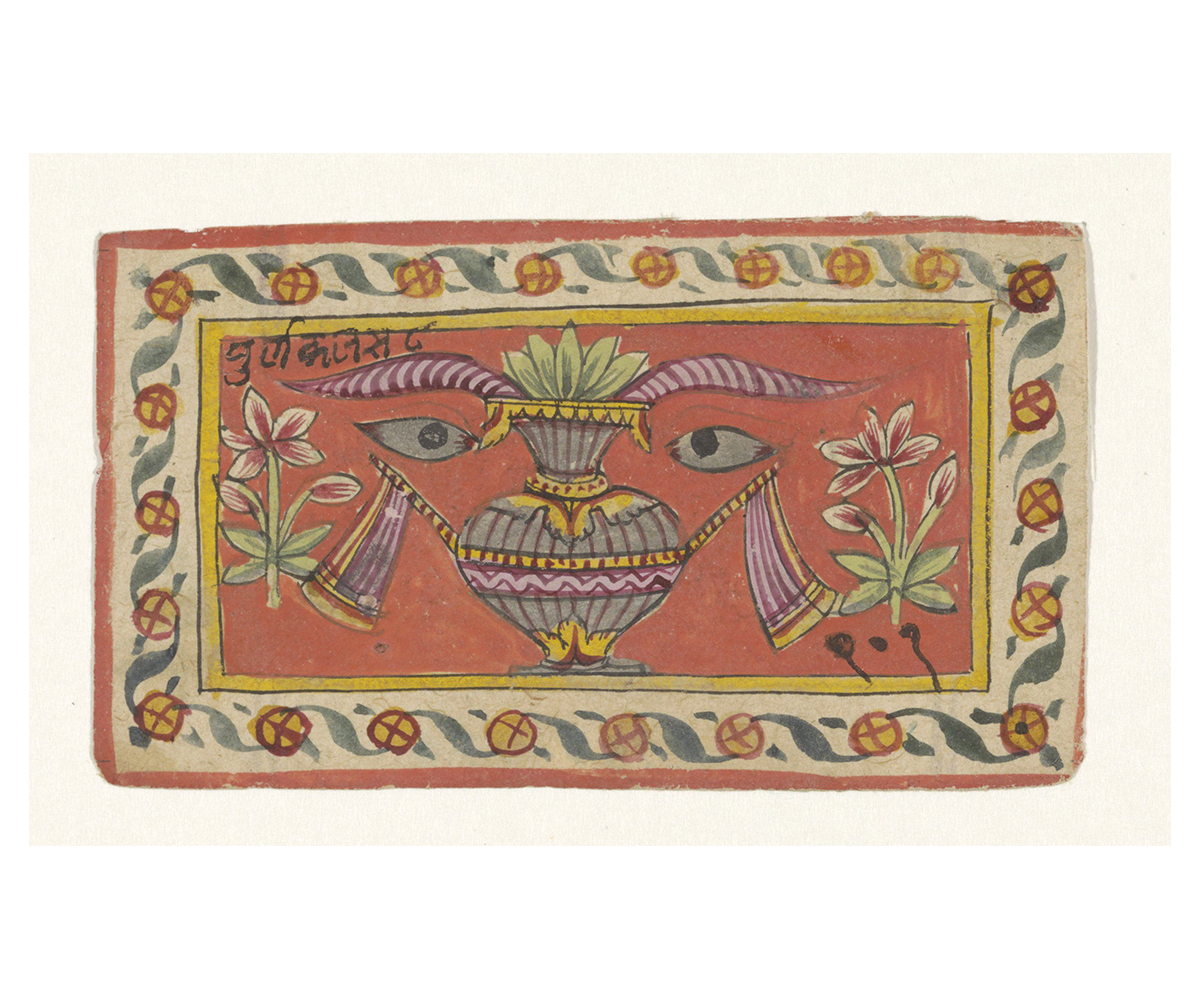
Scholars speculate that the kalasha’s origins can be traced to early fertility cults in South Asia. It is described in the Rigveda, dated to the second millennium BCE, as a vessel of divine bounty that is held by the yajamana or patron of a ritual, and symbolises the prosperity and abundance bestowed upon those present. In the Yajurveda, the kalasha is likened to a creative womb from where all life emerges. Hindu philosophical thought also uses the kalasha form, as the ghata or purna-ghata, as a metaphor for the human body, which in turn is seen as a microcosm of the universe. Associated with, and often seen accompanying, deities of prosperity, it also functions as the aniconic representation of figures such as Lakshmi. Given its strong association with water, fertility and plenty, the kalasha is also an iconographic emblem associated with the yakshas, nagas and river-goddesses.
The kalasha features in Jain literature as the purna-ghata that forms one of the fourteen auspicious dreams of Mahavira’s mother, Queen Trishala. The kalasha also features as part of the Ashtamangala, a set of eight sacred symbols used in Buddhist, Jain and Hindu iconography; while the constituents of the Ashtamangala vary across traditions, the kalasha is found in all of them.
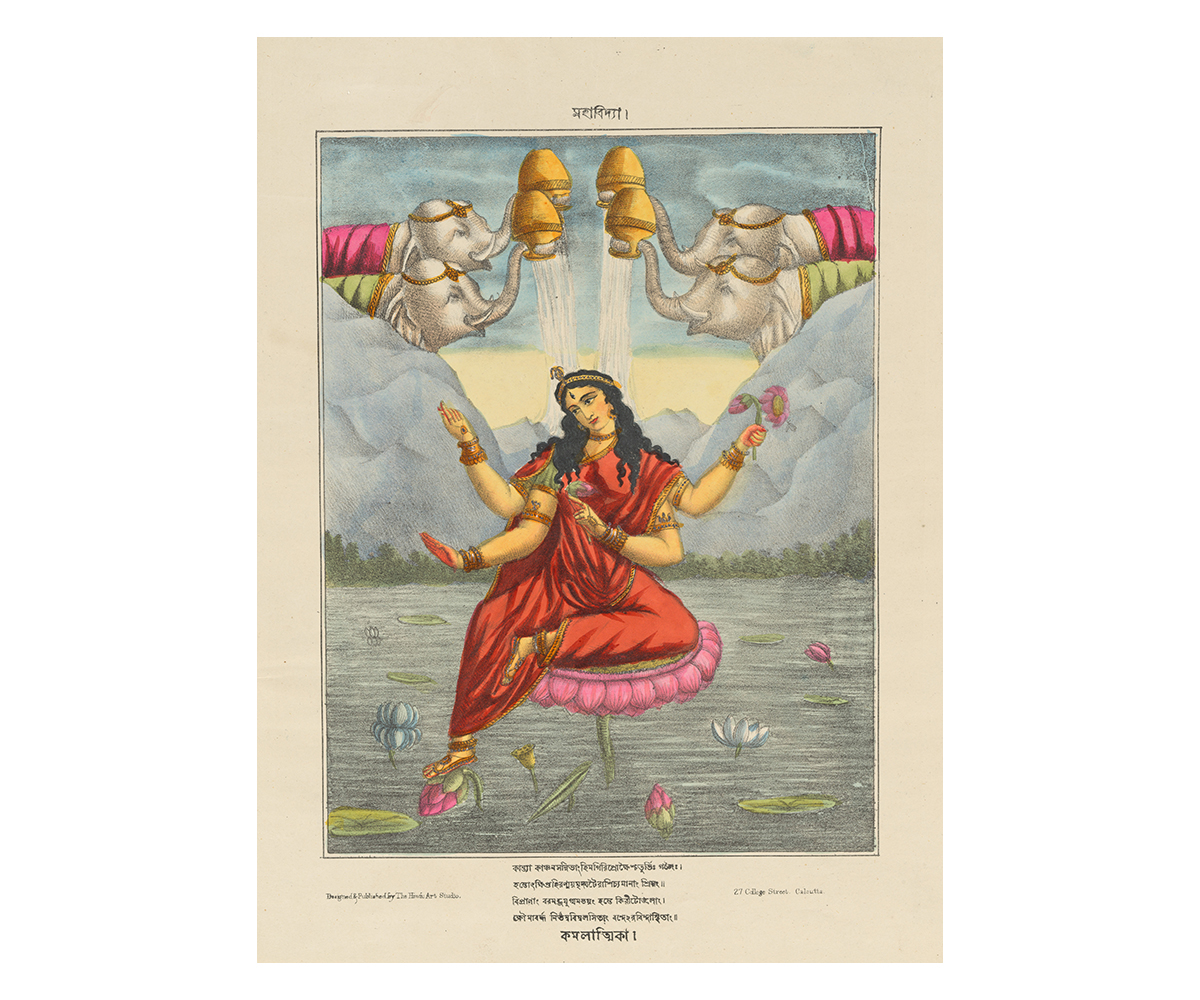
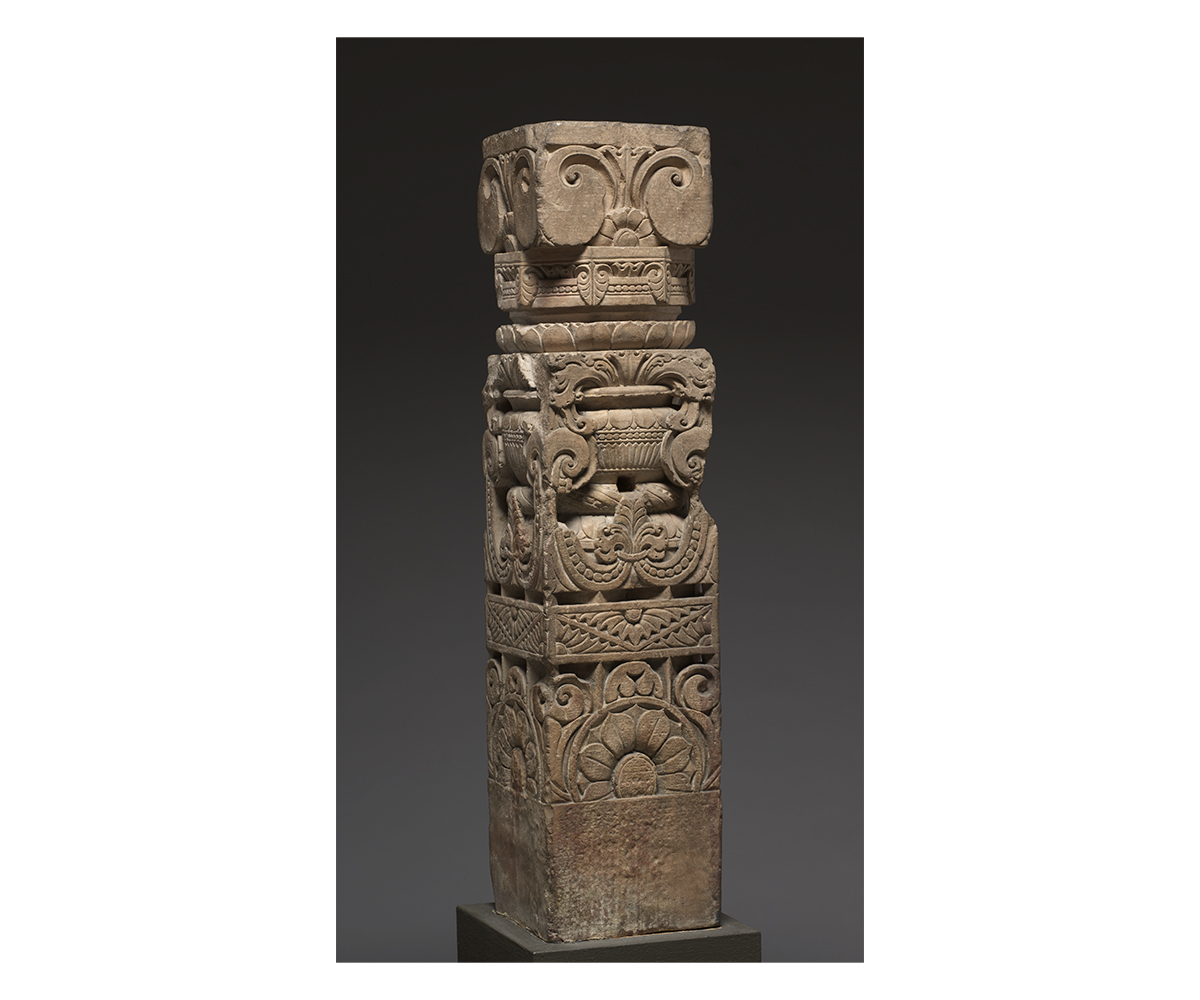
One of the earliest known appearances of the kalasha in Indian art occurs in a third-century BCE pillar at Vidisha in present-day Madhya Pradesh in central India. Depicting the wish-fulfilling Kalpataru tree, and thought to be dedicated to the deity of wealth Kubera, the pillar has a pot-shaped base moulding from which rises a banyan tree (Ficus benghalensis) with overhanging roots laden with motifs of money and overflowing vessels. In the same region, the kalasha appears in stone mouldings carved during Shunga rule (c. 185–73 BCE) at Buddhist sites such as Bharhut and Sanchi. These variously show manifestations of the goddess Lakshmi — a symbol of wealth and prosperity — emerging from kalashas or as Gajalakshmi, being showered by elephants holding kalashas.
At Bharhut, Sanchi, and Mathura to the north, mouldings at the bases of pillars and columns depict the kalasha variously as an inverted globular bell motif or with a variety of flora and fauna emerging out of its mouth, such as flower vines, lotuses and hamsa birds. Intricate reliefs on limestone pillars at Amaravati in present-day Andhra Pradesh, India, show tall vegetal scrolls emerging out of narrow-necked kalashas; such pillar carvings are also found at Gandhara in present-day northwestern Pakistan and eastern Afghanistan, and as far as Borobudur in present-day Indonesia. At the Buddhist complex of Abhayagiri Vihara in Sri Lanka, sculpted purna-kalashas appear alongside naga figures at the entrances to major water reservoirs.
Some scholars speculate that the kalasha motif found continuity in the baluster columns that were later commissioned by Mughal patrons at Agra Fort and Delhi Fort in the sixteenth and seventeenth centuries CE.
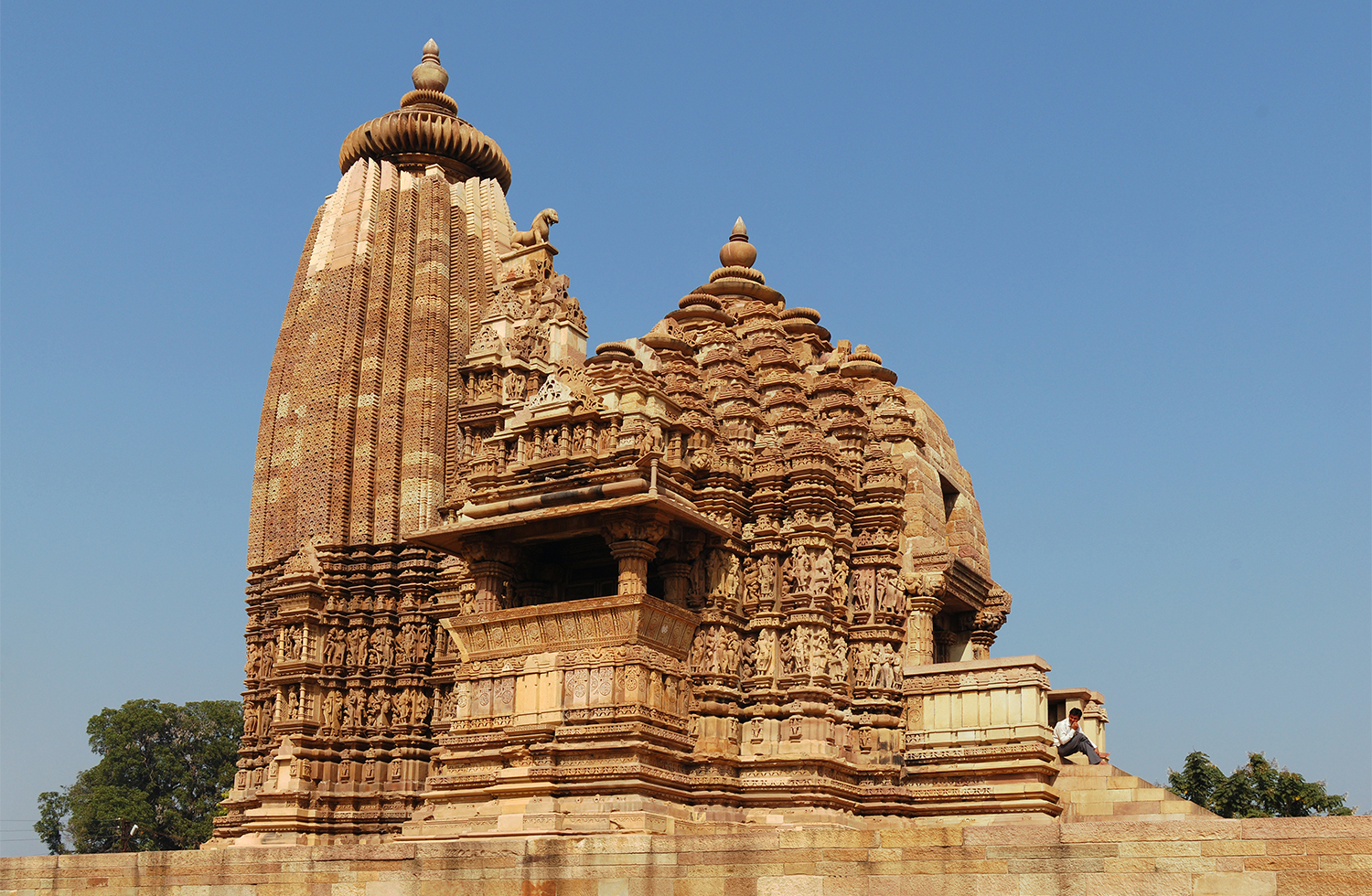
The kalasha forms the crowning spire in the Nagara-style temple architecture of northern India, which is considered to have reached its peak between the sixth and tenth centuries CE. The main shikhara or superstructure that rises over the central sanctum or garbhagriha, is topped with a gilded finial comprising a kalasha form. It is seen in this context as an embodiment of the sun resting at its zenith above the seat of the three gods, Brahma, Vishnu and Shiva, who are believed to reside in the shikhara. The kalasha as finial was borrowed in Mughal architecture — exemplified in the domes in every structure, save the tomb itself, in Humayun’s Tomb, New Delhi. Preceding this, the kalasha also appears in the domes of Delhi Sultanate architecture, as a pot surrounded by petals, resembling a blooming lotus flower.
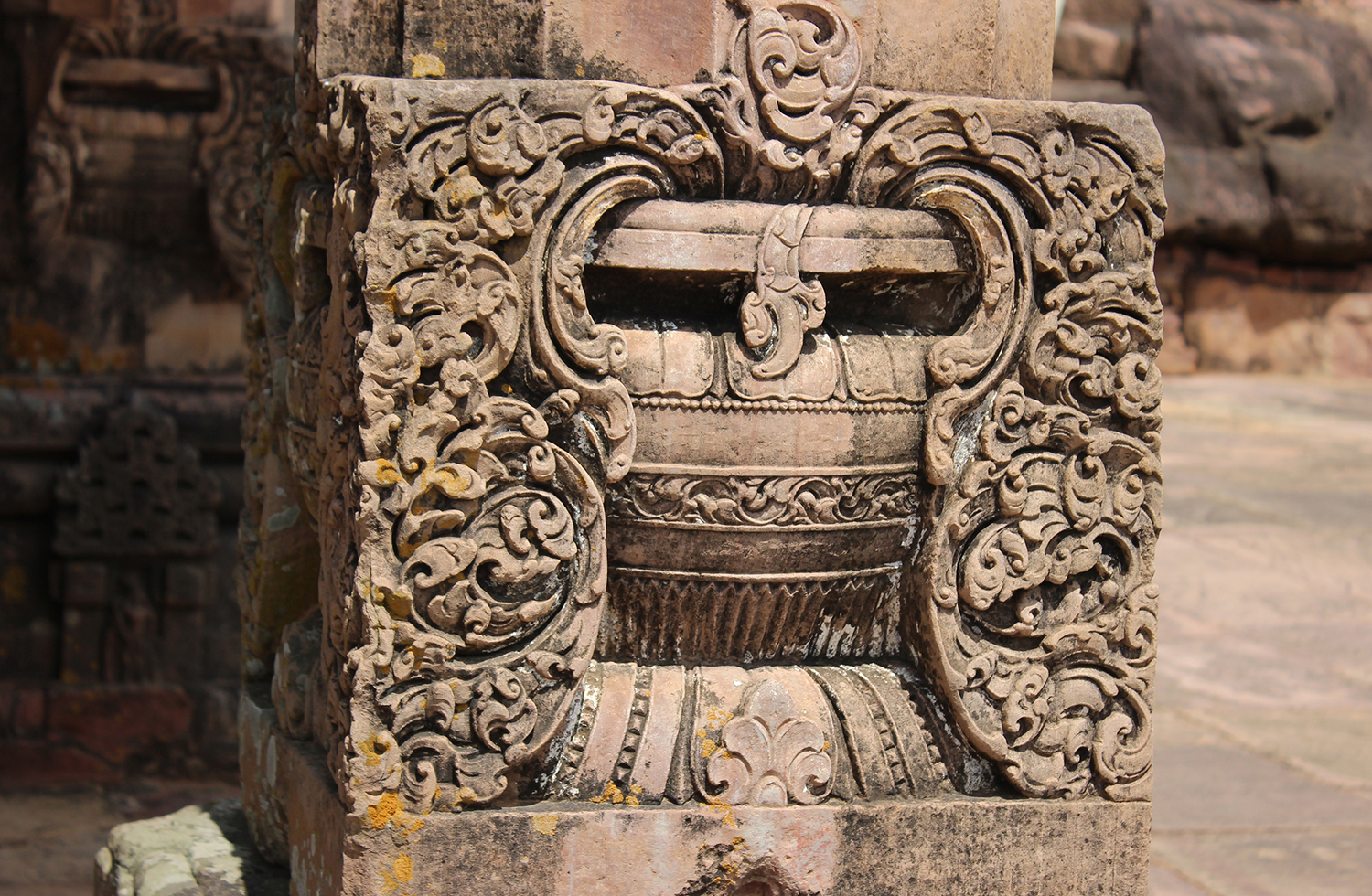
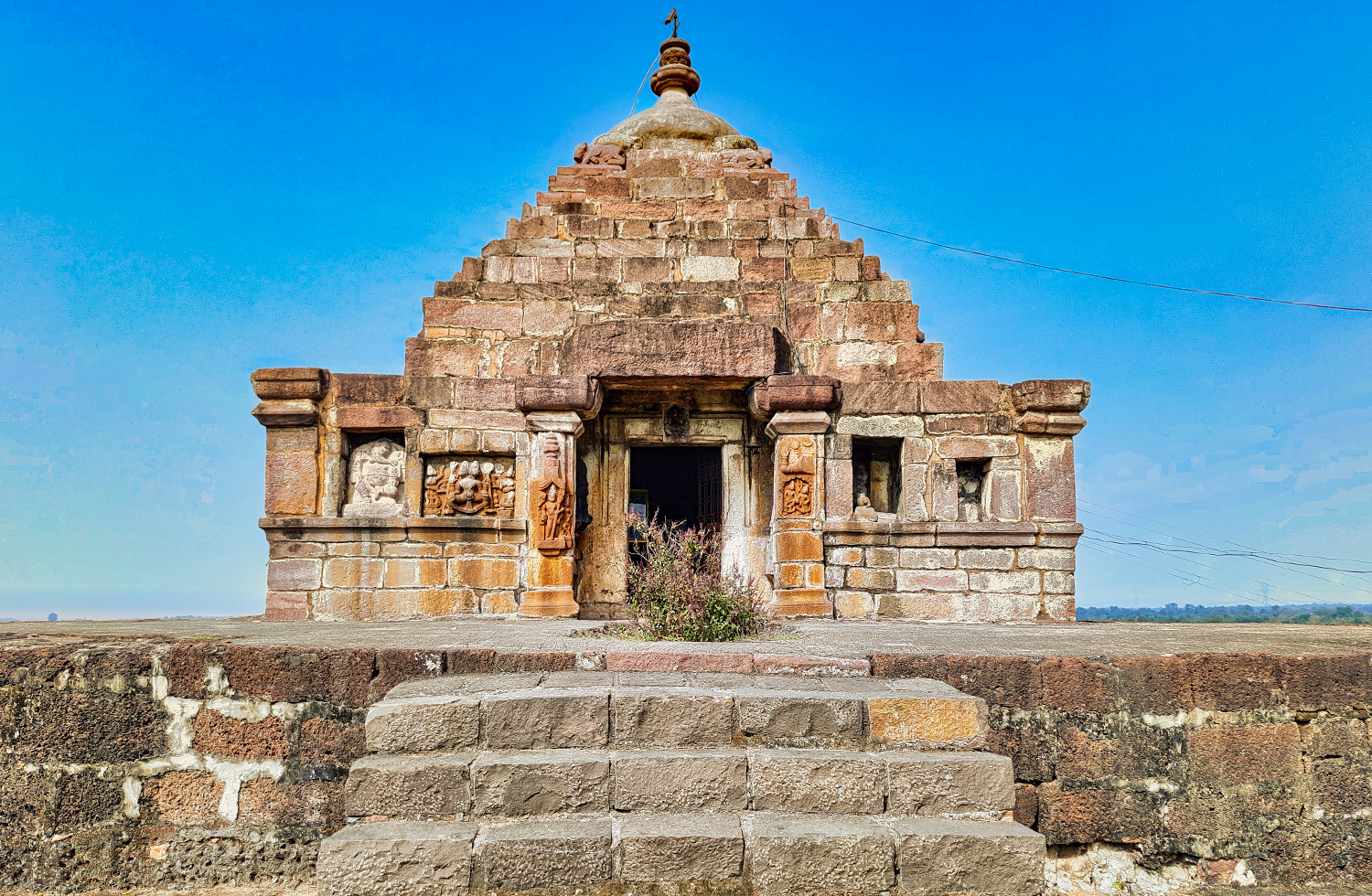
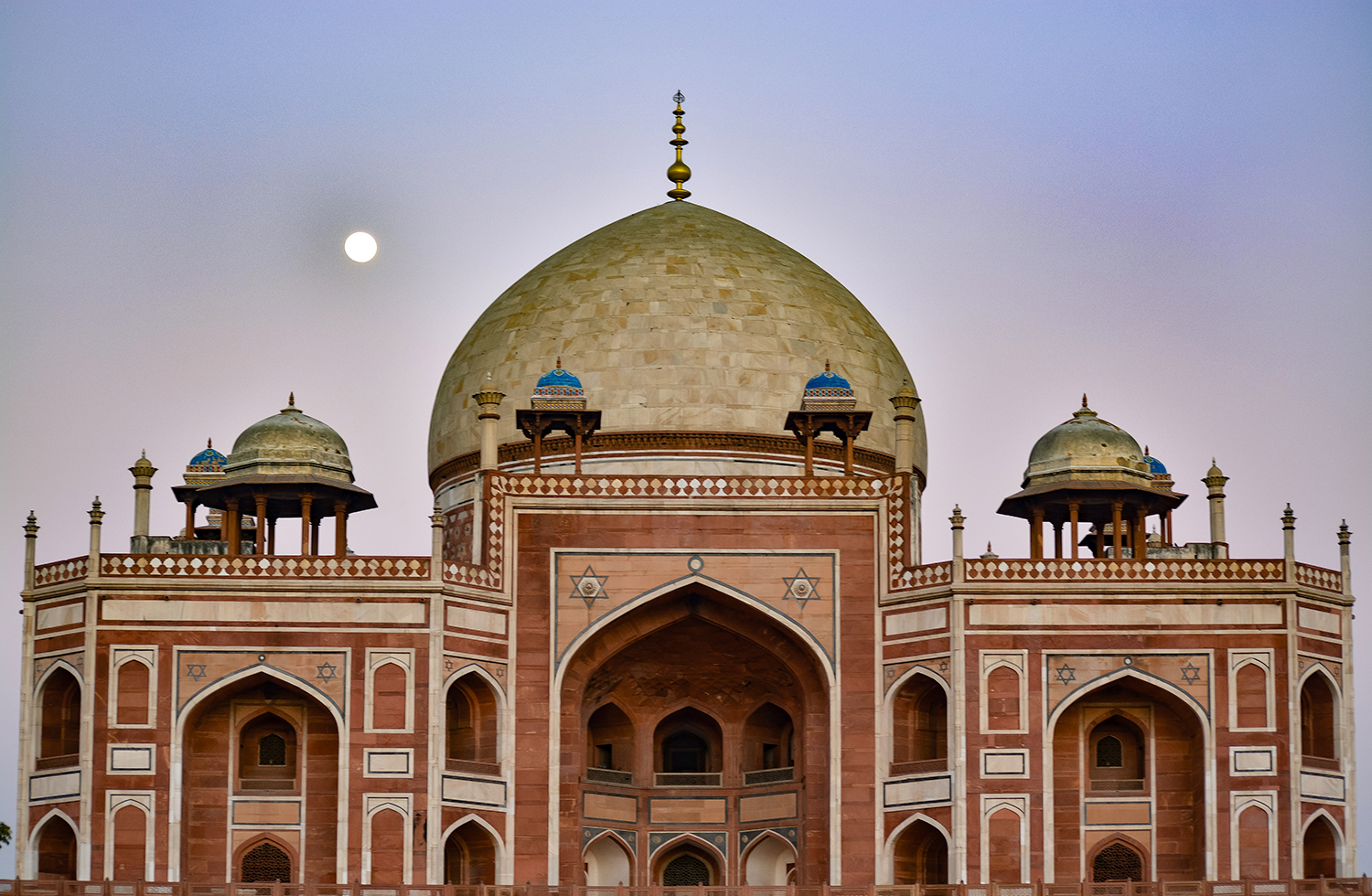
Retaining its highly auspicious connotations in the present day, the kalasha forms a ubiquitous motif in Hindu and Jain cultures around the world, and many Buddhist cultures, featuring prominently in important ceremonies as well as daily rituals and practices. It is seen as part of configurations such as Ashtamangala, as well as individually, in visual art and popularly drawn ritual designs, such as rangoli and alpona, as well as on door frames. Its common use at the entrance of homes and other spaces underlines its Vedic association with the ceremonial reception of guests, evidenced also in its appearance on pillars flanking the portals of ancient and medieval structures. In some Hindu rituals, the kalasha is placed on diagrams or mandalas, symbolising variously the seat of the deity, or a receptacle or nucleus for the deity being invoked. The purna-kalasha is commonly embodied in ceremonial use by filling a kalasha with water or rice and placing a coconut and mango leaves upon its mouth. A lushly decorated kalasha holding lotus flowers and buds, inspired by the motif at Amaravati, forms the centre of the official state emblem of Andhra Pradesh.
First published: 8 January 2024
Image Gallery
Bibliography
Aamir, Naela. “The Conceptual, Cultural and Artistic Significance of Purna-Kalasa and Its Use in Hindu and Muslim Architecture of the Subcontinent.” South Asian Studies 31, no. 2 (July–December 2016): 561–81. http://pu.edu.pk/images/journal/csas/PDF/12_31_2_16.pdf.
Agrawala, Prithvi Kumar. Purna Kalasa or the Vase of Plenty. Varanasi: Prithvi Prakashan, 1965.
Bühnemann, Gudrun, and H. Brunner. Maṇḍalas and Yantras in the Hindu Traditions. Revised ed., India. New Delhi: D. K. Printworld, 2007.
Coomaraswamy, Ananda K. Yaksas Part II. Washington DC: Freer Gallery of Art, Smithsonian Institution, 1931.
Kramrisch, Stella. The Hindu Temple. Vol. II. Calcutta: University of Calcutta, 1946.
Quraishi, Fatima. “Sultanate Art and Architecture, An Introduction.” Art of Asia: Unit 7; Lesson 6: 1200–1500 C.E. Khan Academy. Accessed January 2, 2024. https://www.khanacademy.org/humanities/art-asia/south-asia/x97ec695a:11001500-northwest/a/sultanate-art-and-architecture-an-introduction.
Feedback