-
ChicagoImpart Encyclopedia of Art. "Kurma." October 26, 2023. https://imp-art.org/articles/kurma/.
-
MLA"Kurma." Impart Encyclopedia of Art, Oct. 26, 2023, https://imp-art.org/articles/kurma/.
-
HarvardImpart Encyclopedia of Art (2023) Kurma. Available at: https://imp-art.org/articles/kurma/ (Accessed: 3 March 2026).
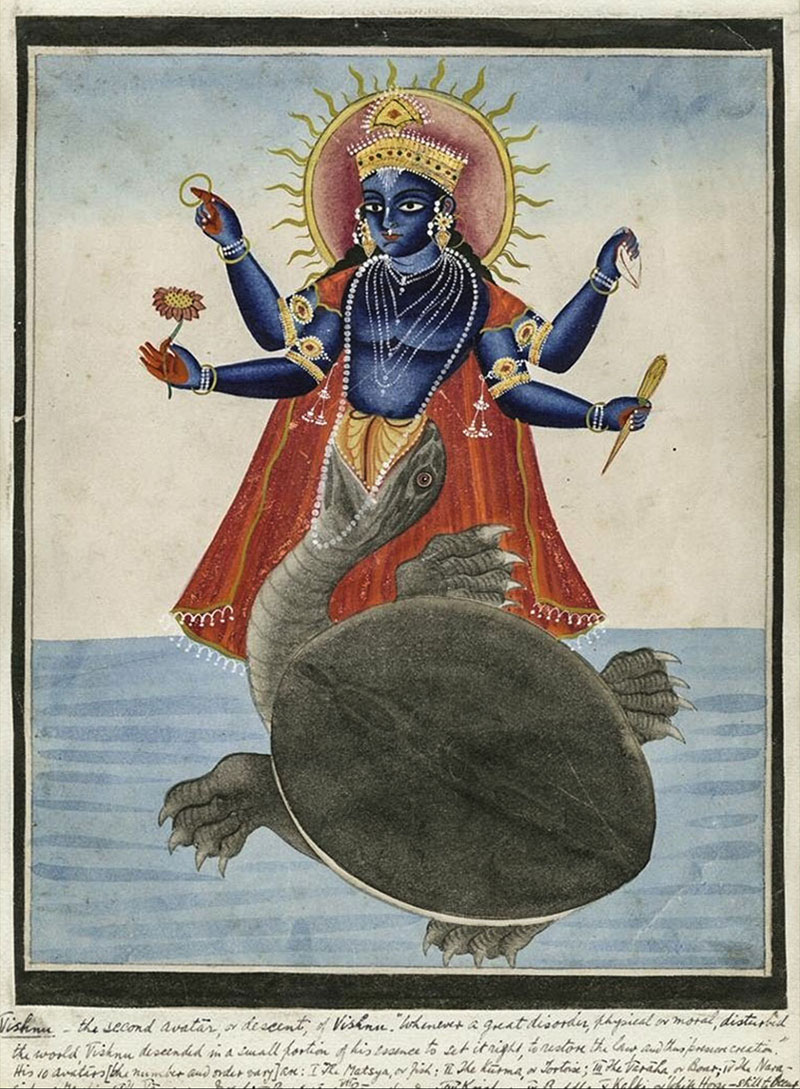
An avatar of the Hindu deity Vishnu, Kurma takes the form of a tortoise and is the second of his ten worldly incarnations, collectively known as the Dashavatara (Sanskrit for ‘ten avatars’). These incarnations — Matsya (‘fish’); Kurma (‘tortoise’); Varaha (‘boar’); Narasimha (‘man-lion’); Vamana (‘dwarf’); Parashurama (‘Rama with an axe’); Rama or Ramachandra; Krishna; Buddha or Balarama; and Kalki (the avatar yet to come) — are widely associated with Vishnu’s role as the protector of humankind. Another belief is that the Dashavatara are the result of a curse laid upon Vishnu by Shukra — guru of the asuras, or demons — or the latter’s father, the sage Bhrigu.
According to the Shatapatha Brahmana and Taittiriya Samhita, Matsya, Kurma and Varaha are avatars of the god Prajapati, who is described by some Hindu texts as a form of the creator deity Brahma. Prajapati is assumed responsible for the creation of the world and its safeguarding. In the Matsya Purana, Kurma occurs as the second of the Dashavatara. In the Bhagavata Purana, Kurma is listed as Vishnu’s eleventh incarnation of twenty-two. This work, among other Hindu texts, describes the conflict between the devas and asuras as the precursor for Vishnu’s incarnation as Kurma. During this time of discord, the asuras would perform various austere practices in the form of tapasya to obtain boons that enabled them to fight the devas. When the devas entreated Vishnu for aid, he advised them to unite with the asuras in churning the ocean — an important event in Hindu mythology called Samudramanthana — in order to make peace. The ocean, which is said to have contained treasures for the prosperity of humankind, could only be churned by the devas and the asuras together, with the reward of amrit, a nectar that would grant them immortality. The gods lifted the mountain Mandara to use as a churning rod, and Vasuki, the serpent king of the Nagas, wrapped himself around it to be used as the rope. But the weight of the mountain caused the earth to sink, prompting Vishnu to take the form of a tortoise to give the churning rod a base to rest on. Later in this episode, Vishnu would change himself into a celestial damsel or apsara named Mohini to distract the asuras so the devas could retrieve the vessel of amrit that the asuras had attempted to steal for themselves.
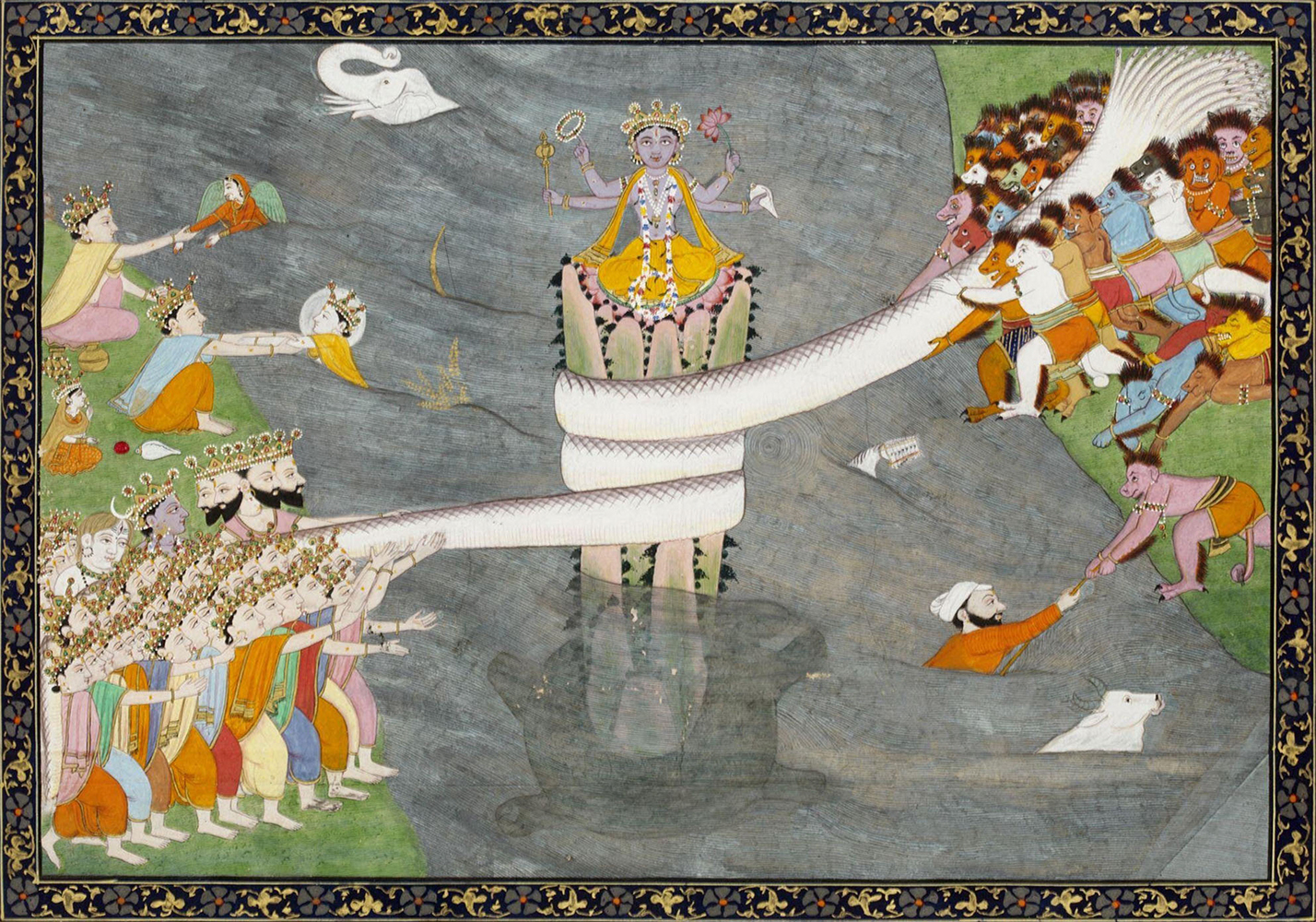
Kurma is also conflated with the sage Kashyapa from early Vedic texts such as the Rigveda, and is also referred to by synonymous names meaning ‘tortoise’ in Sanskrit, such as Akupara, Kachhapa and Kamatha, in Puranic stories. The image of a cosmic turtle bearing the world on its back is found in mythologies across diverse ancient cultures including those of China and the Native Americans, as well as in contemporary popular culture such as the fantasy fiction of Terry Pratchett and Stephen King.
Vishnu in his Kurma avatar is depicted in two ways — either as a complete tortoise or as a hybrid, with the lower body of a tortoise and the upper body of a human with four arms. Two of the arms are shown carrying Vishnu’s symbols, the Sudarshan Chakra, the discus, and the shankha, the conch shell, while the other two assume the boon-bestowing varada mudra and the reassuring abhaya mudra. The figure is decorated with resplendent ornaments and wears a tall cap, the kirita-makuta, on its head.
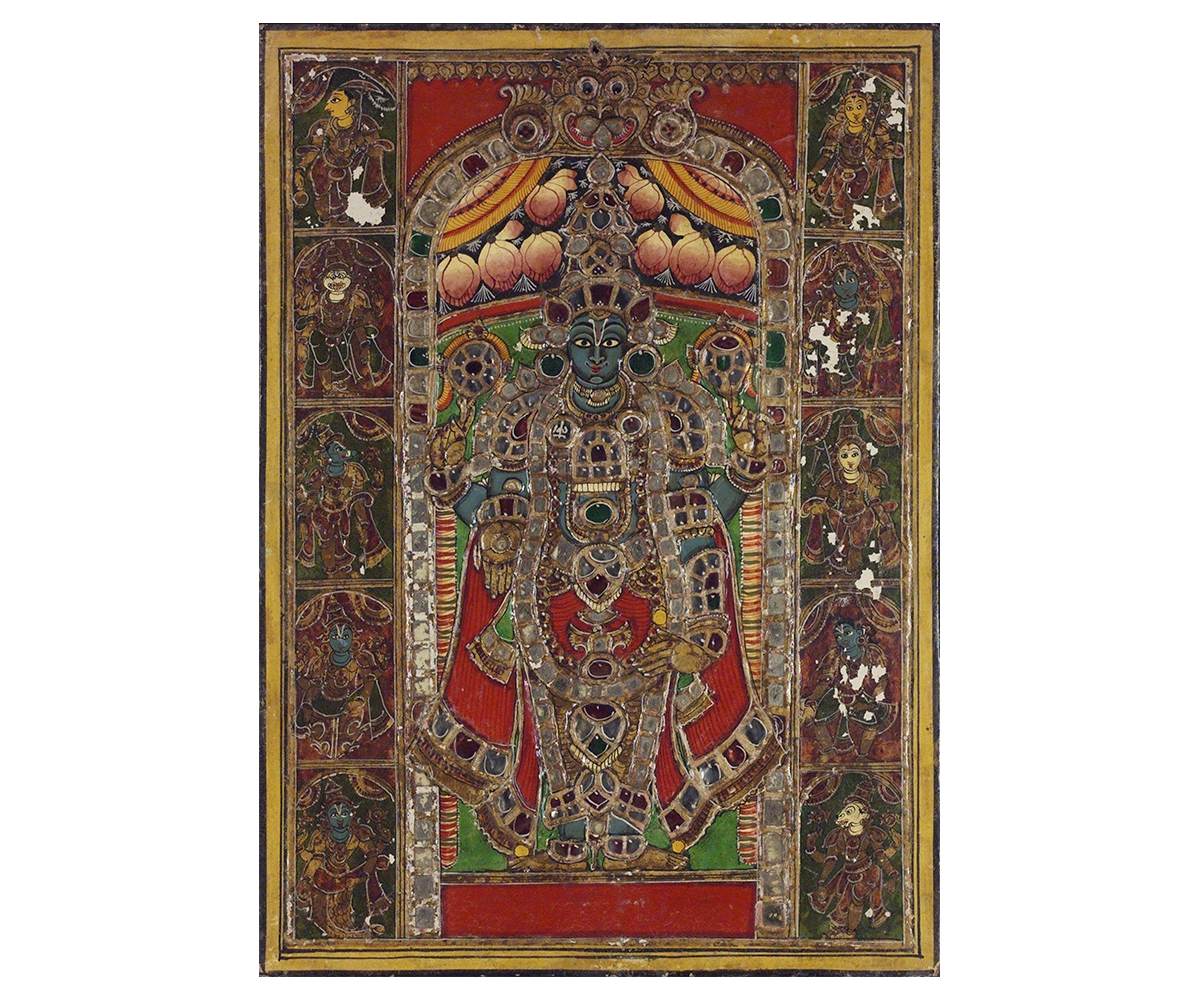
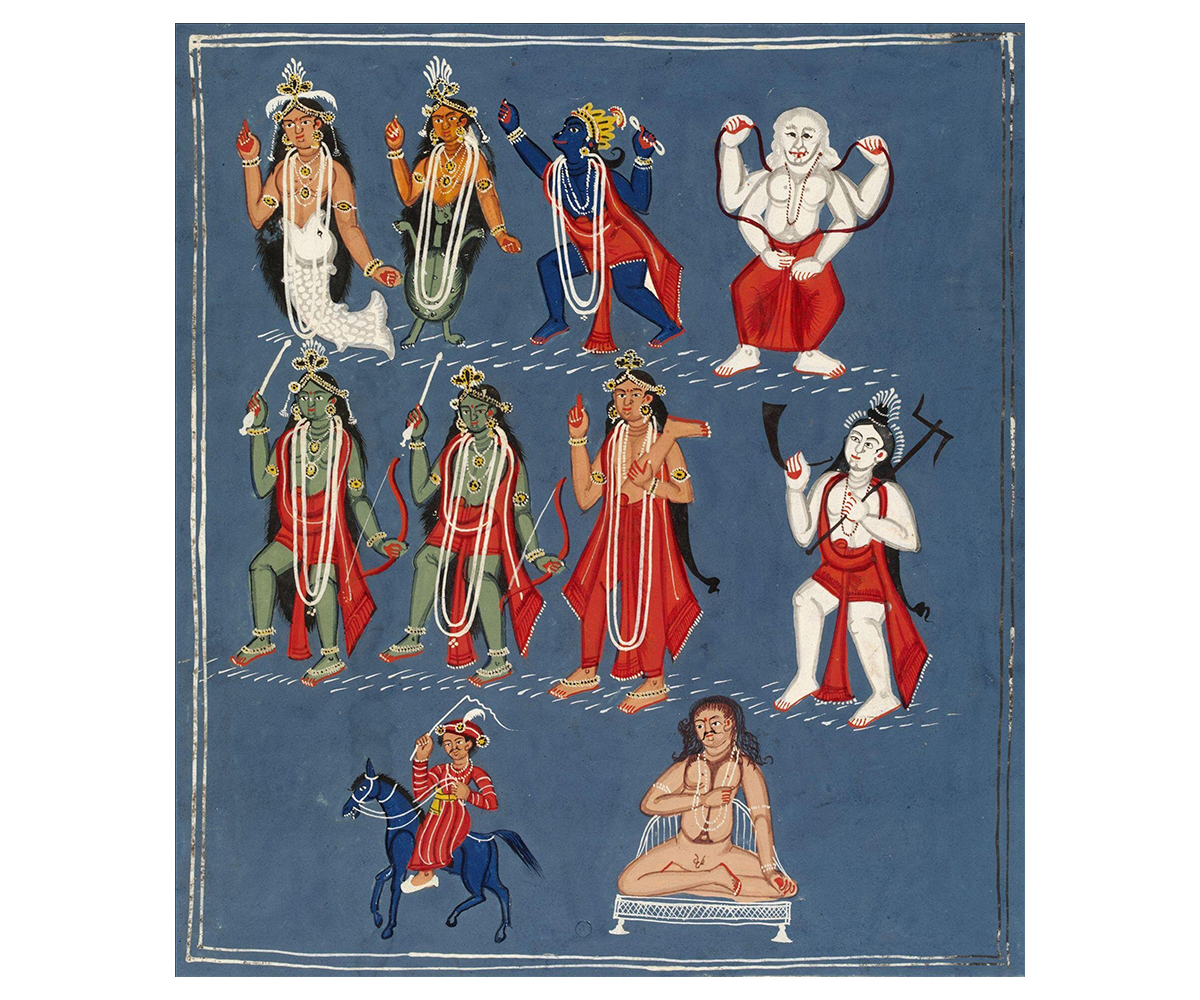
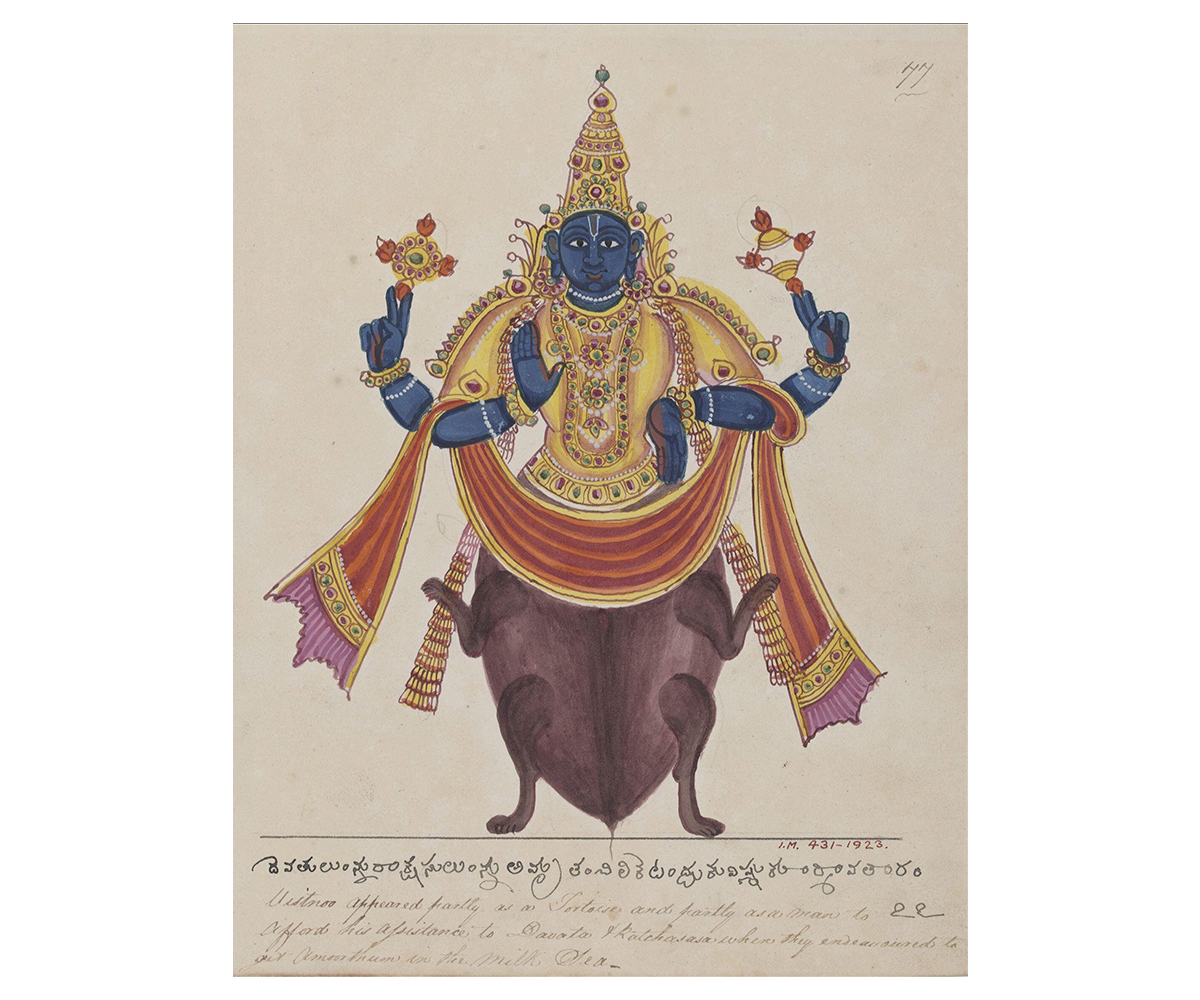
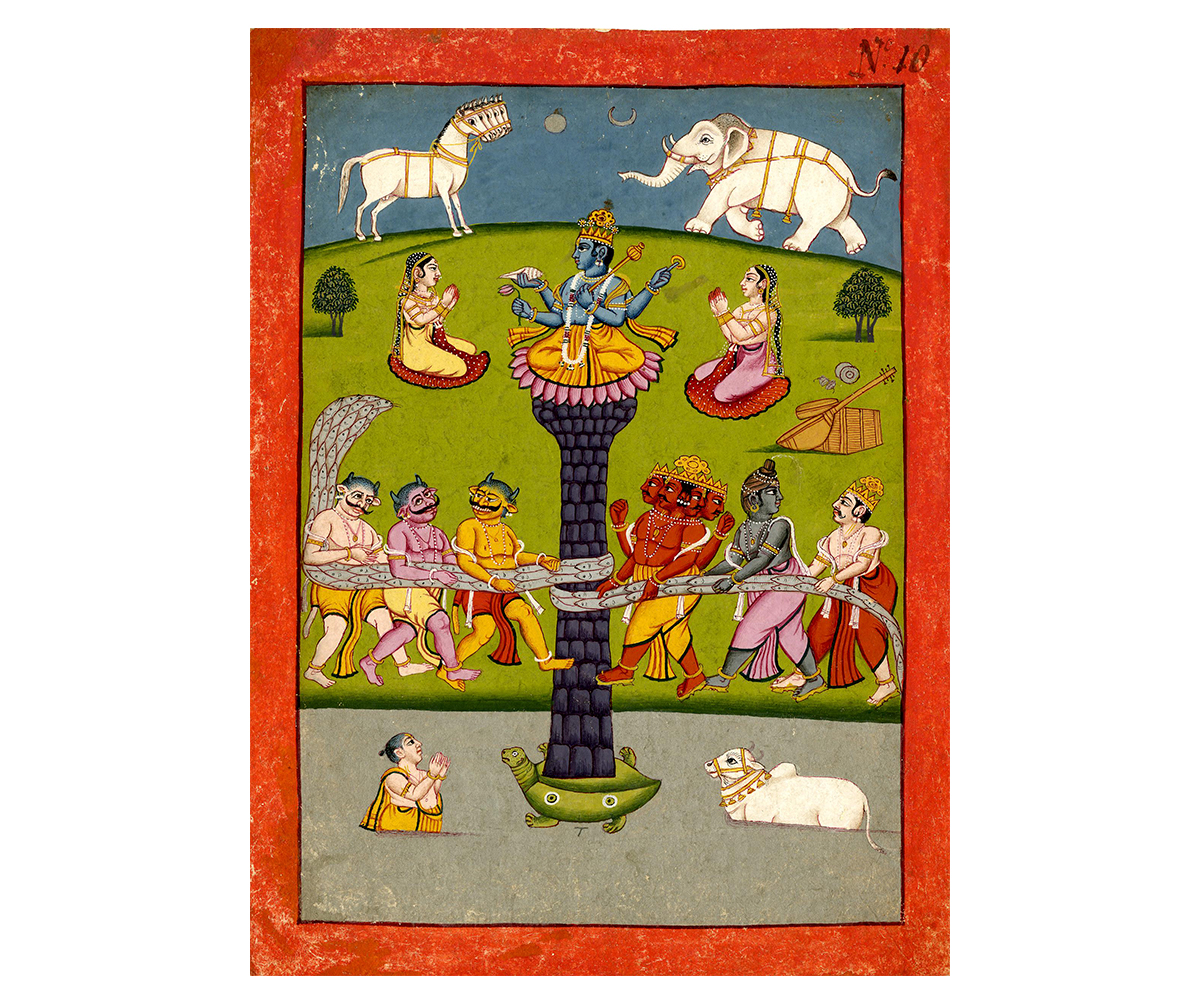
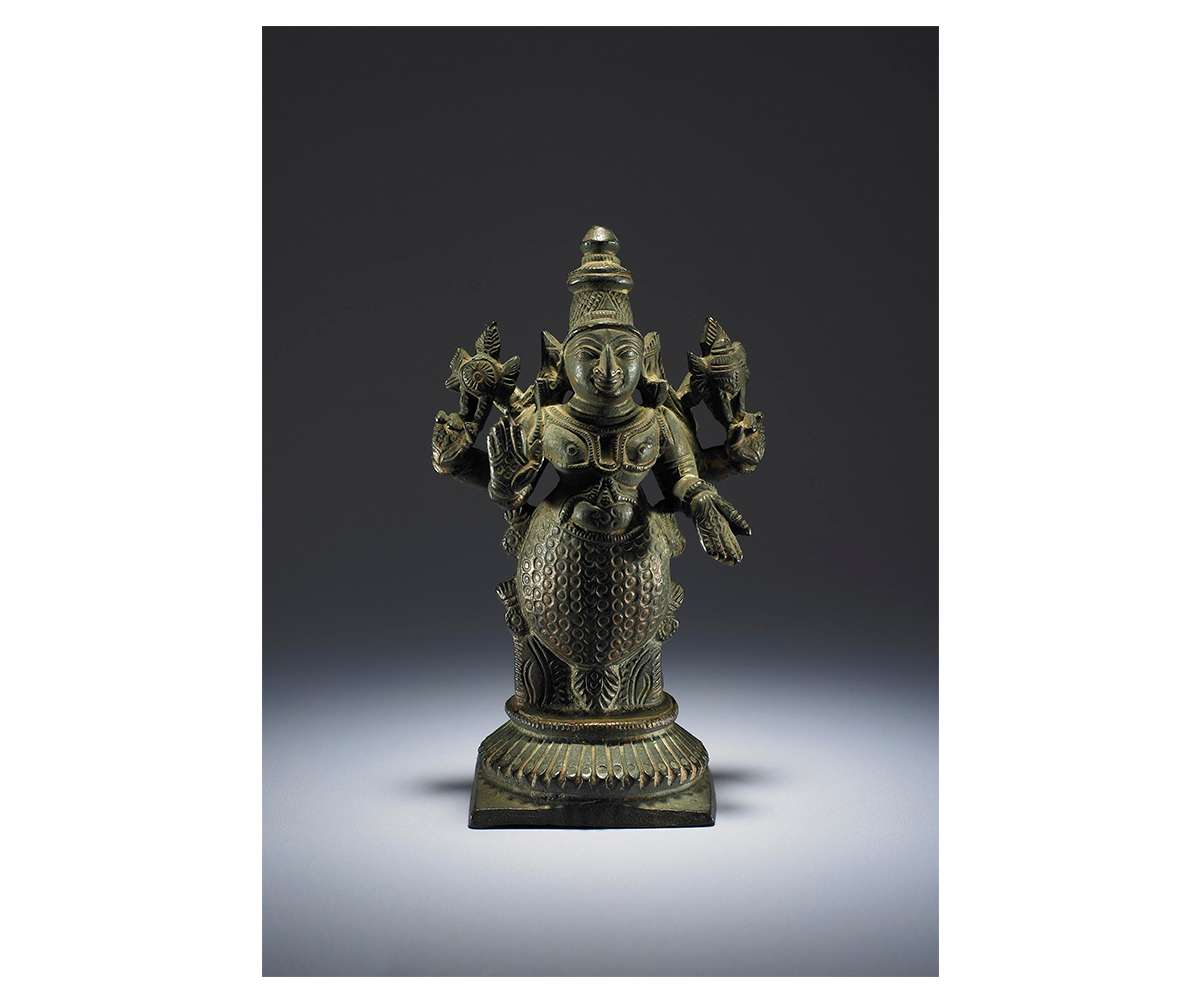
Kurma features prominently in representations of the Dashavatara as a group but does not typically appear singularly or have a significant following of his own. The pre-eleventh-century CE Kurmanathaswamy Temple at Srikurmam, located in the Srikakulam district of present-day Andhra Pradesh, is known to be one of the few sites of premodern Kurma worship.
First published: 26 October 2023
Image Gallery
Bibliography
Banerjea, Jitendra Nath. The Development of Hindu Iconography. New Delhi, India: Munshiram Manoharlal Publishers Pvt. Ltd., 2016.
Dallapiccola, Anna L. Dictionary of Hindu Lore and Legend. London: Thames & Hudson Ltd, 2014.
Doniger, Wendy. The Hindus: An Alternative History. 2nd ed. New Delhi: Speaking Tiger, 2015.
Grundhauser, Eric. “Why is the World Always on the Back of a Turtle?” Atlas Obscura. October 20, 2017. Accessed August 18, 2023. https://www.atlasobscura.com/articles/world-turtle-cosmic-discworld.
Gupte, R. S. Iconography of the Hindus, Buddhists and Jains. D. B. Taraporevala Sons & Co. Private Ltd., 1972.
Rao, T. A. Gopinatha. Elements of Hindu Iconography. Vol. 1.1. Madras: The Law Printing House, 1914.
Feedback